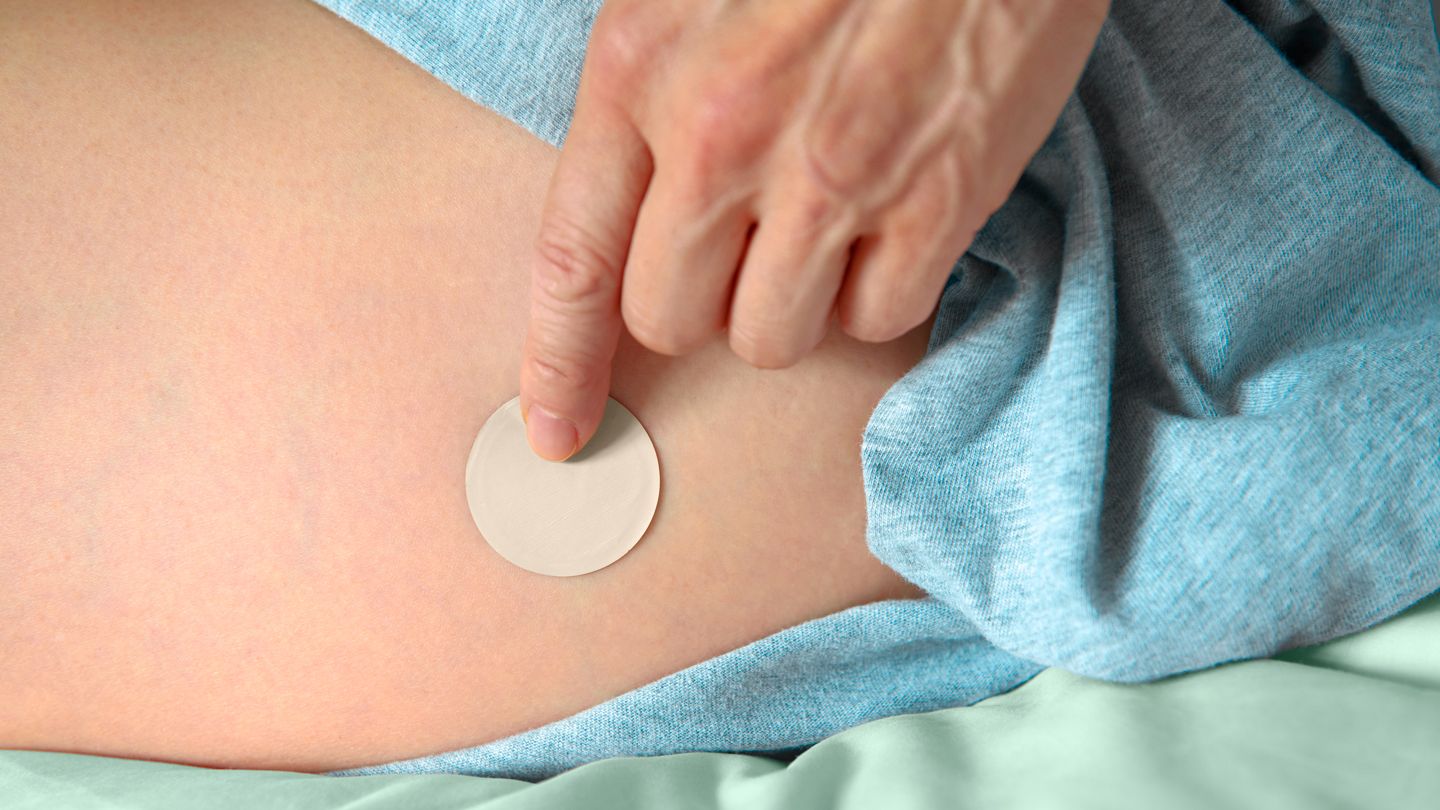
If you’re having trouble getting your estrogen patch prescription filled, you’re part of a national trend. Pharmacies around the country are reporting shortages for this form of hormone therapy prescribed to treat menopause and perimenopause symptoms.
An “out-of-stock” message from your go-to pharmacy could leave you scrambling to find the patches elsewhere, switching brands or dosages, paying higher out-of-pocket costs, or going without treatment altogether for weeks at a time — which could mean the return of symptoms like hot flashes and night sweats.
Here’s what to know about the shortage, what’s causing it, and when it may be over, plus what to do if you can’t fill your prescription but want to continue the therapy.
Why Is There a Shortage of Estrogen Patches?
For the last several years, supply chain issues have been causing shortages across the board for many drugs, including antibiotics, chemotherapy drugs, and hormone therapy — and now, specifically, estrogen patches (also known as estradiol transdermal patches), says MargEva Cole, MD, a gynecologist and certified menopause practitioner at Duke Health in Durham, North Carolina.
Some of the main pharmaceutical companies producing patches sold in the United States include Amneal, Sandoz, Noven, Viatris, and Zydus. The latest data from the American Society of Health-System Pharmacists shows that products by Sandoz and Amneal are currently in shortage.
Estrogen patches are complex medication delivery systems that require specialized manufacturing. “There are only a few manufacturers of estrogen patches in the world — the supply chain is fairly narrow,” says Dr. Cole.
The issue is that pharmacies order patches anywhere between 18 and 24 months in advance based on expected demand, she explains.
Those projections appear to have underestimated the current demand for hormone therapy, which has increased significantly in the last couple of years — and that’s caused shortages, says Cole.
More Women Are Looking to Try Hormone Therapy
Cole says she finds more women are open to exploring hormone therapy. “There’s several reasons for that: increased media coverage on menopause and menopause symptoms, word-of-mouth on social media, and a better understanding of the actual risks,” she notes.
While the risks of hormone therapy may outweigh the benefits for women with a history of breast or endometrial cancer, blood clots (DVT/PE), stroke, heart attack, or active liver disease, most experts agree that this treatment is a safe and an effective way to ease many menopause and perimenopause symptoms.
“Adding to the demand, prescriptions aren’t just coming from primary care doctors or gynecologists anymore — there are many online vendors offering easy access,” says Cole.
All these factors add up to more prescriptions, while supply has likely been relatively flat, she says.
What Do Estrogen Patches Do?
As women approach menopause, estrogen levels fluctuate and eventually decline, triggering symptoms that can affect sleep, mood, cognition, and overall quality of life. Hormone therapy can stabilize and boost estrogen levels.
“There are different ways to get estrogen into the body. You can take it orally as a pill, or you can use a transdermal option, meaning the estrogen is absorbed through the skin,” says Lauren Streicher, MD, clinical professor of obstetrics and gynecology at Northwestern University Feinberg School of Medicine in Chicago and host of Dr. Streicher’s Inside Information: Menopause, Midlife, and More podcast.
Transdermal options include gels, creams, and vaginal inserts, Streicher says, but the most popular choice is the patch. It delivers estradiol — a form of estrogen — through the skin and into the bloodstream. Most patches are dosed twice-weekly or once-weekly.
Both oral and transdermal estrogen have advantages and disadvantages, says Dr. Streicher.
“The advantage of transdermal estrogen is that it’s not metabolized by the liver. Because of that, for women with a history of blood clots, liver disease, or gallbladder disease, transdermal estrogen is a much safer option than oral estrogen,” she says.
“Many women on transdermal estrogen don’t have any of those risk factors,” Streicher says. Many doctors recommend it simply because it’s the only type of hormone therapy that they’re comfortable prescribing — and because most women prefer it, she adds.
What Happens If You Can’t Refill Your Patch Prescription?
If you end up going a few days without your estrogen patch, don’t panic, says Streicher.
“People sometimes worry that stopping for a few weeks will undo all the progress they’ve made or make it harder to restart, and that’s not the case,” she says.
The worst thing that’s likely to happen is some breakthrough symptoms, says Streicher.
Light bleeding is also possible, says Steicher.
But for some women even short gaps in menopause therapy may cause sleep disruption, emotional stress, and an overall negative effect on quality of life.
What to Do if You Can’t Get Your Patch
If your pharmacy is out of stock, you still have options. Cole and Streicher recommend that you:
Call other pharmacies. Availability can vary by location. While independent pharmacies or smaller regional chains may have inventory, you may want to consider which pharmacies may have greater access to large wholesalers.
“Big pharmacy benefit managers like Express Scripts or Caremark may have larger inventories, and large organizations like Costco, Amazon, or Cost Plus Drugs may also be options,” says Cole.
Ask about different brands or strengths of your patch. Your doctor may be able to adjust your prescription to a different brand or dosing schedule if another option is available. “For example, you might consider switching from a twice-weekly patch to a once-weekly patch — those have not been affected by the shortage as much,” says Cole.
Talk to your healthcare clinician about alternatives. Talk with your prescribing physician and ask about other transdermal options, including gel packets, gel pumps, and sprays, says Cole.
“They are truly equivalent from a safety standpoint. We use dosing tables to convert from a patch to an equivalent gel or spray dose,” she says.
Some women may also consider a vaginal estradiol ring called Femring, says Cole. “It delivers systemic estrogen through the vaginal wall and lasts for three months, which many women find convenient. The downside is that insurance coverage can be inconsistent, and it can be expensive,” she says.
Some women may also consider taking oral estrogen, says Streicher. “It’s not inherently dangerous, and it has advantages of its own. Unless someone has a specific medical reason they cannot take oral estrogen, it may actually be a very reasonable and sometimes even better option,” she says.
Can You Cut a Patch or Stretch Out the Time Between Patch Changes?
“Most estrogen patches are what we call matrix patches, meaning the hormone is distributed evenly throughout the patch. While manufacturers typically advise against cutting them, many matrix patches can be cut — ideally straight down the middle or diagonally,” says Streicher. Talk with your doctor first if you’re considering cutting your patches.
Although it’s not ideal, you could also try stretching out the time between changes, says Streicher. “If you normally change it every three or four days, you might extend it to four or five days. The medication doesn’t disappear exactly at the three-day mark, the dose just gradually declines,” she says. You may experience some breakthrough symptoms, Streicher adds.
Is There an End to the Shortage in Sight?
Manufacturers say they are working to increase production capacity and ship additional product to the United States. Some companies report meeting their supply commitments, while others acknowledge continued strain due to rising demand.
Expanded production will take time because of the specialized manufacturing required for transdermal systems, says Cole.
This isn’t an issue that’s likely to go away in a month or two; it may be a year or more until the supply is able to meet the growing demand, she says.
Read the full article here