7 Ways to Increase Your Healthy Fat Intake if You Have Crohn’s
Learn how to work healthy fats into your everyday diet.
1. Try Nut and Seed Butters
Not only are nut and seed butters delicious, you can add them to all sorts of things, like a banana, rice cake, or a slice of sourdough bread. Pureed butters are also a way to consume nuts and seeds without irritating your digestive tract. In fact, nut and seed butters are even safe to consume if you have strictures.
“Sometimes people with Crohn’s disease struggle with the amount of fiber that’s in whole nuts, but that doesn’t mean that you have to cut out nuts altogether. Having lots of different nut butters … is a really great way of incorporating nuts,” says Sophie Medlin, RD, a consultant dietitian at City Dietitians and the chair of the British Dietetic Association for London.
“Almond butter and peanut butter are go-to favorites, but there are all kinds of delicious nut and seed butters, including cashew, walnut, pecan, pistachio, hazelnut, and sunflower seed,” says Webb.
2. Experiment With Avocados
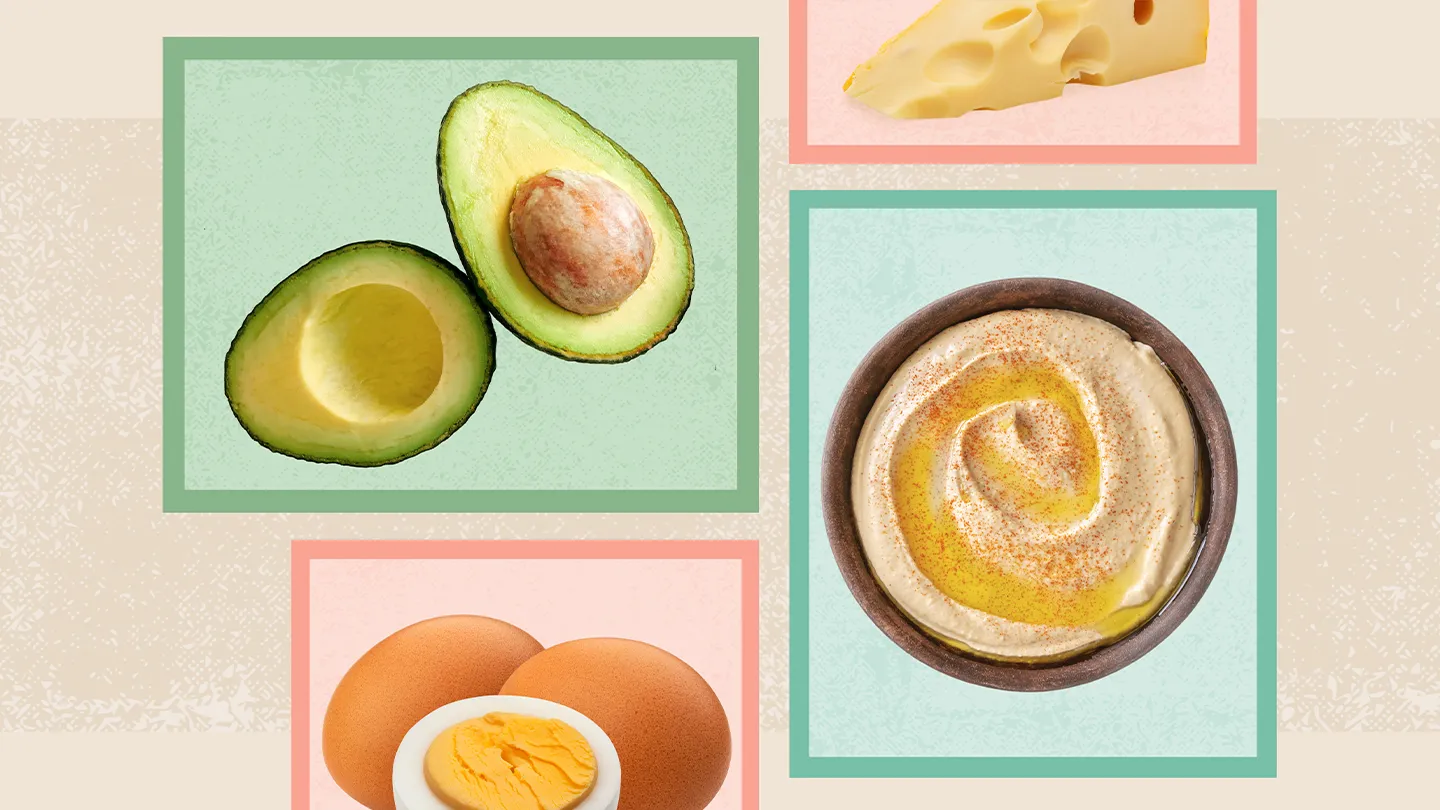
Avocado toast anyone? Avocados are a versatile food that can incorporate healthy fats into any meal. Add slices to a sandwich or salad, make a breakfast taco with chopped tomato and scrambled eggs in a corn tortilla, or enjoy avocados in guacamole. Avocados not only taste delicious; they’re jam-packed with nutrients.
“Avocados are full of healthy fats, and they’re a great source of potassium, magnesium, and easy-to-tolerate fiber,” says Webb.
3. Use Pesto or Hummus Instead of Cheese on a Burger or a Grilled Chicken Sandwich
4. Snack on Dark Chocolate
Eating dark chocolate on its own is unlikely to confer health benefits, unfortunately. It needs to be part of a healthy diet, along with other antioxidant- and flavonoid-rich foods, including brightly colored fruits and vegetables, Medlin says.
5. Swap in Greek Yogurt for Mayonnaise
For a healthier, low-fat option, Greek yogurt can replace mayonnaise in potato salads and on burgers. Try it with canned salmon and a squeeze of lemon — it’s more easily digested by people with Crohn’s than mayo, and it contains probiotics.
But traditional dairy-based yogurt contains lactose, making it a high-FODMAP food that can cause gas and bloating in people with IBS or lactose intolerance. If lactose is a concern, there are lactose-free dairy yogurts, and many plant-based yogurts also contain probiotics. Coconut yogurt in particular is low-FODMAP.
6. Add Anchovies or Sardines to Pasta, Sandwiches, or Pizza
Trying anchovies or sardines on pasta, sandwiches, or pizza is another way to increase your consumption of healthy fats. Medlin says increasing your oily fish intake is one way to consume more omega-3 fatty acids. As previously mentioned, increased omega-3 intake may lead to better health outcomes and lower levels of inflammatory markers in Crohn’s, though other studies haven’t found such benefits in people with IBD.
If you’re a firm believer that anchovies don’t belong on a pizza, consider making a tuna sandwich for lunch or grilled salmon with vegetables for dinner.
7. Drizzle More Olive Oil Than Coconut Oil Onto Your Pan
Medlin recommends extra-virgin olive oil for its many health benefits. “[It] contains lots of amazing plant powers that really help people cope with inflammation….” Olives and olive oil are great things to include in your diet, whether or not you have Crohn’s disease, she says.
If you’re deciding between oils, choose olive oil over coconut oil. “The only [oils] you really want to avoid or not have too much of are coconut oil and palm oil. Coconut oil is very high in saturated fat,” Simon says. “I wouldn’t say it’s a banned food and not to have it at all — you should have it in moderation like you would any other form of saturated fat.”
Proper nutrition is crucial for a strong immune system, and increasing the proportion of healthy fats in your diet can help you reach your nutritional goals.
Read the full article here