Many loaves of bread, like those deliciously seedy sprouted options or ones packed with sourdough, provide a bunch of beneficial ingredients that increase your daily protein intake and help feed your gut with tons of fiber.
The only problem? Since fresh bread contains fewer preservatives than the sliced Wonderwhatever-style loaves you find in the supermarket, they don’t tend to last as long — and accidentally taking a big ol’ bite of a PB&M sandwich (you know, peanut butter and mold) can happen to the best of us.
So, what happens if you eat moldy bread? And is it an emergency?
Will I Get Sick From Eating Moldy Bread?
As relieving as it may be to hear that *most* cases of ingested moldy bread won’t lead to anything serious, getting sick from moldy bread is possible, though rare.
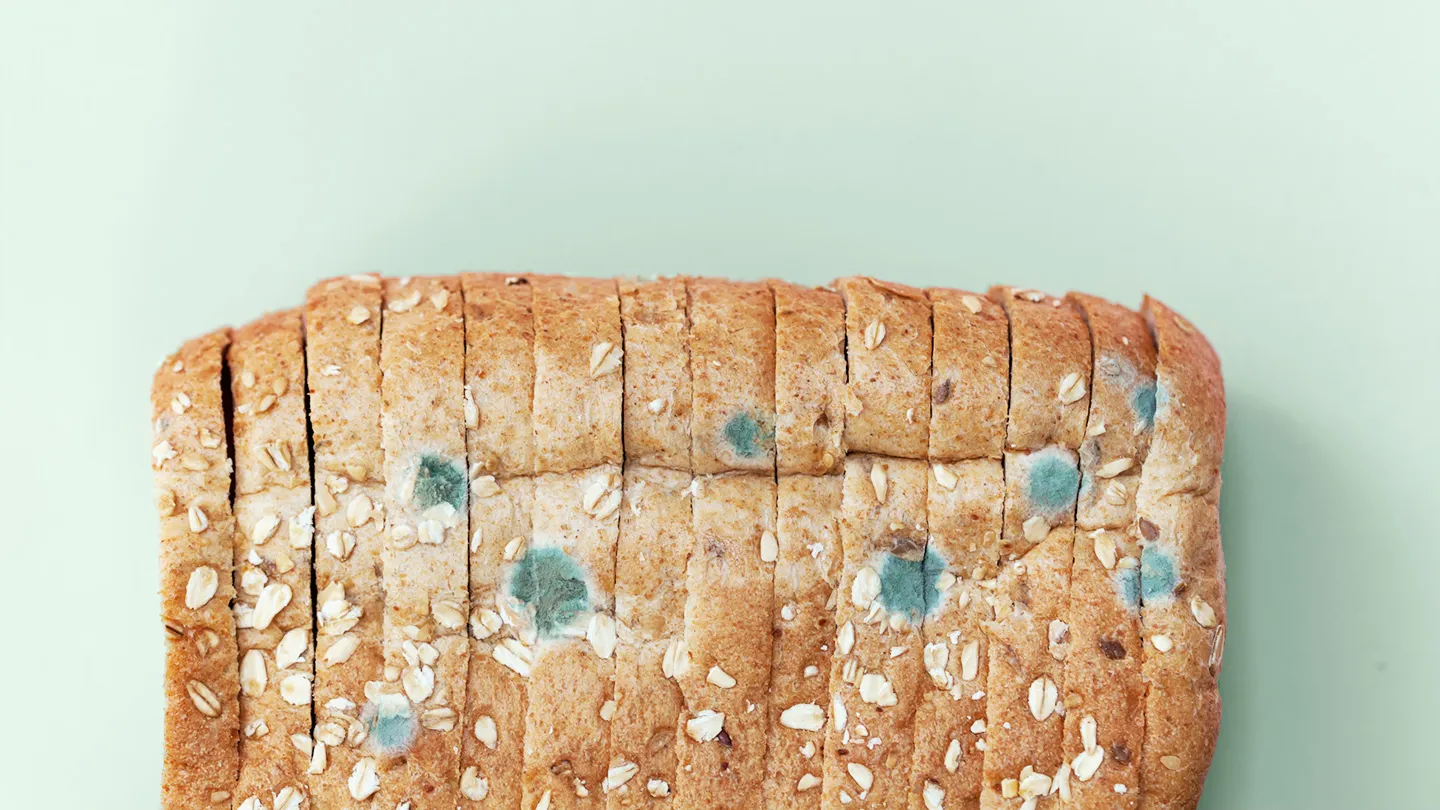
Molds are microscopic fungi that live on plant or animal matter. They’re filamentous organisms that produce spores, which gives them the color you can see, aka that lovely green-speckled pattern often visible to the naked eye.
Some people can be allergic to it. Those allergic reaction aren’t often serious, but some people with severe mold allergies have had life-threatening reactions after eating moldy food.
Aside from possible allergies, the other risk of eating mold involves poisonous substances called mycotoxins that molds make under certain conditions. These are toxic to humans and other creatures.
For the most part, if you consume a little bit of moldy bread once or twice, you’ll probably be okay. Swallowing the fuzzy green stuff isn’t likely going to do your body harm.
The most awful part about eating mold is probably realizing you ate it. And even though it might make you gag, being grossed out is typically the worst outcome.
But in larger doses, or over longer periods, mold consumption can cause health issues.
What to Do if You Accidentally Eat Moldy Bread
In all likelihood, nothing bad will happen to you if you eat moldy bread, especially if you have a healthy immune system. But you should take several precautions if you find mold on your bread after eating some.
No solution applies to all types of mold exposure, as the onset of sickness can depend on a few factors, like predisposed sensitivities or allergies to mold, the amount you ingest or inhaled, and the type of mold you eat.
Monitor for Immediate and Delayed Reactions: Recognizing Symptoms
If you eat mold, monitor for symptoms throughout the day once you’ve ingested the food, especially since you can develop a delayed reaction.
Some symptoms of eating mold can include shortness of breath, nausea, an elevated temperature, or diarrhea. If you experience any of these symptoms, it’s best to consult a medical professional to determine the best course of treatment.
Exposure to mycotoxins in larger doses can lead to gastrointestinal symptoms like vomiting and diarrhea or even liver, spleen, and kidney disease.
Don’t Sniff the Bread
Avoid taking a sniff of the moldy slice of bread to confirm whether it’s actually gone bad. Inhaling mold spores can pose health threats, especially for people with asthma.
In some instances, this could lead to respiratory illnesses, difficulty breathing, or, in rare cases, anaphylaxis — an extremely severe allergic reaction that can lead to hives, low blood pressure, fainting, and a dangerously swollen throat and airways.
Seek immediate medical attention if severe symptoms begin to develop.
Don’t Eat the Rest of the Slice
Although eating a small, accidental amount of most mold isn’t likely to cause harm, identifying which mold you’ve eaten isn’t possible for most people. Plus, if moisture on bread has led to mold growth, you’re also eating bacteria.
For that reason, it’s better to avoid risking mold exposure altogether whenever possible. This means that if part of the slice of bread has gone moldy, the rest should join it in the trash, even if it doesn’t look moldy.
How to Handle Moldy Food
So, what’s the best way to handle mold on bread or food in general? Well, it depends on the type of mold and the type of food.
Since it’s easier for mold to spread in softer foods because of the way it grows, whether that’s bread, cheese, meat, or dips, you need to throw it away ASAP. With harder foods like carrots, cabbage, bell peppers, or hard cheeses like cheddar, mold doesn’t spread as easily, so the mold is probably just in the areas you can see.
Because of that, you could cut out the yucky spots and enjoy the rest if you want to. But if you’re not sure, don’t take the chance.
If you can see mold on food, there’s a good chance it has also developed some form of bacteria by that point, which means, mycotoxin or not, you could still get sick. So, when in doubt, it’s simply better to play it safe and find another nutritious snack.
How to Store Bread so It Doesn’t Grow Mold
You can prevent mold from forming in the first place by storing your bread and keeping it fresh for longer.
“The best place to store bread is in a cool, dry place in your kitchen,” says Melissa Rifkin, RD, a registered dietitian based in Ridgefield, Connecticut. “This is where bread boxes come in handy since they only allow a small amount of air to circulate, keeping the bread from molding.”
She adds that if your counter space is limited, a cabinet will work, too. “When storing bread in a bread box, cabinet, or drawer, just make sure the location is not near a heat-producing appliance. Placing your bread on top of a fridge or next to the stovetop that produces heat is a sure way to increase mold production.”
If you want to have on-hand bread that will last longer than a couple of days, sourdough may be a good option. It has a longer shelf life than other home-baked loaves due to the chemical effects of the fermentation process.
On the other hand, Rifkin notes that another way to keep mold from sprouting on your bread as easily is to store it in the freezer.
“You can thaw individual slices of bread overnight in the fridge before you plan to use the next day,” she says. “If you’re worried about mold, waste, or storage options, go small: Cut your recipes in half and freeze whatever you’re not using to enjoy at a later date.”
If your bread is stale but hasn’t started getting moldy yet, don’t throw it out just yet.
“If your bread has become stale, you can toast it, then pulse it in a food processor to create breadcrumbs to use in recipes,” Rifkin says. She also likes using stale bread to make croutons by cutting it into cubes, tossing them with olive oil, and baking them in the oven.
These tips can help your bread last longer and prevent mold from forming as quickly, but if you do discover you’re munching on mold, don’t freak out: You’ll probably be okay.
The Takeaway
- If you accidentally eat moldy bread, keep an eye out for symptoms like nausea or shortness of breath. Consult a healthcare professional if they develop.
- Most mold exposure from food is not harmful, but people with mold allergies should be more cautious due to possible severe reactions.
- Avoid sniffing moldy bread to prevent breathing in mold spores, which can be harmful, especially for those with asthma.
- To prevent mold growth, store bread in a cool, dry place, or freeze it if you plan on using it later. Always discard bread if any part of it is moldy.
Read the full article here