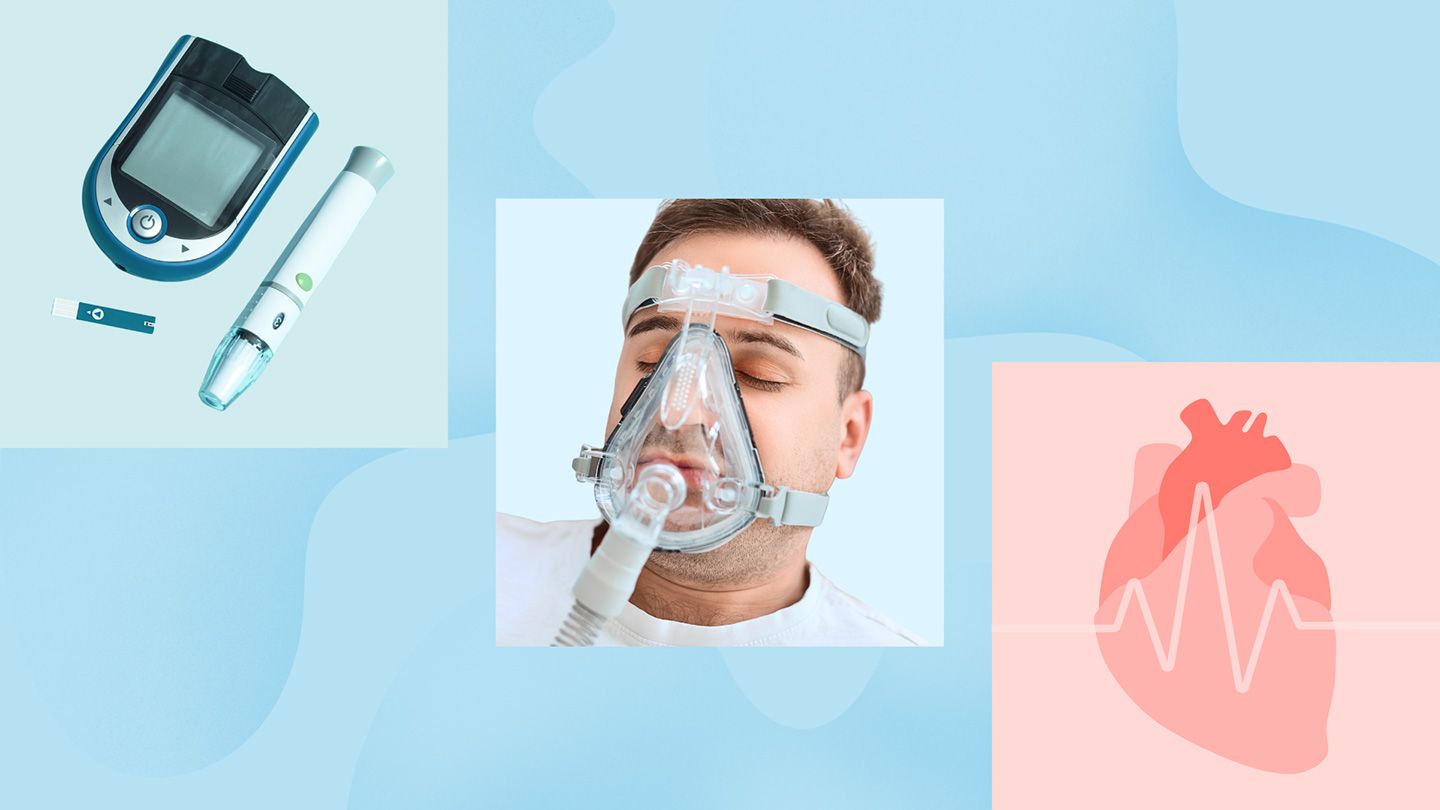
Sleep interruptions from OSA also disrupt how your body handles food and energy. This makes it harder to lose weight and easier to gain weight, Dr. Jaisinghani says, leading to a cycle with negative effects.
“Excess weight worsens airway collapse, while untreated OSA makes weight management and glycemic control significantly more difficult,” she says.
“The satiety hormone leptin falls, and the hunger hormone ghrelin rises, leading to potential hunger, cravings, and weight gain,” says Jaisinghani, adding that daytime fatigue from OSA also makes it harder to lose weight via activity and exercise.
In addition to affecting these hormones, OSA can cause dangerous changes to your blood sugar. Sleep interruptions cause your brain to release cortisol, which raises your blood sugar. Left untreated over time, this can lead to insulin resistance, in which your body struggles to process sugar properly, a root cause of type 2 diabetes.
With OSA making it harder to manage your weight and blood sugar, it also puts you at a much higher risk of developing type 2 diabetes. As many as 80 percent of people with type 2 diabetes also have OSA, and the worsening effects of one can cause complications in the other.
If you’ve been diagnosed with OSA, it may have come after a diabetes diagnosis. Doctors often recommend testing for OSA if you have diabetes or hypertension, as untreated OSA can make either condition harder to control.
OSA can increase your risk of other metabolic health conditions associated with diabetes and obesity, including:
- Liver Disease About half of people with OSA have metabolic dysfunction–associated steatotic liver disease (MASLD), formerly known as nonalcoholic fatty liver disease. Severe, untreated OSA also may lead to more severe MASLD.
- Kidney Disease Among people with early chronic kidney disease, 31 percent also have OSA. The number increases to 45 percent among people with more severe kidney disease.
Read the full article here