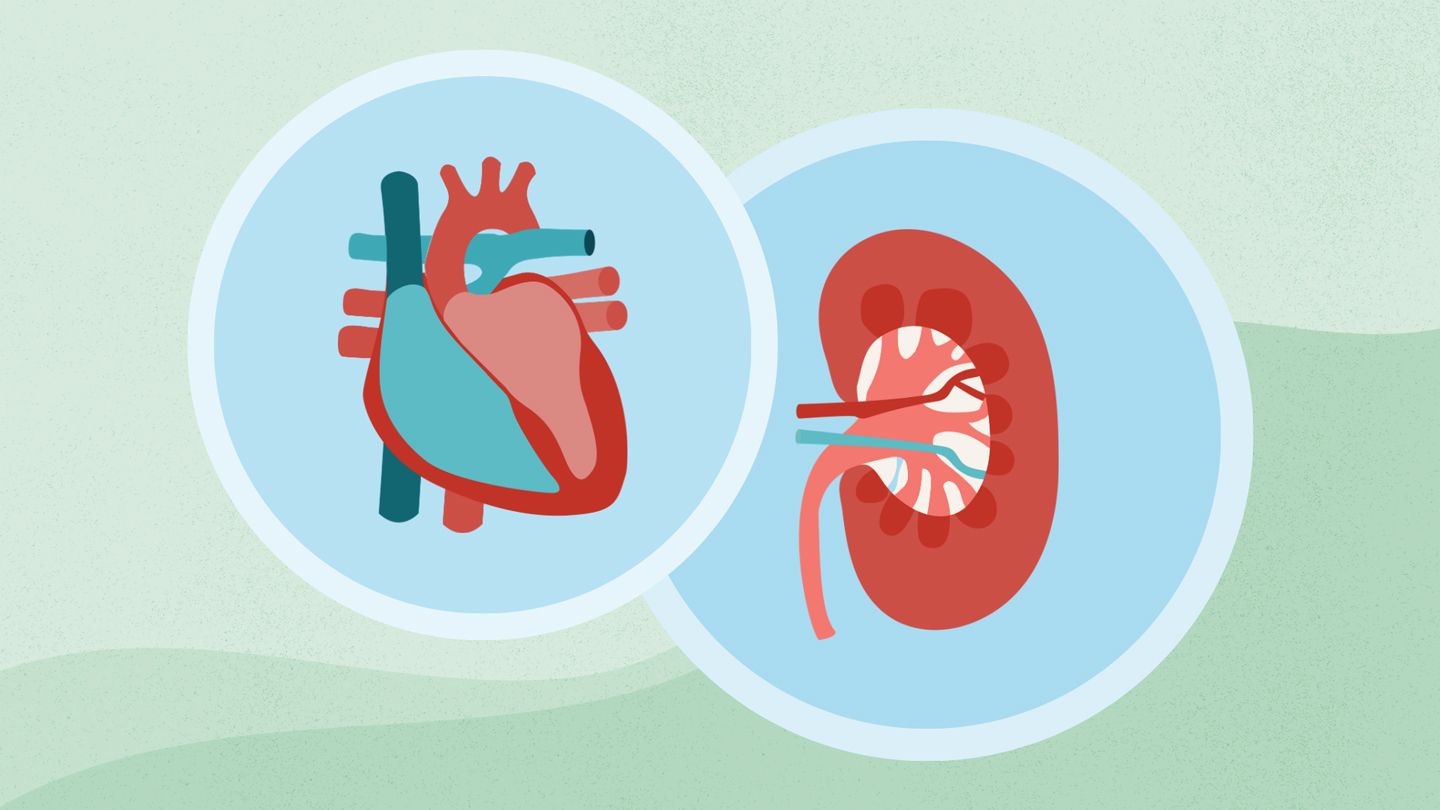
Several changes that happen in CKD can directly increase cardiovascular risk.
Fluid Overload
Healthy kidneys remove excess water from your body. When they can’t, fluid builds up in the bloodstream and tissue.
“The heart has to pump against more volume, like trying to push water through an overfilled hose,” Mehdi says. This added strain can lead to swelling, rising blood pressure, and eventually heart failure.
High Blood Pressure and Hormonal Changes
Kidneys play a central role in controlling blood pressure. When they’re damaged, blood pressure often rises and becomes harder to manage.
“When the kidneys don’t function, patients develop hypertension (high blood pressure),” Dr. Bansal says. “The kidneys regulate hormones that lead to good vascular health. When that is disrupted, the resulting hypertension causes stress on the heart.”
That stress can cause the heart muscle to thicken, a process known as remodeling, which may progress to heart failure.
High blood pressure can also damage the vessels and accelerate cholesterol plaque buildup in the arteries, called atherosclerosis, Mehdi says.
Mineral Imbalances
Kidneys maintain the right balance of minerals in your blood.
Normally, you have a specific balance of minerals in your blood that your cells need to function. When the kidneys can’t work properly to excrete waste products, they can’t maintain that equilibrium.
When the balance of calcium and phosphorus is off, the body can’t produce enough of a hormone that helps activate vitamin D, which you need to absorb calcium from your diet, Mehdi says.
“Then the active form of vitamin D drops, and that can lead to low blood calcium,” he says.
At the same time, phosphorus builds up the body, and the hormonal adjustments the body makes to restore the balance can cause significant issues, including bone disease and multiple cardiovascular complications, Mehdi says.
“Over time, these changes can cause calcium to deposit in blood vessels, making them stiff, almost like pipes,” he says.
The plaque that forms may also be distributed differently, making it harder to treat, Bansal says.
“Stiffer blood vessels increase blood pressure and raise the risk of heart attack and stroke,” she says.
Anemia
Anemia is common in people with CKD, especially in the more advanced stages of the disease. Your kidneys produce a hormone that signals the body to make red blood cells. But if your kidneys are damaged, you produce fewer red blood cells, which leads to anemia.
When anemia develops, your tissues and organs, including the heart and brain, may not get enough oxygen to work properly. Your heart must pump harder to deliver oxygen throughout the body and can get strained over time.
Read the full article here