


Hydrating throughout the day is essential for your overall health, and it’s better for the environment if you skip single-use plastic water bottles. However, reusable water bottles can get filthy in a hurry. Germs can quickly grow inside, where the liquid is stored — not to mention what finds its way from dirty hands to the outside and mouth of the container. According to a 2022 survey of 1,000 people, most people don’t wash their water bottles very frequently. A quarter of people reported cleaning their water bottle just a few times a week, and 13 percent did so only a couple times per month.e60dc2a1-f33c-4a05-9b50-8e3e8e597629afa49e4b-bab5-476f-980c-75ca2a5f0a5b That’s far less than experts recommend. Here’s how often you should be washing your water bottle and how your health may be impacted if you don’t.
Why It’s Important to Wash Your Water Bottle Why It Matters Water bottles provide a moist and enclosed environment that’s perfect for germ growth, says Yuriko Fukuta, MD, PhD , an associate professor of infectious diseases at Baylor College of Medicine in Houston. “When you think about the key components of bacterial growth, you need moisture, some form of food or nutrients, and warm temperature — all of which can be present in water bottles,” says Carl Behnke, PhD , a food safety expert and retired associate professor at the school of hospitality and tourism management at Purdue University in West Lafayette, Indiana. Dr. Behnke’s research, along with other studies, confirms that a variety of foodborne illness-causing microorganisms — like Staphylococcus aureus and E. coli — can thrive in water bottles, and a significant amount of contamination can be found both in the interior and on exterior of the bottles.e60dc2a1-f33c-4a05-9b50-8e3e8e597629eafd0ec4-47ed-4ace-9eb7-150a6a0a90a8 Some of Behnke’s research showed, for example, that people regularly refill bottles without cleaning them, particularly if the bottle design is complicated.e60dc2a1-f33c-4a05-9b50-8e3e8e597629557d3a57-5091-4e1a-8bc5-6491be99b687
How Often Experts Recommend You Wash Your Water Bottle Recommendations While there aren’t large-scale studies that offer strong recommendations around washing frequency, Dr. Fukuta recommends thoroughly cleaning your reusable water bottle after each use, although that level of frequency may not always be realistic. E. coli , for example, can double in number in as little as 20 minutes in favorable conditions.e60dc2a1-f33c-4a05-9b50-8e3e8e597629a17d33bb-a5a1-429a-a208-ae19a1d90c8f “Skipping a wash sometimes may not cause problems, but don’t make it a habit,” she says. A minimum of daily washing is preferred by Fukuta and Behnke if you fill the container with anything other than water, such as juice, coffee, tea, or a sports beverage . These liquids can leave residue (like sugar) that allow microbes to grow. The same goes for adding a slice of lemon or other fruit, which can introduce additional bacteria into the mix.e60dc2a1-f33c-4a05-9b50-8e3e8e597629819cc2cd-7dd1-4676-b667-80cdb7bd61ee
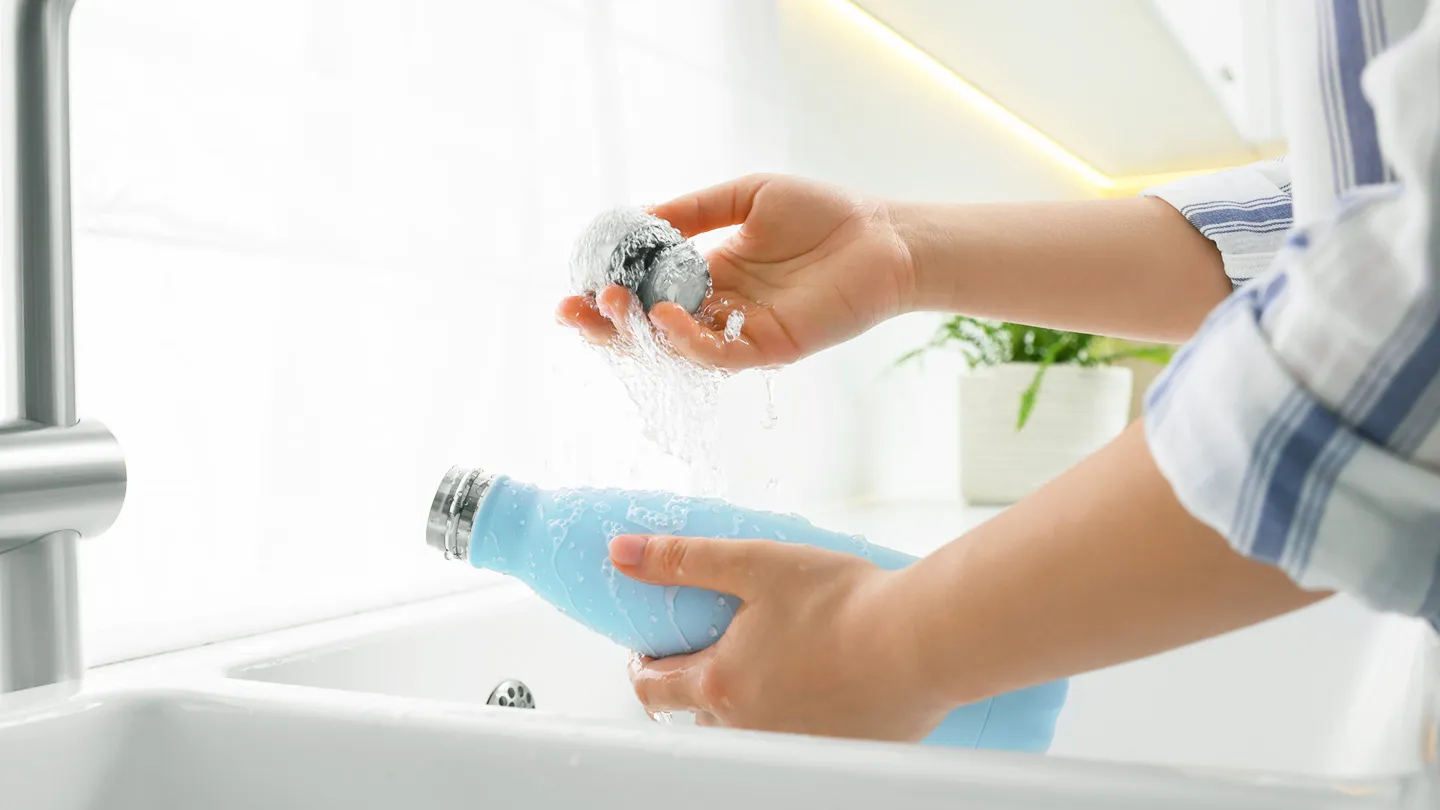
The Right Way to Wash Your Water Bottle How to Do It Right Whether by dishwasher or by hand, you should clean your water bottle in warm water and soap before allowing it to dry completely, says Fukuta. When cleaning manually, she says, “Wash your hands first, separate out all the water bottle parts, and then wash with a cleaning solution and water, using a clean brush if possible. Air-dry the water bottle, and make sure it stays dry between uses.” Putting the bottle in a dishwasher — if the bottle you use is labeled as safe for that — may help sanitize it even more effectively, since hot water cycles are effective at sanitizing, even though the water doesn’t reach a boil.e60dc2a1-f33c-4a05-9b50-8e3e8e597629b12e23e0-1fbe-4d6f-a40a-32c367226400 Behnke agrees that a dishwasher’s sanitizing cycle can be an advantage for achieving cleanliness but notes that how it’s loaded in the machine may impact the result.e60dc2a1-f33c-4a05-9b50-8e3e8e597629f5b44d6a-fd5e-4875-9ea4-fccbacbcb100 “When you think about how a dishwasher works, it is subject to the amount of detergent that’s able to shoot up into a [water bottle’s] opening, so that detergent would need to get through to the top of the bottle to actually do anything,” he says. Wide-mouthed bottles are more easily cleaned.
What Could Happen if You Don’t Wash Your Water Bottle Frequently Enough? Risks of Not Washing Failing to keep up with routine cleaning opens the door for illness, including symptoms that may resemble food poisoning.e60dc2a1-f33c-4a05-9b50-8e3e8e5976298fe5259f-eea6-409d-9255-3cad6db3dd11 Contamination may be less likely if you only use water in your water bottle, though. “Some bacteria can still multiply in water, but it is much less than in drinks with sugar,” says Fukuta. A bad taste or odor is often the signal that something is off with the liquid inside. Exposure to bacteria or mold, which grows in damp environments, can trigger different symptoms.e60dc2a1-f33c-4a05-9b50-8e3e8e59762969ea929a-2b9b-4edc-abd5-228b1b726af5 Fukata says that mild symptoms may include an upset stomach or allergylike symptoms. If the contamination is more severe, you may experience diarrhea . People with weakened immune systems could develop more serious problems like bloodstream infections.e60dc2a1-f33c-4a05-9b50-8e3e8e5976296b49d931-0746-49bb-a679-409807d54ecf If you share your water bottle with anyone else, they could be transferring their own naturally occurring bacteria from their mouth to your bottle, which can also get you sick.e60dc2a1-f33c-4a05-9b50-8e3e8e59762943b71bba-4994-4c02-978b-2ef385c05a8a This is why it’s best to keep your water bottle to yourself, Behnke says. “If you’re just putting water in the bottle and you’re the only one drinking it — the bacteria that may be growing there are the bacteria that are already in your mouth, and you probably already have a resistance to them,” he says.
How to Stretch the Time Between Washing Your Water Bottle Other Tips There’s not much wiggle room for washing delays, but if you do it less frequently, consider following these tips from Fukuta: Only fill your water bottle with clean water , rather than drinks that contain sugar. Avoid touching the mouthpiece with unwashed hands. Consider using sanitizing wipes for lids or areas near the mouthpiece. Rinse with hot water if soap is not immediately available. Keep your bottle completely dry in between washes and uses. Don’t leave bottles in cars in the summer or in warm climates. Replace bottles that are cracked, scratched, or have persistent odors. Maintain hand hygiene , as “a lot of germs often stay on our hands, and we tend to touch many places including mouthpieces unconsciously,” Fukuta says. Don’t share your water bottle with anyone else. For times when frequent washing isn’t convenient, consider having an extra bottle or two on hand so you can rotate them between loads of dishes. It’s also worth noting that the material used for your water bottle may impact how clean it can be. Fukuta prefers metal or glass bottles over plastic ones, as it’s possible for plastic to develop tiny cracks that can become a haven for germs. If you have a plastic one, select a BPA-free version and replace it regularly to help prevent this, she says.e60dc2a1-f33c-4a05-9b50-8e3e8e597629e7603fa8-4d7b-430f-81bc-927cffd4ce85 While there’s not much large-scale research available to confirm the germ load on different materials, one small pilot study found less germ buildup on stainless steel bottles than those made from the common plastic polyethylene terephthalate.e60dc2a1-f33c-4a05-9b50-8e3e8e59762987210e25-6f54-432d-afef-2348ecaf589ae60dc2a1-f33c-4a05-9b50-8e3e8e5976291295ec76-2c95-45bd-93e3-d5ee6598e5aa Water bottle design might also influence its susceptibility to accumulate germs. Behnke’s research suggests that bottles that require frequent touching of the drinking surface for opening and closing — like straws, spout lids, and nozzles — had the potential to lead to more recontamination, and bottles with smaller diameter openings could make sanitizing more challenging.e60dc2a1-f33c-4a05-9b50-8e3e8e5976294d8168f3-a762-4e02-933b-b9afa53341ee To help simplify reusable water bottle shopping , Fukuta recommends versions with larger mouthpieces, detachable components, and simple lids without complex straws.
The Takeaway Frequently washing a reusable water bottle is important for keeping germs at bay. The combination of moisture and warmth within a water bottle creates an optimal environment for pathogens like bacteria to grow, which can lead to foodborne illness. Experts generally recommend washing water bottles by hand or in a dishwasher with warm water and soap after each use or daily. In addition to sanitizing a water bottle regularly, a few habits can help prevent germ buildup, like not sharing bottles with others, avoiding touching the mouthpiece, and keeping bottles completely dry in between uses.
Read the full article here


Leave a comment
