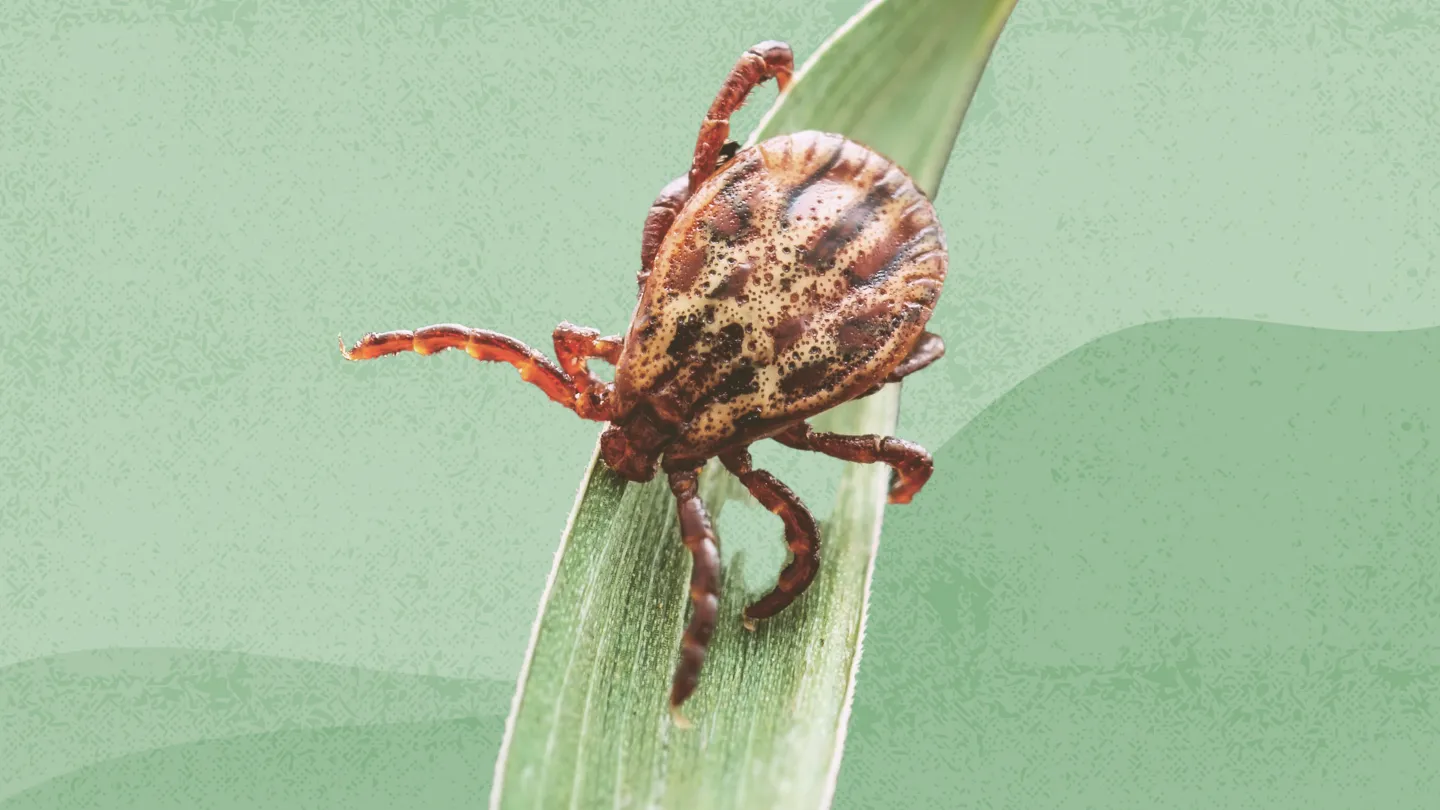
Also called black-legged ticks, deer ticks are common in woods and grassy areas across the eastern United States. Reddish-brown adults are only 1/8 of an inch long. Immature ticks about the size of a poppy seed can also bite.
Lyme Disease
Deer ticks infected with the bacteria Borrelia burgdorferi can cause Lyme disease in people, dogs, and cats. Lyme disease is found in certain parts of the United States, typically the Northeast, mid-Atlantic, and upper Midwest.
You might not notice the tick or its bite. But if you do, removing the tick within 48 hours can help limit your chances of contracting Lyme. The first symptom is often a bull’s-eye rash. The rash may appear within one to two weeks, but not everyone gets or notices the rash, in part because it doesn’t itch or may not be obvious in people with darker skin tones. Other signs include flu-like symptoms such as fever, chills, headaches, aches, and swollen lymph nodes.
Anaplasmosis, Ehrlichiosis, Babesiosis, and Powassan Virus
Babesia, the parasite that causes babesiosis, invades red blood cells and destroys them. Babesiosis is relatively rare compared with Lyme disease, but doctors are diagnosing it more often than in years past as awareness of the disease increases and climate change drives up case counts.
Cases of babesiosis are typically concentrated on the East Coast, but it has also been reported in certain states in the Midwest and West. Babesiosis can be mild, and many people don’t experience symptoms. When symptoms do occur, they can be flu-like and include a low-grade fever, fatigue, and body aches. The disease can be dangerous for immunocompromised people, older adults, and individuals who do not have a spleen, an organ that filters blood. In some cases, black-legged ticks can infect people with babesiosis and Lyme at the same time.
Like babesiosis, Powassan virus disease can have mild symptoms or cause none at all. As of August 2026, the virus was most commonly reported in the Northeast, with a few cases reported by residents of Wisconsin and Minnesota.
Symptoms include fever, headache, vomiting, and weakness. In rare cases of severe disease, the virus can infect the brain, causing encephalitis. There is no medication for treatment, but the disease usually goes away on its own with rest and over-the-counter pain relievers.
Read the full article here