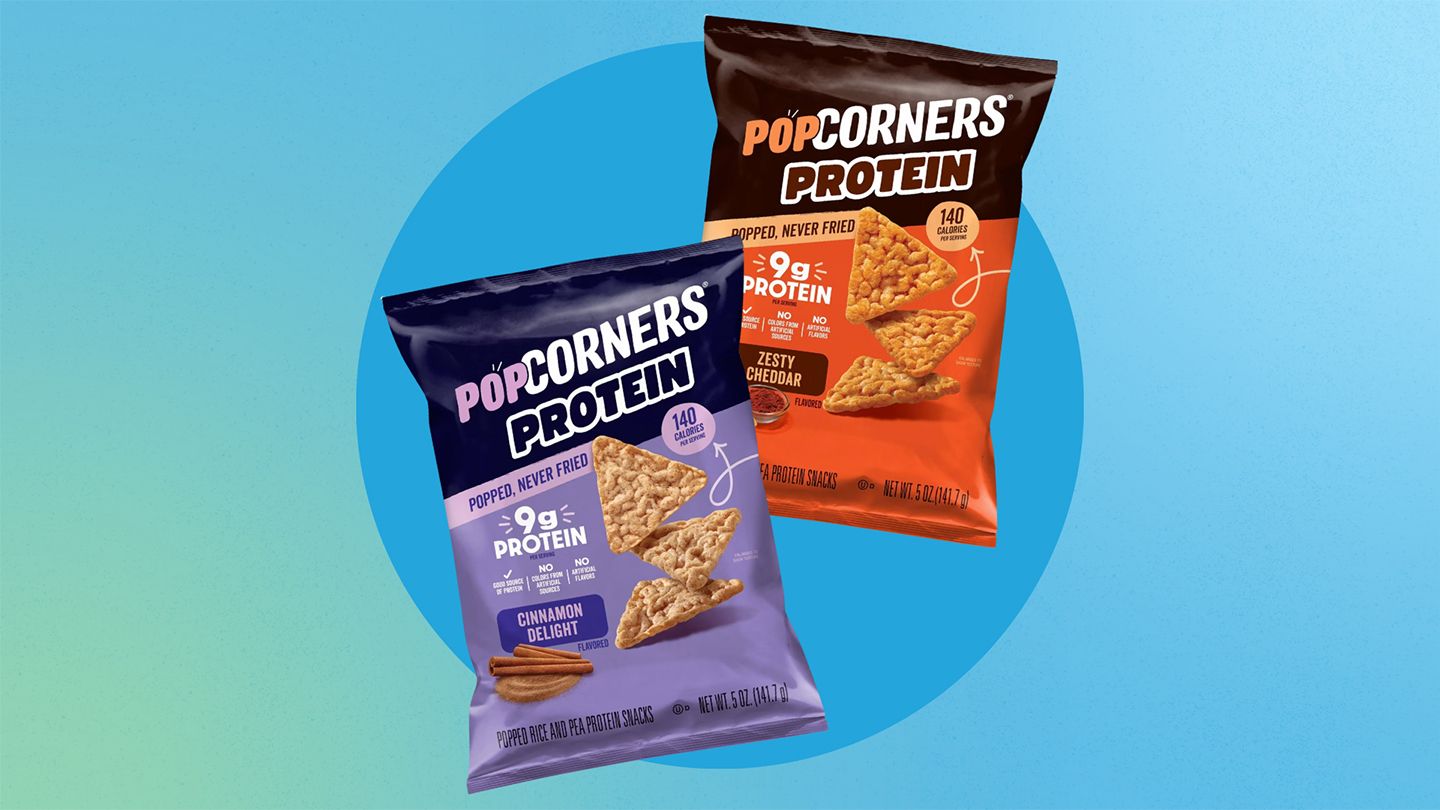
Unlike the original product, PopCorners Protein Crisps are made with rice flour instead of corn. Corn is actually slightly higher in protein than rice, but both products are nutritionally very similar aside from protein content, Zenker says.
Protein
Protein is one of the three essential macronutrients, and most people in the United States already meet their daily protein needs without adding fortified snacks.
The bulk of the added protein in PopCorners Protein Crisps comes from pea protein isolate and rice protein isolate. These are plant-based protein sources, which makes them a good option for people trying to limit their animal protein intake, says Zenker. But all versions of PopCorners Protein Crisps contain some dairy ingredients, so they’re not vegan.
“Most Americans are getting a lot of protein from animal sources, so it’s good to start getting more of the plant-based proteins when possible,” Zenker says. “They [pea protein isolate and rice protein isolate] have all nine essential amino acids in different amounts, so having both of them together is really complementary.”
Seed Oils
These protein crisps also contain seed oils, like canola, safflower, and sunflower. Despite some claims that seed oils are “toxic,” research shows they’re associated with better cardiovascular health and child development.
“The evidence is not supportive that they’re inherently harmful. The concern with seed oils is more to do with the types of foods that they’re used in. A lot of ultra-processed foods use seed oils, and seed oils are a fat. Fats are higher in calories, and too many calories can contribute to weight gain and increase the risk for metabolic conditions,” Zenker says.
Processed Ingredients
The original and protein versions of PopCorners contain processed ingredients, Zenker says, and the NOVA classification system classifies them as an ultra-processed food. That means they’re best enjoyed in moderation.
In general, research links diets high in ultra-processed foods to an array of negative health outcomes, while cutting back is associated with better health.
“This product isn’t especially dense in vitamins, minerals, or fiber,” Zenker says. “They can be part of a diet that’s also high in nutrient-dense whole foods, but they don’t contribute particularly meaningful nutrients on their own other than the protein.”
Read the full article here