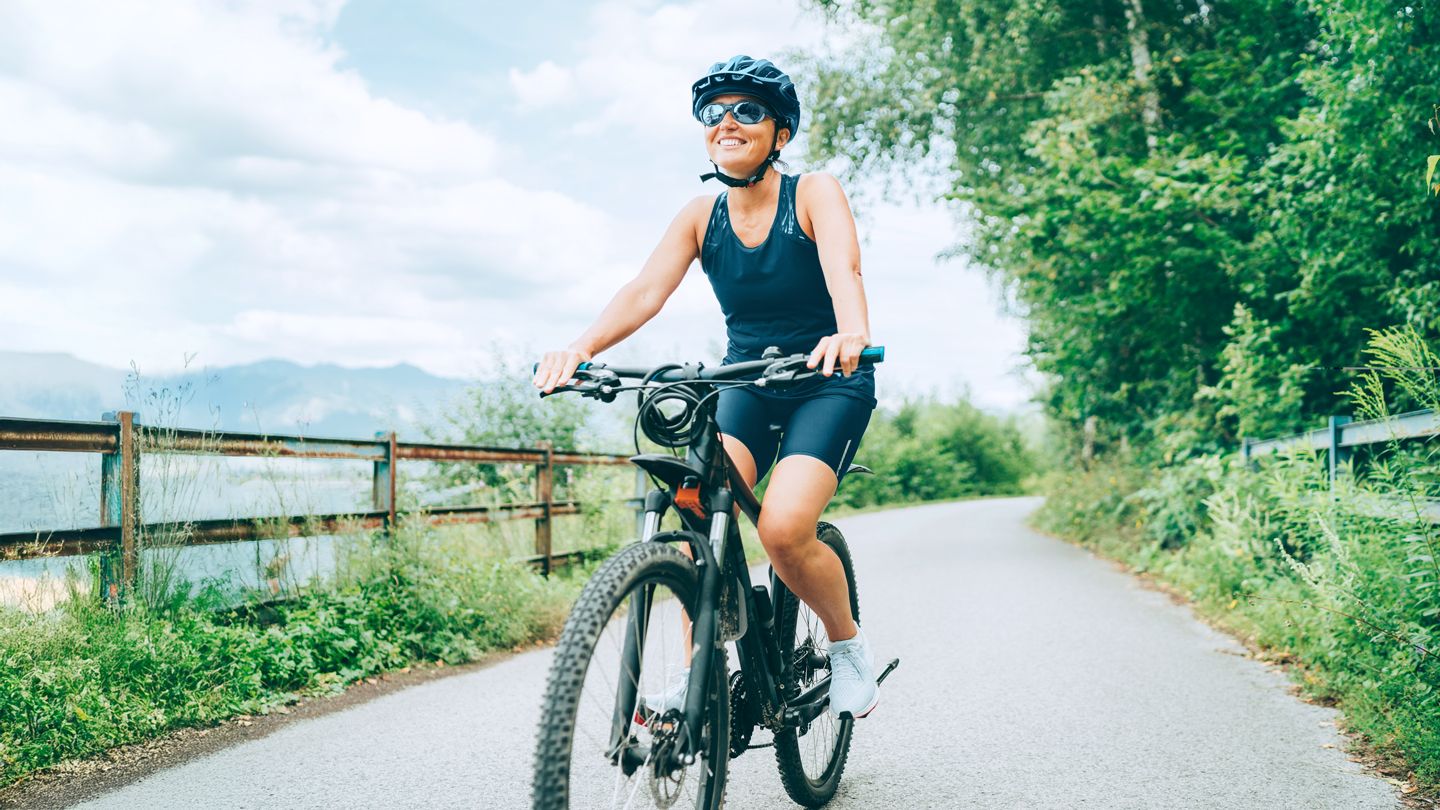
All About Gear and Equipment
If you want to start cycling regularly, you will need to invest in some basic gear.
Choose a Bike
If you don’t have a bike already and you’re a beginner, you can be a cheapskate, says Mike Clucas, a former professional cyclist based in Victoria, Australia, who founded FulGaz, an indoor cycling app.
Whether you’re looking at new bikes or used ones, he recommends choosing a bicycle on the basis of where you plan to ride: If you’ll cycle only on gravel roads, you might want a mountain bike, which has more shock absorption and thicker tires for taking on rough terrain. If you plan on sticking to paved surfaces, road bikes have thinner tires, lighter frames, and handlebars that curl downward (making them more aerodynamic). Hybrid bikes have some elements of each.
If you’re a beginner, though, even that old bike in your garage could be the perfect starting point. (Just take it to the cycle shop for a tune-up first.)
“You can get fitter on a cheap, slow bike than you can on a high-end model when you’re starting out, because it takes more effort to pedal,” Clucas says.
Plus, it will force you to focus on the basics of riding instead of trying to figure out numerous gears and strategies. Learn the motion of cycling first, and then you can level up, he says.
In terms of bike fit, the easiest measurement to use is called the standover height — when you straddle the frame of the bike with both feet flat on the ground. Too much clearance between you and the frame means the bike is too short for you, and you’ll end up struggling with proper leg extension when you pedal; with too little clearance, you risk locking out your knee.
With a road bike, you should have about 1 or 2 inches of clearance, while a mountain bike needs at least 2 inches of clearance, Clucas says.
Your best bet for making sure your bike is the right fit for you is to visit a bike shop. In many cases, the shop can help you adjust a bike by changing the seat height or handlebars, as well as make sure gears, brakes, and tires are working properly, Clucas says.
Once you have the right bike fit, make sure you ride with good form: Keep your shoulders back, your elbows slightly bent, and your chin down with your neck long.
Choose a Helmet
If you have an old helmet in the garage that’s been collecting dust, consider upgrading, says Seacat, because helmet technology has come a long way in the past 10 years.
His suggestion is to get a helmet classified as a multidirectional impact protection system (MIPS). It has a thin layer of material inside that’s anchored to the helmet frame, allowing the helmet to rotate independently from the head and better absorb the impact of a potential collision.
“Buy one at a bike shop and ask for help in fitting it to your head,” says Seacat.
The helmet should fit snugly on your head, and you shouldn’t be able to put more than one or two fingers between your chin and the strap. Once secured, the helmet should rock no more than 1 inch in any direction on your head.
Decide What to Wear
Check the weather before you head out, especially if you anticipate big swings in temperature, humidity, windchill, or precipitation.
Dress in layers, Seacat says, especially in clothes that are moisture wicking, which can draw the sweat away from your body so you don’t get cold while you ride. This is a major concern if you’re going for longer distances or it’s windy, which can make you feel more chilled.
For longer rides — or even short jaunts, if you’re unused to cycling — wearing padded bike shorts or bibs (which are a shorts version of tight-fitting overalls) can be a groin saver, Seacat says.
They take pressure off your points of contact with the seat and work as shock absorbers, so you’re not bouncing on the bike as much while you ride. One tip: Don’t wear underwear with them. They’re designed to be worn without undergarments, and an extra layer can increase your chances of chafing.
Keep in mind, though, that it’s perfectly fine to skip fancy gear like bike shorts if they’re not in your budget or you find them uncomfortable.
When it comes to footwear, choose a comfortable pair of athletic shoes.
Beginners should skip clip-in style bike shoes, which may give you more riding power but require pedals that specifically fit them, Seacat says. And because you have to unclip the shoes from the pedals before putting your feet down, they can be an unsafe choice of footwear for less experienced riders.
Read the full article here