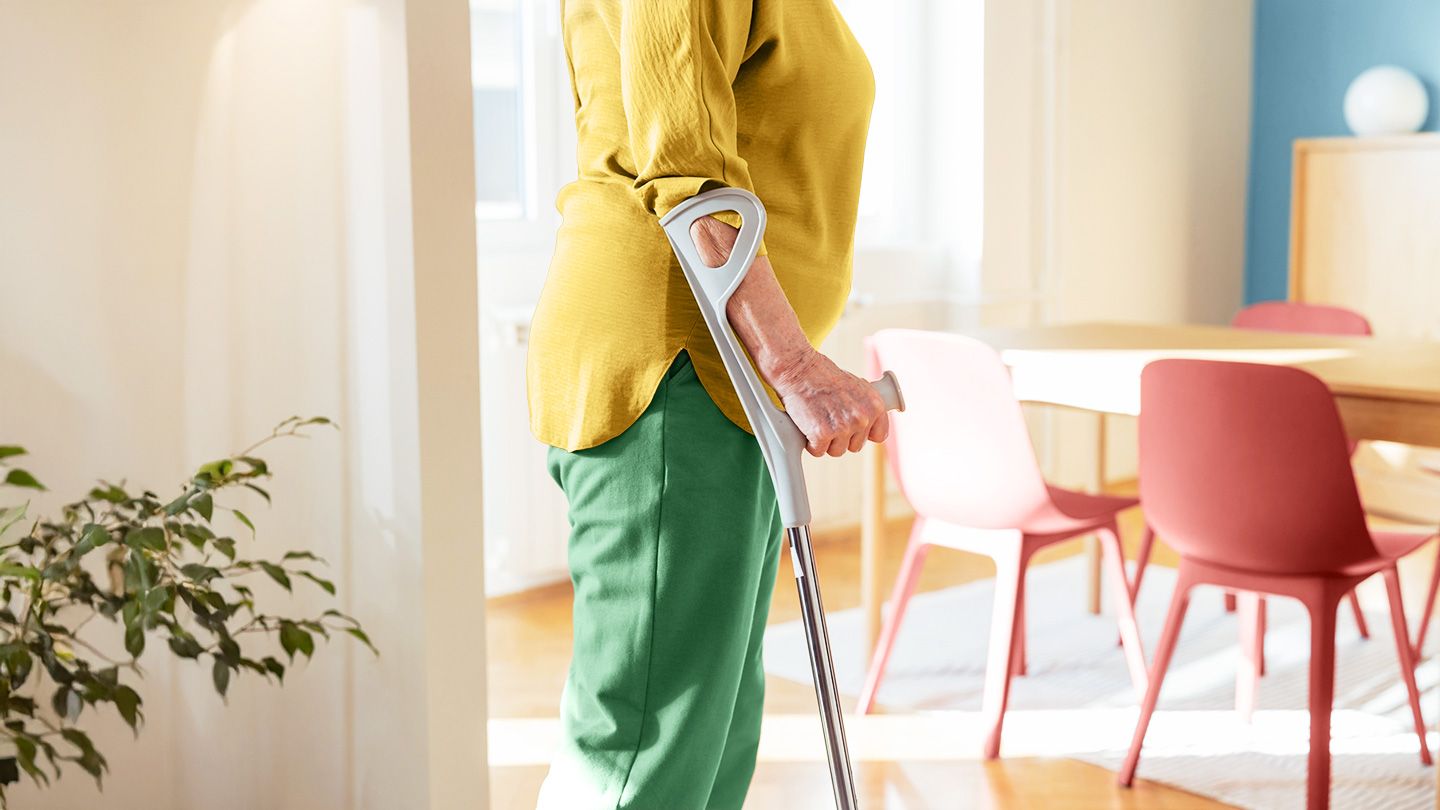
Most falls occur indoors — so your first goal is to identify some fall risks around your home and reduce the dangers with thoughtful prevention strategies. “Simple changes can make daily movement safer and help avoid injuries,” says Dr. Singer.
The Living Room
You probably walk through the living room quite a bit, so you should try to remove any clutter from the floor, as well as tripping hazards such as throw rugs and electrical cords, says James Pang, DPT, of Pang Physical Therapy in San Diego.
Other suggestions include:
- Keep paths wide and free of clutter so you have plenty of space to walk.
- Keep electrical cords near walls or behind furniture and away from walking paths.
- Space out your furniture so you don’t need to maneuver through tight spaces.
- Make sure your sofas and chairs are at a comfortable height for you to easily sit down and stand up.
- Use enough lighting so you can easily see the floor, day or night, when walking. Replace burned-out light bulbs right away and install a light switch at the entrance of the room if you don’t have one.
- Keep items you use often at waist level or within easy reach.
- Remove all loose carpets and area rugs or make sure they are secured to the floor with skid-proof backing.
The Kitchen
Between slippery floors, cluttered countertops, and high cabinets, the kitchen is another risky area for a fall. To stay safe, consider the following tips.
- Keep frequently used items within reach (usually waist-level) to avoid overreaching or the need to use a step stool, says Singer. If you do use a step stool, make sure it is sturdy and has a handrail on top.
- Wipe up spills from the floor as soon as possible.
- Keep countertops relatively clutter-free, with only the most commonly used items easily accessible.
- Remove the floor mats or use one with nonskid backing.
- Avoid using floor waxes or high-gloss polishes, which can make the floor very slippery.
- Use a “reach stick” — a special grabbing tool you can buy at a hardware or medical-supply store — to reach objects that are just out of reach.
The Bedroom
- Arrange bedroom furniture so there are clear, wide pathways, especially between the bed and bathroom.
- Keep clutter off the floor and power cords against the wall, and give yourself space to walk.
- Keep essential items, such as your phone or glasses, within easy reach.
- Use night lights and install light switches close to your bed.
- Keep a flashlight on your nightstand in case the power goes out and you need to get up.
- Set up your bed at a comfortable height, so it is easy for you to get in and out.
- Avoid throw rugs or small area carpets, or use ones with nonskid backing.
The Bathroom
The bathroom is another common place for falls, in part because the floors can be slippery from water spills and slick, tiled surfaces. (The precarious job of climbing in and out of the bathtub or shower doesn’t help, either.)
Still, there are ways to make the bathroom safer.
- Use anti-slip surfaces in the shower, says Dr. Pang.
- Place nonskid mats by the tub, shower, and sink.
- Use a grab bar in the bathtub or shower, says Pang.
- Leave a light on in the bathroom at night or use a night light.
- Clear clutter out of the main pathway (keep the wastebasket under the sink or against a wall).
- Use a shower chair if you feel unsteady on your feet while in the shower.
- Consider getting a raised toilet seat, which makes it easier to sit down and stand up. You can also purchase one with armrests for extra support and stability.
- If you have to step over a tub wall to get in and out of the shower or bath, consider replacing it with a walk-in shower. If you want to keep the bathtub, use one with a lower wall and add built-in seating.
Stairways
Stairs account for a significant number of falls, with one study finding that, on average, about one million people are treated in the ER for stair-related injuries each year.
Consider these safety measures when using a staircase, both indoors and outdoors.
- Make sure there are secure handrails on both sides of the staircase and always hold the handrail when going up or down.
- Don’t carry anything large enough to block your view of the stairs or heavy enough to make you lose your balance.
- Have light switches at the top and bottom of stairs, in entryways, and on each end of a long hallway. Make sure the lighting is bright enough to light up the area, and change burned-out bulbs right away.
- Clear the clutter from the stairs and in the entryway. If you remove your shoes when entering your home, keep them clear of the door or stored in a shoe rack (shoes are easy to trip over).
- If the stairs are carpeted, make sure the carpet is firmly secured to the floor. For hardwood or tiled stairs, use no-slip strips to add traction.
- Keep the stairs in good shape by immediately repairing loose carpeting, broken steps, or wobbly handrails. The same goes for the stairs leading up to your front door.
- Make sure the outside entryway into your house is well lit so you can see where you are walking.
Read the full article here