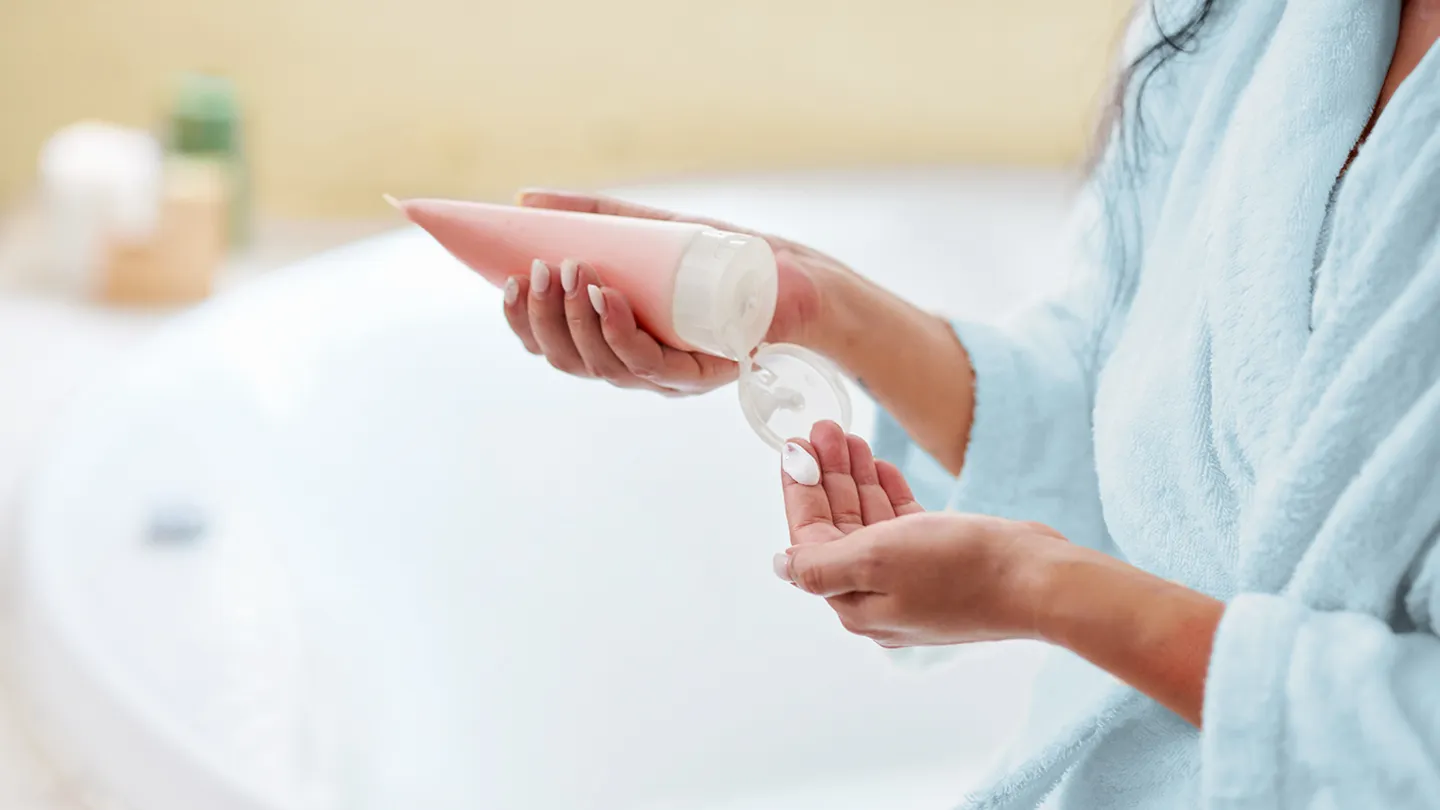
Adding a systemic treatment can help, but you can also speed up your mornings by making some shifts in your skin-care routine.
Shorten the Soak
Although it’s a common recommendation to take a lengthy soak in the tub — as much as 20 minutes — to add moisture to your skin, that’s often not necessary, says Dr. Evans.
“Quick cleansing plus immediate moisturizing after bathing can be effective, and more realistic for busy families,” she says. “Also, research finds no significant difference between applying topical steroids to wet versus dry skin, which means prolonged soaking may not also provide extra benefits.”
Switch to a Night Routine
When you do your AD skin treatment is less important than whether you do it, says Dr. Gordon. Switching to a nightly routine may be easier than trying to do it in the morning, and it might even be more effective. For example, she says sleeping with wet wraps can be helpful, and worth trying to see if it improves skin health.
“Evening routines allow more time for bathing, moisturizing, and targeted treatments without the pressure of getting out the door,” Bowles says. “Overnight, the skin has more time to absorb products and recover. This approach can significantly reduce morning stress, particularly for parents managing a child’s eczema.”
Use Breathable Fabrics
“Typically, breathable fabrics are best because they reduce daytime skin issues,” Gordon notes. “Silk is one of the best fabrics because it is natural, hypoallergenic, and reduces friction on the skin that can cause irritation and trigger itch.”
Cotton and bamboo are other good choices, Bowles adds. “Seamless clothing and tag-free options can also make a noticeable difference, especially for children or individuals with sensitive skin,” she says.
Recognizing when your AD routine isn’t working and making changes can do more than save time on busy mornings — it could boost your emotional health as well.
“Atopic dermatitis is strongly associated with psychological effects, with higher risk of anxiety and depression,” says Evans. “Improving your morning routine can help you feel a greater sense of control that lowers stress and that, in turn, can help manage symptoms more effectively.”
Read the full article here