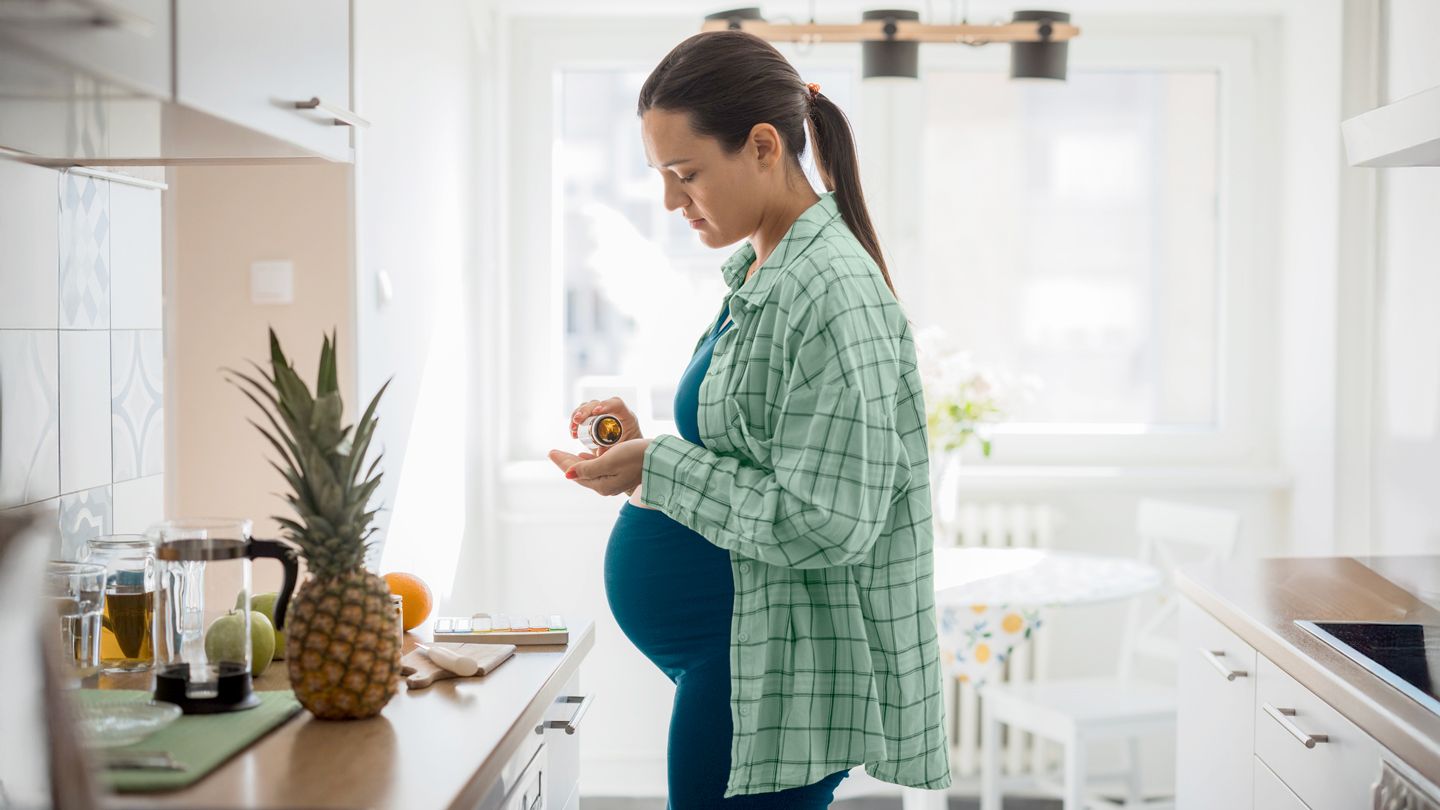
It’s important to get enough nutrients when you’re pregnant to help support you and your baby’s health. Take fiber, for instance — this essential nutrient helps promote good digestion. But can you take fiber supplements during pregnancy?
In general, you should always talk to your doctor before trying any type of supplement while you’re pregnant, whether it’s a fiber pill, digestive enzyme, or something else entirely.
That’s because the U.S. Food and Drug Administration doesn’t require these products to be proven safe or effective before they’re sold, so there’s no guarantee that any supplement you take is safe, contains the ingredients it says it does, or produces the effects it claims.
So if you’re considering taking a fiber supplement (like Benefiber) while pregnant, here’s everything you need to know, including whether it’s safe and the best types of products to buy.
Can You Take Fiber Supplements While Pregnant?
Remember, it’s crucial to talk to your doctor before trying a fiber supplement during pregnancy (or any supplement, for that matter). And when it comes to adding fiber to your diet, take it slow: Eating too much fiber too quickly can lead to gas, bloating, and cramping, according to Mayo Clinic. Instead, slowly increase your intake to give your body time to adjust.
That said, there are some instances when taking certain types of fiber supplements during pregnancy can help. The high progesterone levels that come with pregnancy, for instance, can slow down your digestion and cause issues like constipation, according to the University of Rochester Medical Center.
Constipation is also a common side effect of iron supplementation (a mineral that’s often included in prenatal vitamins), according to the American Pregnancy Association (APA).
Fortunately, fiber can help ease constipation, according to Mayo Clinic. However, before you turn to pregnancy fiber supplements, it’s best to get the nutrient through your food. The 2020-2025 Dietary Guidelines for Americans say pregnant people should aim to eat 25 to 36 grams of fiber every day.
Good sources of fiber include:
- Fruit, namely prunes
- Vegetables
- Legumes like lentils, peas, and beans
- Whole grains like spelt, buckwheat, and oatmeal
- Flaxseed
If you’re eating a diet rich in fiber (and taking other measures to reduce constipation, like drinking plenty of water and exercising regularly) and are still dealing with digestive issues like constipation, then it’s time to talk to your doctor about whether you can take fiber supplements or gummies while pregnant, according to the APA.
They may recommend an over-the-counter (OTC) product to help normalize your bowel movements (more on that in a moment).
The APA advises against taking laxative pills or supplements to relieve constipation while pregnant. These can cause dehydration and may trigger uterine contractions.
Dehydration can also be a factor if you’re experiencing constipation during pregnancy. Increasing fluid intake can help, especially when you add fiber to your diet as well.
Can You Take Benefiber While Pregnant?
Benefiber is a common OTC supplement that’s packed with soluble fiber. This type of fiber slows digestion, which can help lower cholesterol and glucose levels, according to Mayo Clinic. But is Benefiber safe during pregnancy?
While OTC fiber supplements can be a helpful tool to ease constipation, taking Benefiber during pregnancy may not be the best option.
Because the product contains soluble fiber, it won’t speed your already slow pregnancy digestion. Instead, it ferments in your gastrointestinal tract and may cause symptoms like bloating and gas, according to Mayo Clinic. Insoluble fiber supplements are typically a better option for constipation relief, because they can help bulk up your stool and make it easier to pass.
So while Benefiber is technically safe in pregnancy, it may not have the effect you’re looking for. Your best bet is to talk to your doctor about whether Benefiber is okay to take when you’re pregnant, and ask for their recommendations about better supplements to try instead.
It should be noted, though, that individual tolerance matters. Some may see better results with psyllium (mixed soluble and insoluble). Psyllium husk is a common ingredient in OTC products, like Metamucil, that your doctor may recommend. This naturally occurring fiber from the Plantago ovata plant contains both soluble and insoluble fiber.
Can You Take Benefiber While Breastfeeding?
If you’re experiencing constipation while breastfeeding, first try to get enough fiber through your diet alone, according to Mayo Clinic. Also make sure you’re drinking plenty of fluids. Fluid is necessary to relieve constipation, especially when breastfeeding, since fluid needs go up.
But if the constipation persists, talk to your doctor about whether you may benefit from a supplement like Benefiber, and if so, what product and dosage are best for you.
Fiber and fiber supplements don’t pass into breast milk. But it’s still a good idea to check with your doctor before trying any supplement while breastfeeding, fiber or otherwise.
Best Fiber Supplements for Pregnancy
The best way to get your fiber — pregnant or not — is through whole foods, according to Mayo Clinic.
But if you’re eating enough fiber and getting adequate fluids, but still experiencing constipation or other digestive issues, some fiber supplements are better than others.
Safe and commonly recommended options in pregnancy include psyllium husk and methylcellulose (Citrucel). These bulk-forming agents are supported with guidance as safe during pregnancy when taken with adequate fluids.
Psyllium has been shown to relieve constipation and is generally considered a pregnancy-safe fiber supplement when taken in proper doses, according to the American Gastroenterological Association.
Read the full article here