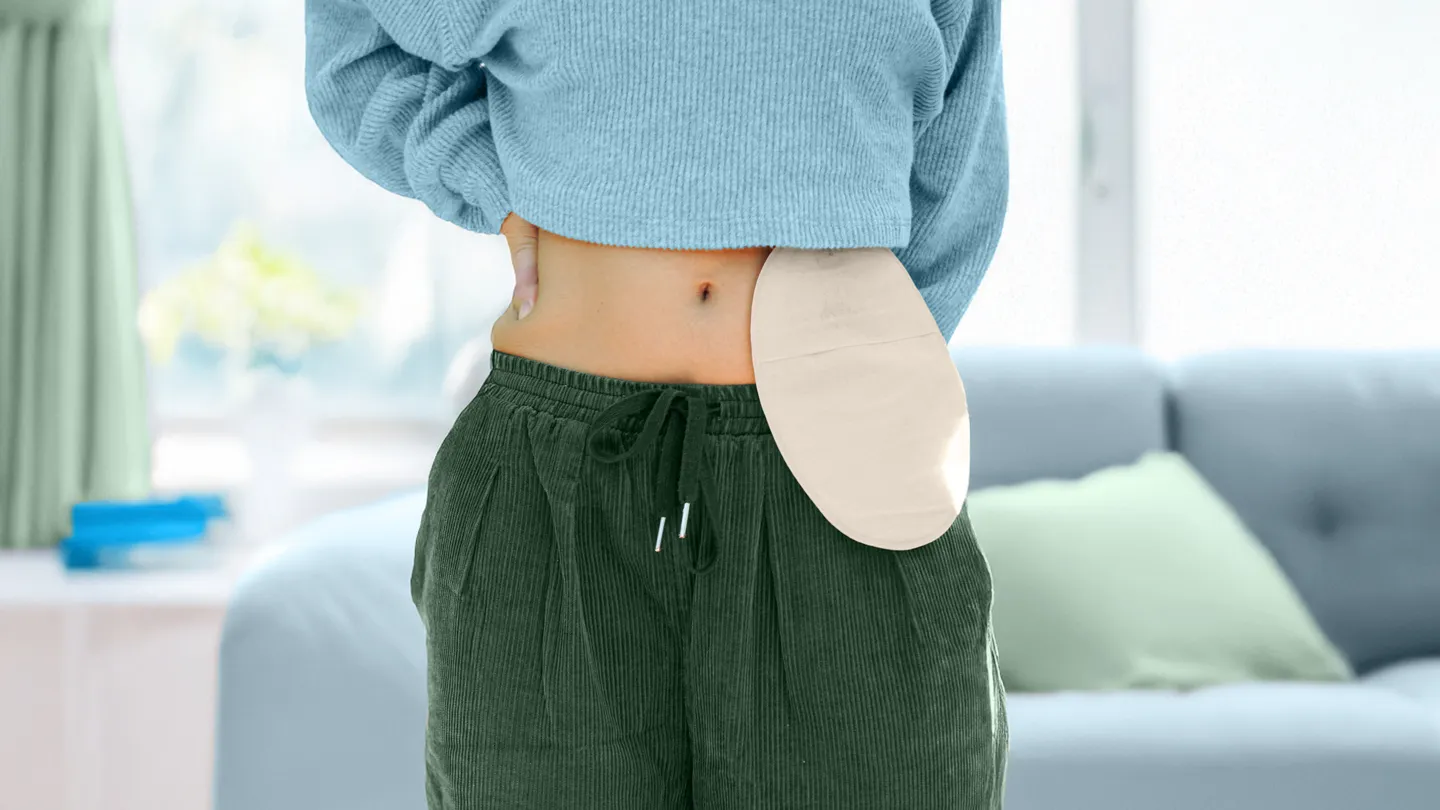
While both procedures involve removal of the colon (and often the rectum), they differ based on how waste is handled after surgery. With a J-pouch, an internal reservoir is created to mimic natural bowel function, while an end ileostomy utilizes an ostomy bag that’s worn externally and has to be manually emptied.
“The type of surgery performed will depend on several factors, including the presence of [co-occurring conditions], patient age, and other[s],” says Dr. Lukin. “[It] should be determined using a shared decision-making approach.”
End Ileostomy
An end ileostomy is most commonly performed on older adults, those with co-occurring health conditions, and those preferring to avoid J-pouch surgery due to the potential risk of inflammatory disorders following surgery, Lukin says. In this procedure, the entire colon (large intestine) is removed — usually along with the rectum — and the outcome is considered a surgical cure for UC, Lukin says. Those who have an ileostomy will need to learn to manage the external pouch used to collect waste.
“The major issues will revolve around learning how to place and change the ileostomy appliance, manage ileostomy output, and care for skin around the pouch site,” he says. “In most cases, this surgery results in an excellent quality of life, and inflammatory complications are rare.”
J-Pouch Surgery
J-pouch surgery is typically done via two or three separate procedures. During the process, the colon and rectum are removed, and the tissue of the ileum (the end of the small intestine) is used to create the pouch. Then the pouch is connected to the anus.
While the steps can sometimes be done in a single surgery, multistage procedures have been shown to have more favorable outcomes, says Lukin.
“For patients undergoing [J-]pouch surgery, this results in the ability to defecate [through the anus],” he says. One of the colon’s main functions is to absorb water from waste, which solidifies fecal matter, slowing its transit down. This means bowel movements post-colon removal will be more frequent and range from liquid to solid, Lukin says.
“The typical output for [J-]pouch patients ranges from 4 to 10 [bowel] movements per day,” he says.
In the months just after the procedure, there is an adjustment to return to normal bowel function, and the frequency and consistency often improves during this time, Lukin says.
“In terms of outcome, usually [J-]pouch function is excellent, but depending on [bowel movements’] frequency, consistency, and level of urgency, this may take some adjustment, or may require the use of antidiarrheal medications, fiber supplements, or other medications to decrease output,” he says.
Read the full article here