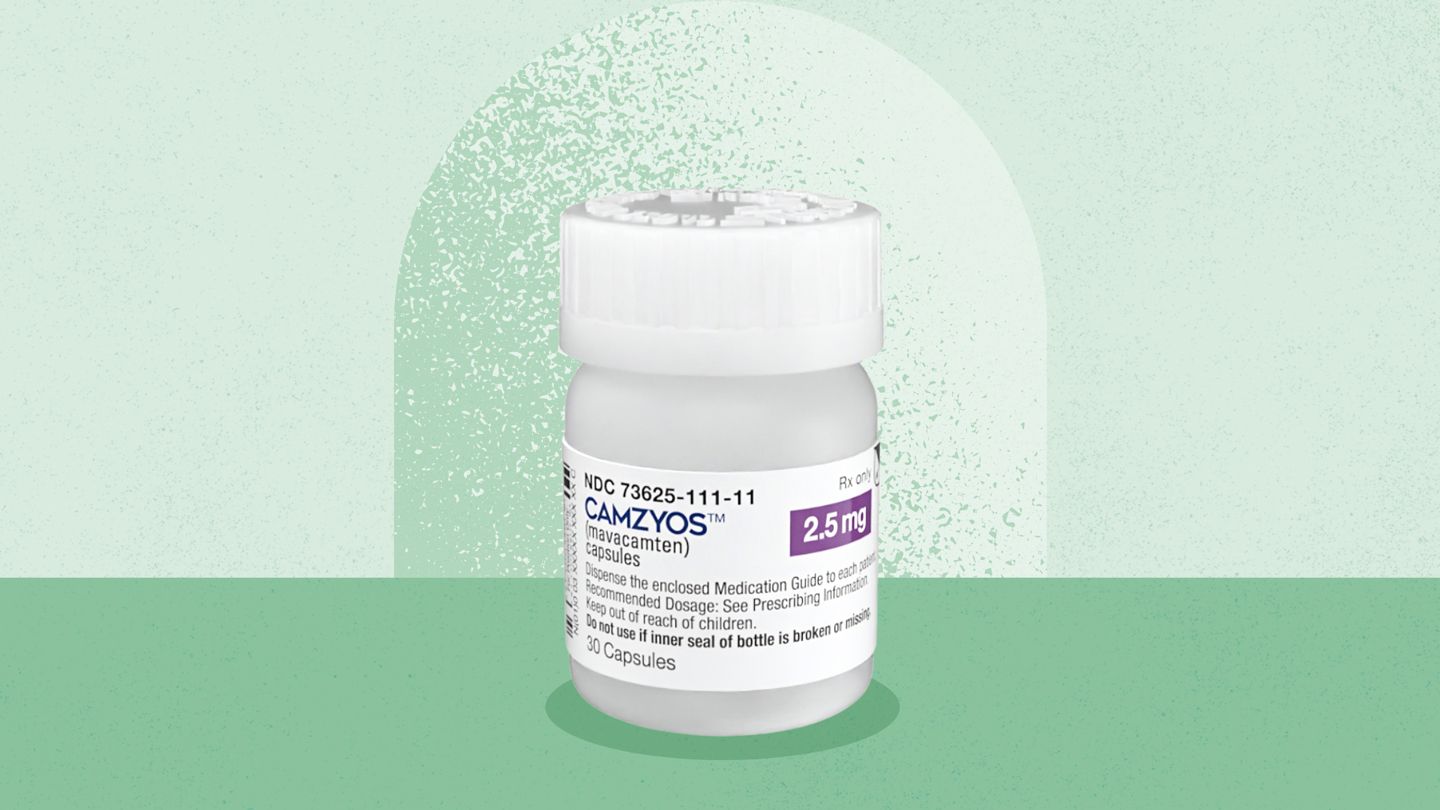
There is one notable risk associated with this drug: Mavacamten can increase your risk of heart failure.
“Because mavacamten decreases heart muscle contraction, there is a possibility that the heart muscle may overreact to it, increasing the risk of the heart becoming too weak,” Makkiya says.
Mavacamten is only available as part of a risk evaluation and mitigation strategy (REMS) program, which requires ongoing monitoring to ensure you aren’t developing heart failure. This makes getting a prescription more complex, as it requires you and your cardiologist to be enrolled in the REMS program.
Your cardiologist will:
- Evaluate your heart failure risk with an echocardiogram
- Assess your existing medications to rule out interactions with mavacamten. Taking diltiazem, disopyramide (Norpace), ranolazine, rifampin, or verapamil with a beta-blocker can increase your risk of heart failure or heart-rhythm problems, for example.
- Check your heart function with echocardiograms regularly. These are required to continue or increase mavacamten dosages.
Only 1 percent of mavacamten users in the REMS program have experienced heart failure.
“When prescribed appropriately within [REMS], mavacamten is very safe, and dose adjustments can prevent long-term problems,” Makkiya says.
Read the full article here