Sensitive Areas Impacted by Psoriasis
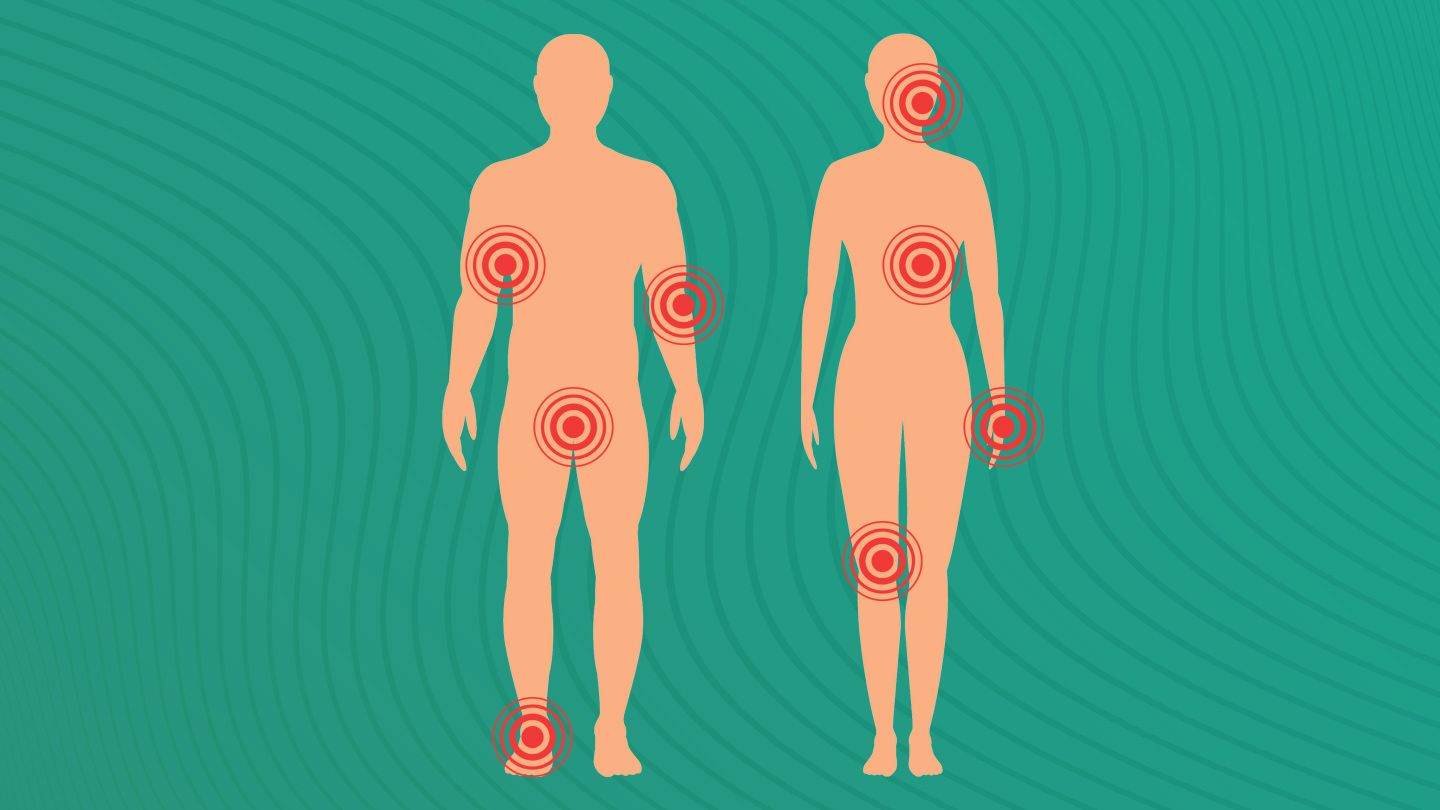
While psoriasis can occur anywhere on the body, there are some particularly sensitive areas that can be affected by this inflammatory disease.
Groins, Armpits, and Under the Breasts
The most common form of psoriasis is called plaque psoriasis. It often appears as dry, raised silvery or grayish-scaled patches on the knees, elbows, scalp, and lower back. But another type of psoriasis, inverse psoriasis, can occur in areas that are more sensitive, such as the groin, armpits, and under the breasts, according to Rosalyn George, MD, a board-certified dermatologist and fellow of the American Academy of Dermatology and owner of Wilmington Dermatology Center in North Carolina.
Inverse psoriasis causes smooth red patches on lighter skin tones or darker brown or violet patches on darker skin tones. These patches can be itchy, uncomfortable, or painful, and the inflammation can be worsened with sweat or when your skin is rubbed together.
“In the areas where there are skin folds — in women in the areas beneath the breasts, in both men and women in the groin areas, and anywhere you perspire when you’re feeling warm or nervous, such as the underarms — you don’t see the accumulation of scales because of the moisture in those areas,” says Stephen P. Stone, MD, dermatologist and professor emeritus of clinical internal medicine at Southern Illinois University School of Medicine in Springfield, Illinois.
Genital Psoriasis
According to the National Psoriasis Foundation (NPF), as many as two-thirds of people with psoriasis experience genital psoriasis at some point in their lives. People with genital psoriasis have inverse psoriasis, so they may also have psoriasis on other areas of their body.
Genital psoriasis can affect the following areas, according to the NPF:
- Penis, scrotum, or vulva
- Pubis (the skin above the genitals)
- Crease between the buttocks, including the area around the anus
- Inner and upper thighs
“People can experience flares in genital areas and it can be very disturbing,” says Dr. George. She notes that people with psoriasis on their genital or groin area often worry about whether it’s contagious and if they could give it to a romantic partner.
“It’s not true,” reassures George. “It isn’t contagious.”
Facial Psoriasis
According to the NPF, approximately 50 percent of people with psoriasis experience psoriasis on their face, typically on their eyebrows, upper forehead and hairline, and in the area between the nose and upper lip.
Psoriasis can also affect the skin around the ear (including in the ear canal). In rare cases, psoriasis can also appear in and around the mouth or around the eyes.
Palmoplantar Psoriasis
This type of psoriasis occurs on the palms of the hands and the soles of the feet. According to the NPF, palmoplantar psoriasis affects approximately 40 percent of people with plaque psoriasis, and those who have psoriasis on their palms and soles of their feet tend not to have psoriasis in other areas of their body.
This type of psoriasis can be very disruptive to patients, notes George. “Think of how much we use our hands and feet,” she says. “When you have an itchy or painful rash in those areas, it’s magnified because of how much we use our hands and feet in our daily life.”
Research suggests that people with palmoplantar psoriasis are more likely to experience a lower quality of life, compared with people with plaque psoriasis in other body parts.
The NPF notes that palmoplantar psoriasis can be challenging to treat since it often doesn’t respond to treatment as well as psoriasis that affects other parts of the body.
People with palmoplantar psoriasis may need to try several medications or combinations of treatments to find one that works for them.
Read the full article here