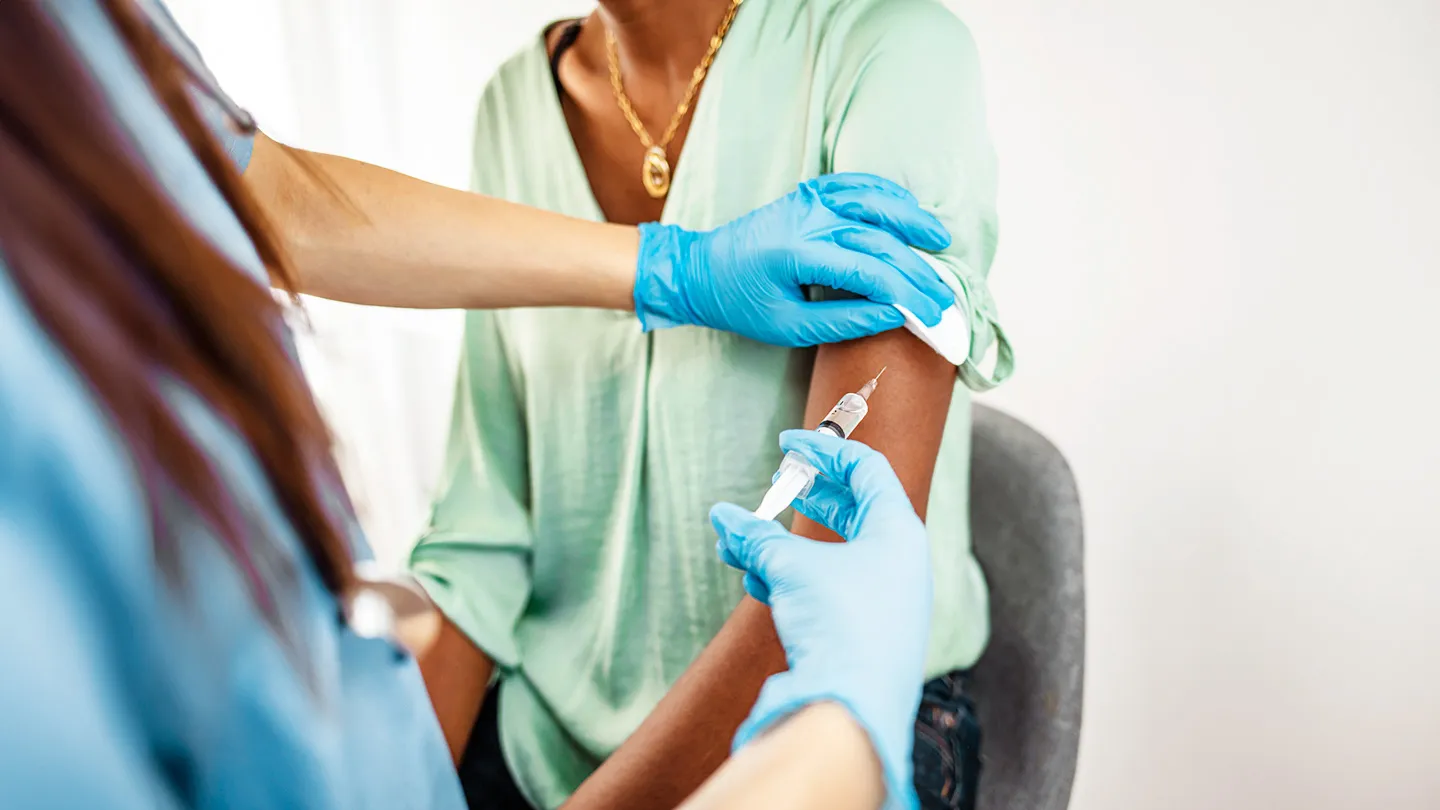
Below are some vaccines that may be recommended if you’re receiving cancer treatment, though you should only get them with approval from your cancer care team.
Influenza (Flu Shot)
The influenza (flu) vaccine is updated every year and is one of the most important ones to get during cancer treatment, says O’Riordan. Catching the flu while you’re already immunosuppressed from treatment can make you seriously ill and lead to complications, she says. You should get the flu shot every year to stay protected against the latest virus strains, and check with your oncologist about when to schedule it during your treatment cycle.
But get the injectable flu vaccine, not the nasal spray, known as FluMist. The nasal spray contains a live, weakened virus that isn’t recommended during cancer treatment.
COVID-19 Vaccine
Like the flu shot, the COVID-19 vaccine is updated annually to protect against new variants, says Davis. Getting vaccinated each year can help decrease your risk of severe COVID-19 complications. And you can get both the flu and COVID-19 vaccines at the same time, says O’Riordan.
COVID-19 vaccines that use messenger RNA (mRNA) might have extra benefits for people with certain cancers. One preliminary study found that people with lung cancer or melanoma who received the mRNA COVID-19 vaccine while taking a type of immunotherapy known as checkpoint inhibitors lived longer than those who didn’t. Researchers believe the vaccine may help the immune system better recognize and attack cancer cells, though more studies are needed to confirm this.
Respiratory Syncytial Virus (RSV) Vaccine
RSV is another respiratory infection worth protecting yourself against, especially during fall and winter months when these viruses spread more easily, says Davis. An RSV infection can cause serious illness in adults with weakened immune systems, including those in cancer treatment.
The Centers for Disease Control and Prevention (CDC) recommends RSV vaccination for everyone ages 75 and older, and for adults ages 50 to 74 who are at risk for severe illness from RSV.
Unlike the flu and COVID-19 vaccines, protection from an RSV vaccine lasts more than one year, so you don’t need to get it annually. If you haven’t had the RSV vaccine yet, your cancer care team can advise when it fits best with your treatment schedule.
Pneumococcal Vaccine
This vaccine helps protect against bacterial pneumonia, bloodstream infections, and meningitis, all illnesses that can lead to more complications during cancer treatment.
If you’ve had your spleen removed as part of your cancer treatment, getting the pneumococcal vaccine becomes even more important. “The spleen normally eliminates these bacteria from the body, so without your spleen, you need extra protection,” says O’Riordan. These vaccines are normally given at least two weeks before surgery to remove the spleen or two weeks (or more) after, she says.
Tetanus, Diphtheria, and Pertussis (Tdap)
If you are not up-to-date with Tdap, you should consider getting an adult booster, says O’Riordan. This combination vaccine helps protect against three bacterial infections. It’s generally safe during cancer treatment and doesn’t require any special precautions, says Davis.
HPV Vaccine
The human papillomavirus (HPV) vaccine helps prevent certain cancers caused by HPV infection. It may be recommended during treatment depending on your age and vaccination history.
Recombinant Herpes Zoster (Shingles) Vaccine
Shingles is a painful rash caused by the reactivation of the chicken pox virus. The recombinant zoster (shingles) vaccine is a non-live virus that’s recommended for adults 50 years and older, as well as those 19 years and older who have a weakened immune system.
Check with your oncology team about whether and when to get the shingles vaccine if you’re currently receiving cancer treatment.
Meningococcal Vaccines (MenACWY and MenB)
These vaccines help protect against bacterial meningitis and bloodstream infections. Like the pneumococcal vaccine, meningococcal vaccines are important if you’ve had your spleen removed or are scheduled for spleen removal surgery. When possible, these vaccines are given before the surgery. Otherwise, they’re typically offered after treatment, once your immune system has recovered.