


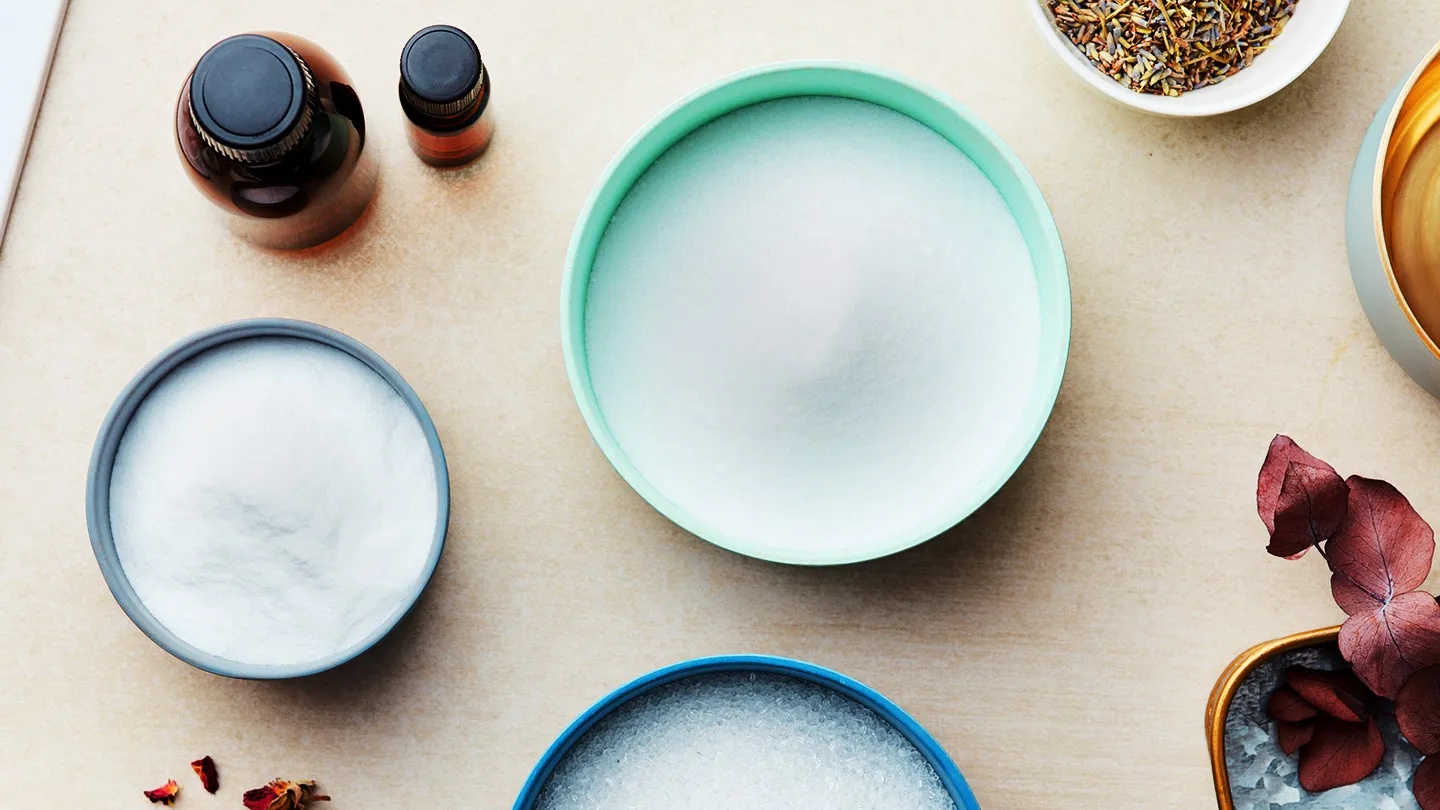
While a nice warm bath may help promote restful sleep, ease muscle pain, and relieve stress all on its own, a number of extra ingredients can give your self-care routine an additional boost.e60dc2a1-f33c-4a05-9b50-8e3e8e59762954319494-348b-4f11-ad14-bc32992751c0 However, not all add-ins are created equal. Some products make for a luxurious, skin-softening soak, but others should be avoided. Certain ingredients can throw off the delicate pH balance of the vagina, while others can trigger symptoms of skin conditions like eczema.e60dc2a1-f33c-4a05-9b50-8e3e8e597629e3948c70-5dab-4de4-920a-97dc7dc30b46e60dc2a1-f33c-4a05-9b50-8e3e8e597629909fccbf-7a55-4d39-bd47-7254798d4b60 Some additions do bring health benefits to your soak, though, and you probably have some of them in your home already. If you have specific health concerns, consult your primary care doctor, gynecologist, or dermatologist before adding anything to your bath.
The Best Ingredients to Add to Your Bath Best Ingredients to Add Transform your soak into a therapeutic experience with add-ins that are known for their muscle-soothing and skin-calming effects. Epsom Salt Dissolving Epsom salt in bathwater releases magnesium and sulfate ions, which are believed to help promote stress relief, soothe muscle pain, and quell inflammation in the body.e60dc2a1-f33c-4a05-9b50-8e3e8e5976299422763c-c677-40d5-b7f9-8f0f54fe846f Bathing with Epsom salt “naturally reduces inflammation from either an injury or sore muscles,” says Raphael Kellman, MD , an integrative and functional medicine physician in New York City. To reap these benefits, try adding about 1 ¼ cups of Epsom salt to your bath, opting for a product that contains 100 percent magnesium sulfate when possible. However, avoid Epsom salt baths if you’re experiencing skin inflammation (redness, swelling, rashes, blisters, pain, dryness, or itching) or a skin infection, or if you have an open wound or burn.e60dc2a1-f33c-4a05-9b50-8e3e8e5976299422763c-c677-40d5-b7f9-8f0f54fe846f Lavender Oil Essential oils can easily elevate bath time, but choose them wisely, as some are too harsh for a soak. Luckily, lavender oil usually gets the all clear. “Lavender oil promotes relaxation, soothes muscles, and helps reduce anxiety,” says Dr. Kellman. Aside from its soothing scent, early research suggests that lavender oil also has antiseptic and anti-inflammatory properties that promote wound healing, says Kseniya Kobets, MD , a board-certified dermatologist at Montefiore Einstein in New York City.e60dc2a1-f33c-4a05-9b50-8e3e8e59762921de1e01-a1f5-4527-905d-f3b07e32b281 To prevent skin irritation, experts recommend diluting lavender oil with a carrier oil like jojoba oil before adding it to your bathwater. Use 10 to 12 drops of the diluted oil per bath.e60dc2a1-f33c-4a05-9b50-8e3e8e597629047ac27c-df0c-4c22-b30e-1404a2c6c619 Baking Soda Baking soda baths are a potential remedy for eczema and related skin irritation, thanks to the compound’s mild anti-inflammatory properties.e60dc2a1-f33c-4a05-9b50-8e3e8e59762979dae50d-6e3b-4999-ace4-93f340daf28c “Baking soda has detoxifying and pH-balancing actions, which can help balance out the essential oils used in bath salts,” says Dr. Kobets. It can help eliminate odors as well. Try adding ¼ cup of baking soda to your bath to relieve itching.e60dc2a1-f33c-4a05-9b50-8e3e8e59762979dae50d-6e3b-4999-ace4-93f340daf28c If you have an infant dealing with diaper rash, try adding 2 tablespoons to their tub.e60dc2a1-f33c-4a05-9b50-8e3e8e597629f9f0e355-90f8-4548-800f-797e5d64fb60 Oats Oat baths are a traditional remedy for a variety of skin conditions, including eczema and psoriasis, and they’re a great option for anyone who wants to moisturize their skin.e60dc2a1-f33c-4a05-9b50-8e3e8e5976290dc3f55b-c498-42ce-a3d5-69c5aec6fcc0 “Oats are well known for their soothing and anti-inflammatory properties, and are a great add-in to warm baths for those with eczema or sensitive skin,” says Kobets. Colloidal oatmeal has been used for decades to soothe eczema, as it’s especially helpful for combating itchiness resulting from the skin condition.e60dc2a1-f33c-4a05-9b50-8e3e8e59762979dae50d-6e3b-4999-ace4-93f340daf28c Add 1 cup of colloidal oatmeal to bathwater to soothe and moisturize skin.
Bath Ingredients to Skip to Avoid Skin Irritation Bath Ingredients to Skip Just because a bath product is popular doesn’t mean it’s the best choice for your skin. The following additives may lead to irritation, allergic reactions, or clogged pores. Bath Bombs They turn your bathwater fun colors, come in a variety of designs, and bring some extra excitement to bath time, but bath bombs aren’t all they’re cracked up to be. The ingredients that make them colorful, sparkly, fragrant, and fizzy can also irritate your skin and disrupt vaginal microflora.e60dc2a1-f33c-4a05-9b50-8e3e8e597629f5bd2930-f19f-46cf-8bd9-11994b3439b3 “Bath bombs commonly contain questionable ingredients,” says Kellman, pointing to additives like artificial fragrances, which may cause hormone disruption, and dyes and artificial colorings, which can cause skin irritation and allergic reactions. “Abrasive chemicals, strong fragrances, and dyes often found in bath bombs can irritate and dehydrate your skin,” says Carmen Castilla, MD , a board-certified dermatologist with the New York Dermatology Group in New York City. “You may also end up covered in glitter, which can be difficult to remove and further irritate the skin.” Tea Tree Oil Tea tree oil is one of the essential oils that’s not suitable for a bath. “The problem with adding an essential oil such as tea tree oil is that it’s super concentrated, and it is oil based, and oil and water do not mix,” says Dr. Castilla. “After you pour it into the bath, the essential oil just sits on top of the water. When the concentrated oil comes in contact with your skin, it’s likely to cause irritation.” This issue is unlikely with other generally skin-safe oils like lavender, particularly when they’re diluted correctly with a carrier oil, but more irritating oils like tea tree can pose a problem, especially at higher doses. Beyond general irritation, tea tree oil can cause an allergic skin rash called dermatitis in some people.e60dc2a1-f33c-4a05-9b50-8e3e8e5976298f448ef7-6679-4cf7-a78b-edce37cfbe29 Bubble Bath Bubbles aren’t inherently bad for you, but some bubble bath products include problematic ingredients, which is why dermatologists recommend checking labels thoroughly before using them. “Bubble baths that include a lot of chemicals and artificial additives should be avoided,” says Kellman. “These [products] can be potentially irritating to the skin, especially if you’re prone to dry skin, allergic reactions, eczema, or psoriasis.” Kobets recommends avoiding bubble baths with fragrances and dyes altogether to minimize your risk of irritation.e60dc2a1-f33c-4a05-9b50-8e3e8e597629e7eb4909-1cb1-438c-98f4-6ce5b5316b39 She also says it’s best to skip products labeled as “unscented,” since they may contain irritating chemicals to mask their scent; instead, look for “fragrance-free” on labels. Luckily, it’s easy to swap traditional bubble bath for a skin-safe body wash that still creates plenty of bubbles.
The Takeaway Prioritize therapeutic, natural ingredients in your bath soaks like Epsom salt, lavender oil, colloidal oats, and baking soda to soothe muscles, calm inflammation, and moisturize your skin effectively. Exercise caution with popular additives like bath bombs and heavily fragranced bubble baths, as their dyes, perfumes, and chemical additives can easily cause skin irritation or allergic reactions. Always dilute essential oils (like lavender) with a carrier oil before adding them to a bath, and avoid concentrated, irritating oils like tea tree oil, as they sit on the water’s surface and can irritate skin upon contact.
Resources We Trust Mayo Clinic: Skin Care: 5 Tips for Healthy Skin Cleveland Clinic: Taking the Plunge: 5 Reasons Baths Are Good for You American Medical Association: What Doctors Wish Patients Knew About Maintaining Healthy Skin American Academy of Dermatology Association: 10 Skin Care Secrets for Healthier-Looking Skin National Eczema Foundation: Bathing and Eczema
Read the full article here


Leave a comment
