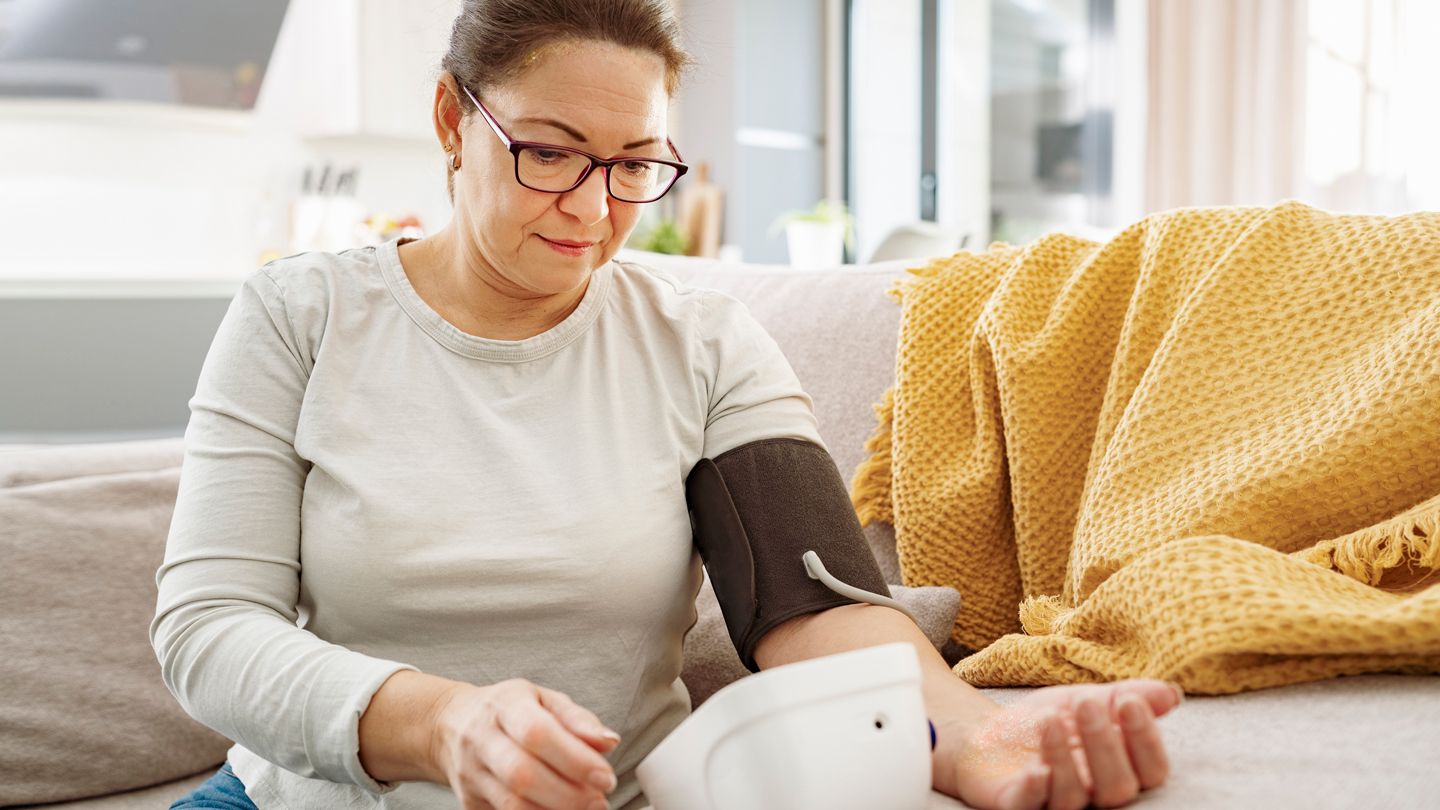
To reduce heart attack risk in people with psoriasis, Dr. Kaffenberger makes sure her patients see a primary care doctor who can monitor their blood pressure and discuss other risk factors for heart disease.
“I also encourage patients to lose weight and quit smoking,” she says. Many psoriasis patients are overweight or obese, a key risk factor for metabolic syndrome.
If you have high blood pressure, your primary care doctor may recommend medication, lifestyle changes, or both.
The following tips can help to lower blood pressure naturally:
Get enough physical activity. Regular aerobic exercise can lower high blood pressure by about 5 to 8 mmHg. Aim for at least 30 minutes of moderate physical activity daily. In addition to aerobic exercise, try to include strength training at least two days a week.
Eat less salt. Read food labels to check for sodium content and limit your intake of processed foods, which often contain added sodium. For most adults, an ideal sodium limit is 1,500 milligrams (mg) a day; this may lower high blood pressure by about 5 to 6 mmHg.
Don’t drink too much alcohol. To help manage blood pressure, it’s recommended that men limit their alcohol consumption to two drinks per day and women limit their intake to one drink per day. If you don’t drink, there’s no health reason to start.
Reduce stress. Chronic stress may put you at risk for different chronic diseases, including high blood pressure, heart disease, and stroke. Finding ways to reduce or manage stress may help improve your overall health.
Read the full article here