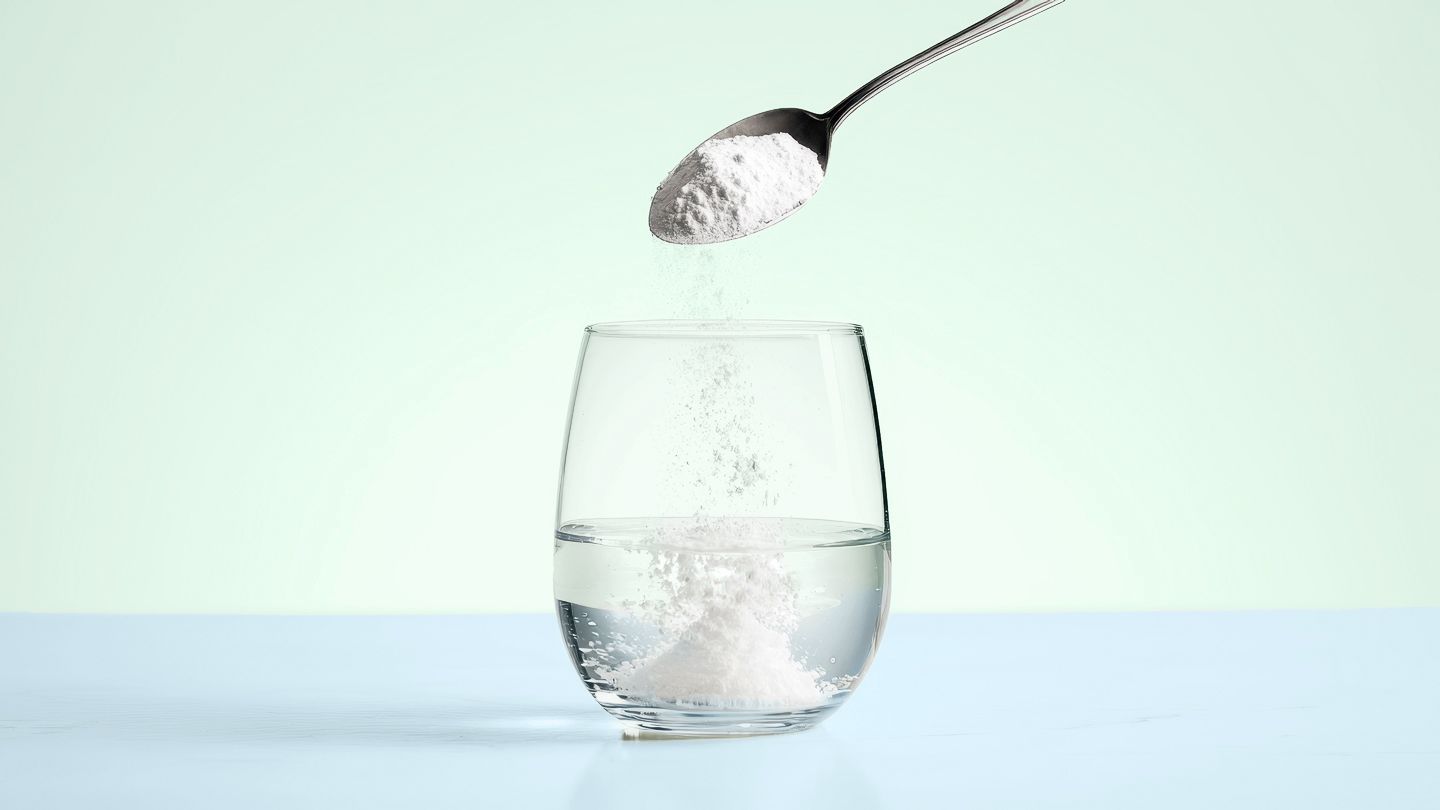
Research supports several potential benefits of baking soda, though the strength of evidence varies. Here’s what the science says.
1. May Improve Athletic Performance
Enhanced athletic performance is one of the better-studied uses of sodium bicarbonate. “Research shows that it can improve performance in certain high-intensity activities where muscle fatigue is partly caused by acid buildup, such as repeated sprints, short-distance swimming or cycling, and high-rep strength efforts,” says Garrett Lang, PhD, of Arlington, Virginia, a cofounder of ReadyRX, a company specializing in personalized longevity and preventive health programs.
That said, Dr. Lang notes that the benefits aren’t universal. “Some people respond well, while others see little to no improvement, and gastrointestinal side effects like nausea or diarrhea are very common and can cancel out any performance gains,” he says.
2. May Relieve Indigestion
“If you’re going to try it, mix ¼ to ½ teaspoon in 4 to 8 ounces of water,” suggests Swiecicki-Allen. “But honestly, antacids are safer and more predictable for this purpose,” she says, referring to over‑the‑counter antacids formulated and dosed specifically to neutralize stomach acid.
3. May Ease Heartburn
But antacids — including sodium bicarbonate — should not be taken for more than two weeks unless directed by a doctor.
4. May Support Oral Health
When it comes to oral health, the evidence is strongest for commercial toothpastes containing baking soda — which outperform regular toothpaste for plaque removal and gum health — rather than drinking it as a solution. “Studies show baking soda–containing toothpastes can help with plaque removal and gum health, likely because they mildly neutralize acids and help disrupt plaque,” Lang explains.
5. May Benefit People With Chronic Kidney Disease
But this doesn’t mean baking soda is beneficial for kidney “cleanses” in healthy people, Lang cautions. In clinical settings, doctors prescribe doses to CKD patients and carefully monitor them to treat metabolic acidosis, which is very different from mixing baking soda at home, Swiecicki-Allen notes.
Read the full article here