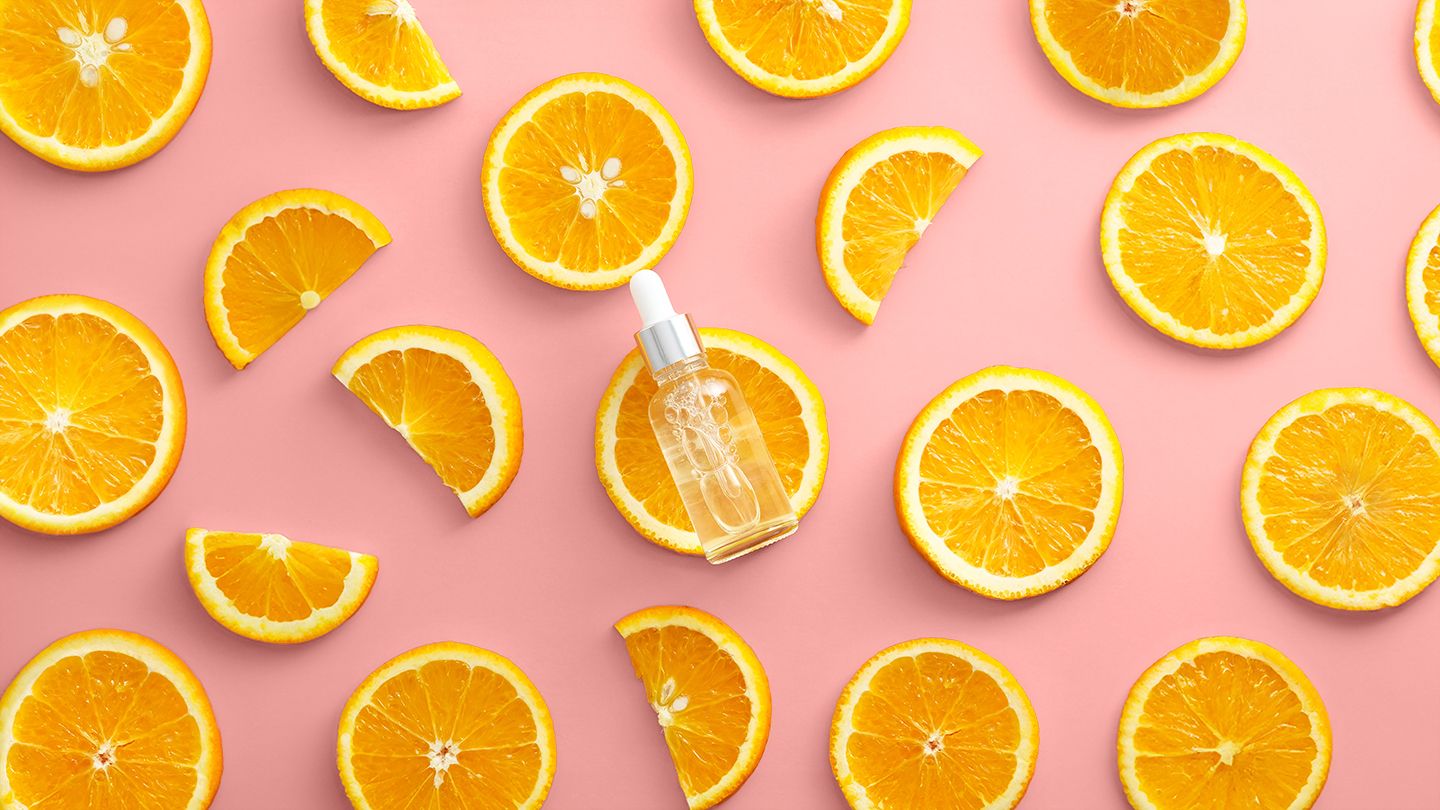
These benefits sound great, right? So, you might be thinking it’s a good idea to increase your vitamin C intake just through diet. And while eating fruits and vegetables is a great idea for overall health, you’ll likely need a topical boost to reap the skin-care benefits of vitamin C. That’s because the epidermis, the outermost layer of the skin, doesn’t have blood vessels to send nutrients to the skin cells, research notes.
However, you can apply vitamin C directly to your skin, and that’s where serums come in handy. “Vitamin C is best known for its ability to neutralize free radicals and improve aging skin,” says Joel Schlessinger, MD, a dermatologic surgeon in Omaha, Nebraska. “It can also improve collagen and elastin synthesis — which can improve the appearance of fine lines and wrinkles, help reduce inflammation, provide natural, mild exfoliation, and brighten skin.”
And there’s evidence to back these claims too. One study found that topical vitamin C increased collagen production among study participants in all age groups. The study participants noticed the effects after 40 days of treatment, and found they were even more pronounced at the 60-day mark.
Vitamin C serum can also help with hyperpigmentation. Research notes that vitamin C plays a role in reducing tyrosinase (a type of enzyme that supports melanin production). By blocking this enzyme, vitamin C may aid in minimizing dark spots. Additionally, vitamin C offers protection against the sun’s UV rays — a common cause of hyperpigmentation.
Read the full article here