The 2026 cyclosporiasis surge has put a damper on salad season. Cyclospora, an intestinal parasite, has sickened thousands of people and hospitalized hundreds with explosive diarrhea, painful cramping, or other gastrointestinal miseries.
The threat of infection has left many Americans wary not just of iceberg lettuce but of fresh fruits and vegetables in general. A recent poll showed that 40 percent of U.S. adults have been buying or eating less produce since the outbreak.
Yet infectious-disease experts are still eating lots of fresh fruits and vegetables, and urge other Americans to do the same. “Fresh food is good for you. Don’t stop eating healthy fruits and vegetables because of cyclospora,” says David Wohl, MD, a professor of medicine in the division of infectious diseases at the University of North Carolina at Chapel Hill.
These experts aren’t rolling the dice with their health; they’re making informed choices.
Here’s what three infectious-disease doctors are preparing at home and ordering at restaurants during the outbreak, plus their thoughts on special health and safety considerations that might require some people to take extra precautions.
Experts Aren’t Changing How They Eat Unless Cases Are Rising Where They Live
The amount of cyclospora illness in the current outbreak varies considerably by state, which helps explain why the experts we spoke with aren’t all making the same decisions.
So far Washington state has not seen a surge in cyclosporiasis. That helps explain why Paul Pottinger, MD, the director of the infectious diseases and tropical medicine clinic at UW Medical Center in Seattle, and a cohost of the travel health podcast Germ & Worm, is still eating his usual daily salad.
Before making a major change in your diet, check whether cases are rising where you live, says John Openshaw, MD, an assistant professor of infectious diseases and geographic medicine at Stanford Health Care in California.
While the recalled lettuce came from central Mexico, cyclospora risk in the United States depends partly on where the products were distributed and served. Because the lettuce went to specific restaurants, stores, and food-service customers, people in some parts of the country are more likely to encounter it.
The Centers for Disease Control and Prevention (CDC) provides a national case map, while state health departments may have more recent information about local increases in illness and foods under investigation.
They’re Opting for Whole Heads of Lettuce Over Bagged Salad Mixes
Whether or not there’s a disease outbreak, Dr. Wohl always opts for whole heads of green lettuce rather than bagged greens. “If I normally bought iceberg or bagged lettuce, I would stop until the outbreak was under control,” he says.
A whole head comes from one farm, whereas a bag of chopped or mixed greens can contain lettuce from multiple farms or production lots, increasing the odds of potential contamination.
Even if bagged or boxed greens are labeled “triple washed” or “ready to eat,” that doesn’t mean they’re free of harmful germs. Cutting, washing, mixing, and packaging create more opportunities for contamination to spread from one leaf to others, and commercial washing can’t guarantee that cyclospora has been removed.
Experts Carefully Wash Their Salad Greens — but They Know Washing Has Its Limits
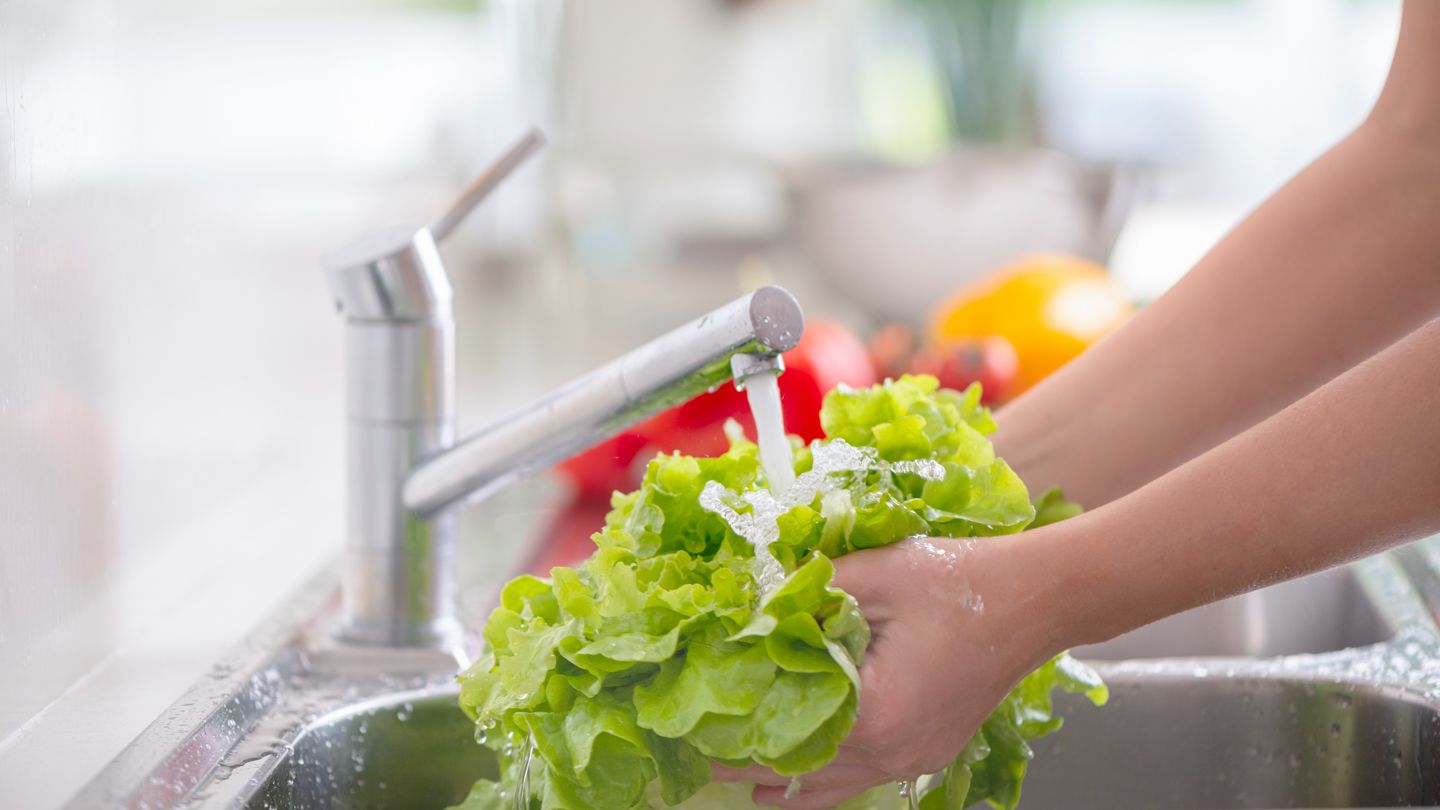
When prepping a head of lettuce to eat, Wohl removes the outer leaves, which are most vulnerable to contamination, then soaks and rinses the remaining leaves three times. Dr. Pottinger also emphasizes rinsing produce under running water.
But while washing can remove dirt and lower the amount of some germs, cyclospora can attach tightly to uneven surfaces and may remain after routine washing. The parasite also resists some sanitizers used during commercial processing.
If you have iceberg lettuce that has been recalled, don’t try to wash it enough to make it safe. Throw it away or return it to the store, following the recall instructions.
What About Cilantro, Parsley, and Berries?
Food safety investigators have connected cyclosporiasis with herbs, berries, and other fresh produce in previous outbreaks. But Wohl continues to eat them during the current outbreak.
“There is no data that I’m aware of implicating these foods, only the historical connection to past outbreaks,” he says.
Experts Buy Local or U.S.-Grown Produce When Possible
Cyclospora is endemic — meaning it’s regularly found — in tropical and subtropical parts of the world, Dr. Openshaw says. That’s why he prefers U.S.-grown produce.
“If you have a local source of produce, don’t stop eating it,” he says.
While all U.S. produce isn’t free of health risks when eaten raw, this outbreak hasn’t included any cyclospora traced back to a U.S. farm, Wohl says.
When possible, check packages for the country or region of origin, processor, distributor, or farm, and compare that information with the recall notice.
Some Experts Are Cooking Produce Instead of Giving It Up
“If people are worried, the best answer is to choose produce that can be cooked, because that kills cyclospora,” Openshaw says.
Options that can replace a raw salad include:
- Sautéed spinach, kale, or other greens
- Roasted broccoli, carrots, cauliflower, or Brussels sprouts
- Grilled zucchini, peppers, corn, or tomatoes
- Vegetable soups, stews, or stir-fries
Are Experts Still Ordering Salads at Restaurants?
Restaurant salads might pose risks because you may not know where the lettuce was grown, whether it was combined with lettuce from other sources, or how the restaurant responded to the recall.
Wohl is not currently ordering restaurant salads or foods topped with shredded lettuce, including at Taco Bell.
When deciding whether to order salad or add lettuce to your sandwich or bowl, Openshaw suggests considering the number of local cases and a restaurant’s ability to identify its lettuce supplier.
“If you’re concerned, ask questions,” he says. If the produce was grown locally or came from a supplier outside the recall, that should provide reassurance, says Openshaw.
Useful questions include:
- Do you know whether this lettuce or its supplier is included in the recall?
- Do you know where the lettuce was grown or processed?
- Has the recalled lettuce been removed and replaced?
If employees don’t know, it’s also reasonable to skip the salad or choose another restaurant, says Pottinger.
Americans With Special Health Concerns Should Be Extra Cautious
Someone who is immunocompromised, pregnant, older, or preparing food for a young child should take a more conservative approach when eating raw produce, Wohl says.
“If I were at higher risk for more severe illness from cyclosporiasis, in addition to not eating bagged lettuce or iceberg lettuce, I would stick with locally or at least U.S.-grown produce and not eat factory-farm products,” he says.
Unfortunately, these food options are likely to be harder to find and more expensive, which will be a problem for many people, he adds.
Choosing fruits and vegetables that can be peeled or cooked will also make them safe.
When Can We Go Back to Our Normal Salad-Eating Habits?
While it’s always a good idea to wash produce thoroughly, people can go back to the usual routines and salad ordering habits once case numbers drop to more usual levels or the source(s) of the outbreak have been identified and dealt with, says Wohl.
Until then, watch for updates about:
- Foods, farms, processors, and suppliers named in recalls
- Additional foods linked to illnesses
- Whether cases are rising where you live
- Announcements that a recall or outbreak investigation has ended
Cyclosporiasis cases usually rise during spring and summer, and the CDC estimates that about six weeks may pass between the start of someone’s illness and the case being reported. The case counts may therefore continue to rise even after a contaminated product has been removed.
Read the full article here