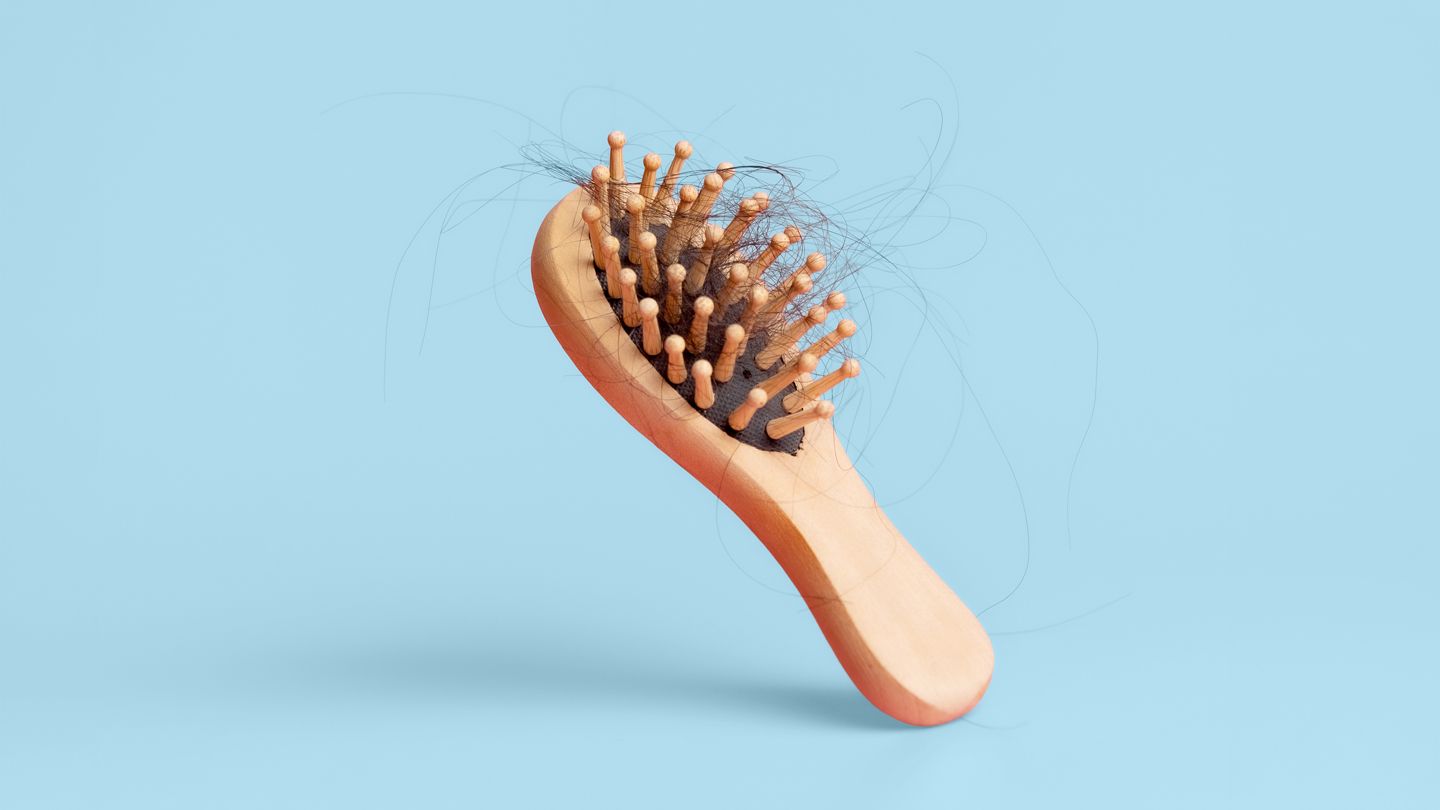
Causes of Hair Loss in Women vs. Men
Although hair loss is common among both men and women, but the reasons for the shedding often differ.
Causes in Men
Male pattern baldness is caused by the hormone dihydrotestosterone (DHT), which is more prevalent in men. DHT gradually shrinks hair follicles, leading to a receding hairline, thinning at the crown, or both.
While there’s a genetic component to male pattern baldness, the long-held notion that the trait is inherited from the mother’s father is not entirely true, and some experts believe other unknown factors are at play.
Causes in Women
Women are also commonly affected by androgenetic alopecia, and age and hormonal fluctuations often play a central role.
“Perimenopausal and postmenopausal women have a shift toward testosterone-induced hair loss like men with a slightly different visible distribution,” says Shah. Unlike men, who often develop a receding hairline and bald spots at the temples or crown, women typically experience diffuse thinning across the top of the scalp while their frontal hairline remains largely intact.
Hair loss or increased shedding may occur during pregnancy, after childbirth, and throughout perimenopause and menopause. They may also occur due to medical conditions, including:
- Telogen effluvium, a type of stress-related shedding that’s more prevalent in women than men
- Polycystic metabolic ovarian syndrome (PMOS), a condition in which high levels of androgen hormones can contribute to hair loss, among other symptoms
- Alopecia areata, an autoimmune disease that attacks your body’s hair follicles, causing patchy hair loss. Research suggests that women are more likely to develop this condition, too.
- Thyroid disorders, including hypothyroidism and hyperthyroidism, which can disrupt the hormones that regulate the hair growth cycle, causing hair follicles to leave the growth phase too early
- Traction alopecia, which is caused by tight hairstyles that pull on the hair
- Iron deficiency and other nutritional deficiencies
- Chemotherapy or radiation treatment, which can damage the cells in your hair follicles, causing the hair to fall out
Read the full article here