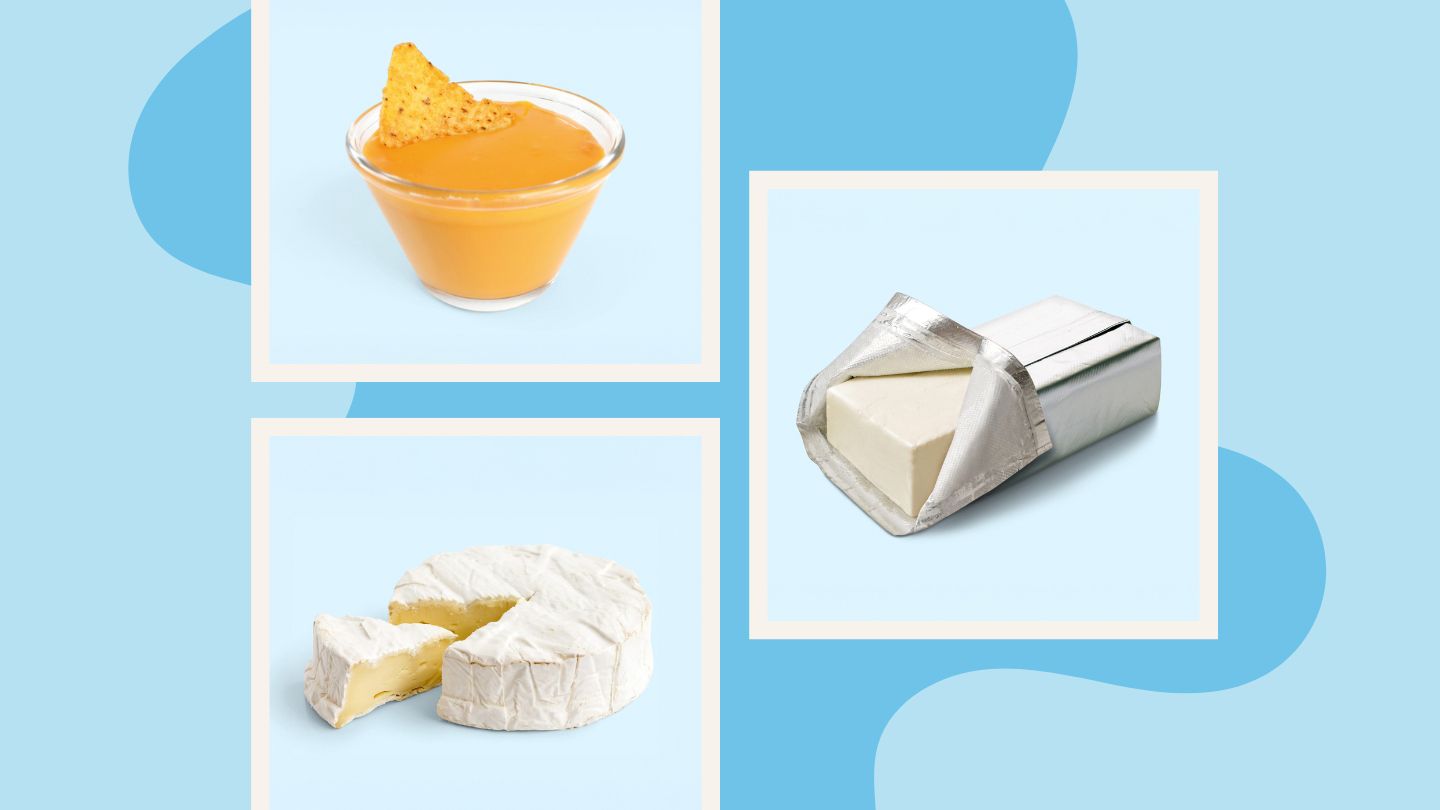
Port wine cheese spread typically blends cheese with sweetened wine, colorants, stabilizers, and a creamier base. It also usually included artificial colors and preservatives.
A 1-oz serving of port wine cheese spread contains about 95 calories, 4 g of saturated fat, and nearly 200 mg of sodium.
Cording notes that this cheese is often used as a spread for crackers, which tend to be high in refined carbohydrates without much nutritional value.
Politi suggests replacing it with a nutrient-rich option like hummus paired with fresh vegetables.
Healthy Ways to Incorporate Cheese Into Your Diet
Although most cheeses can’t be considered nutrient dense or heart healthy, you don’t need to deprive yourself of cheese if you love it. Experts agree that there is room for cheese in a balanced diet.
The key is to eat it like a condiment or garnish, says Fryer. A 1-oz serving looks like a pair of dice, a matchbox, or the size of your thumb, she says.
Think of cheese as a flavor enhancer rather than the main event, adds Cording.
“There are also healthy cheeses,” says Fryer. “For instance, low-fat cottage cheese and low-fat ricotta cheese deliver significantly more protein and calcium with less saturated fat.”
Read the full article here