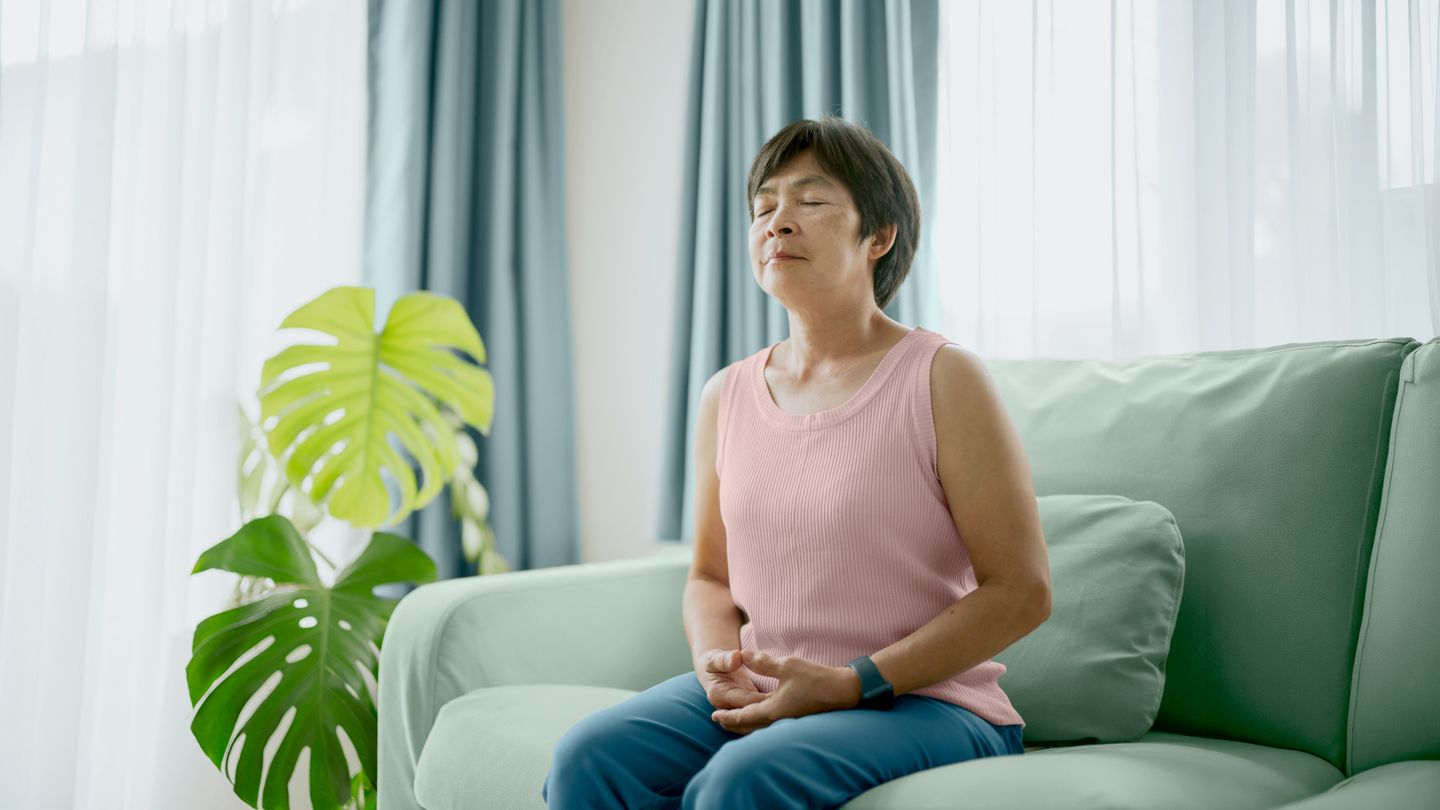
4 Breathing Exercises for COPD
Not everyone will have the same COPD treatment plan. Often, a respiratory therapist will guide you in how to perform specific breathing exercises selected for you and how to do them correctly. Some people may need additional help, such as oxygen or medication, so it’s essential to work with your doctor and respiratory therapist before adding any new exercises.
Some of the breathing exercises most helpful for COPD include:
1. Pursed Lip Breathing
Onugha recommends pursed lip breathing as the top exercise for anyone with COPD. To perform this exercise:
- Breathe in through your nose for a count of three.
- Breathe out through pursed lips, as if you’re blowing out a candle, for a count of three.
Lynn also recommends using this breathing exercise when you’re exerting yourself. For example, if you’re climbing a flight of stairs, you can take a breath in before you climb, then begin breathing out with pursed lips as you climb a few steps, repeating every two or three steps.
2. Belly Breathing
Belly breathing, also known as diaphragmatic breathing, can help empty your lungs by focusing on breathing with your entire chest and abdomen. Performing belly breathing also allows your diaphragm to lower, which then allows your lungs to fill.
Here’s how to do it:
- Place your hand on your belly so you can feel it expand, and breathe in through your nose. Your shoulders, neck, and chest should be as relaxed as possible.
- Exhale all of the air through pursed lips, feeling your belly as you breathe out.
Lynn recommends doing belly breathing while at rest, such as sitting in a chair or lying down, until it becomes routine.
3. Deep Breathing
Deep breathing is exactly what it sounds like, and the steps are simple:
- Take a deep breath, then hold it for a few moments.
- When you’re ready, exhale slowly through your nose.
Like belly breathing, you can practice deep breathing when you’re at rest.
4. Mindful, Purposeful Breathing
- Inhale for a count of one as you prepare to perform an activity or exercise.
- Exhale for a count of two as you perform the part of the activity or exercise when you’re exerting yourself the most.
The idea is to simply focus on your breath without rushing or judging.
Read the full article here