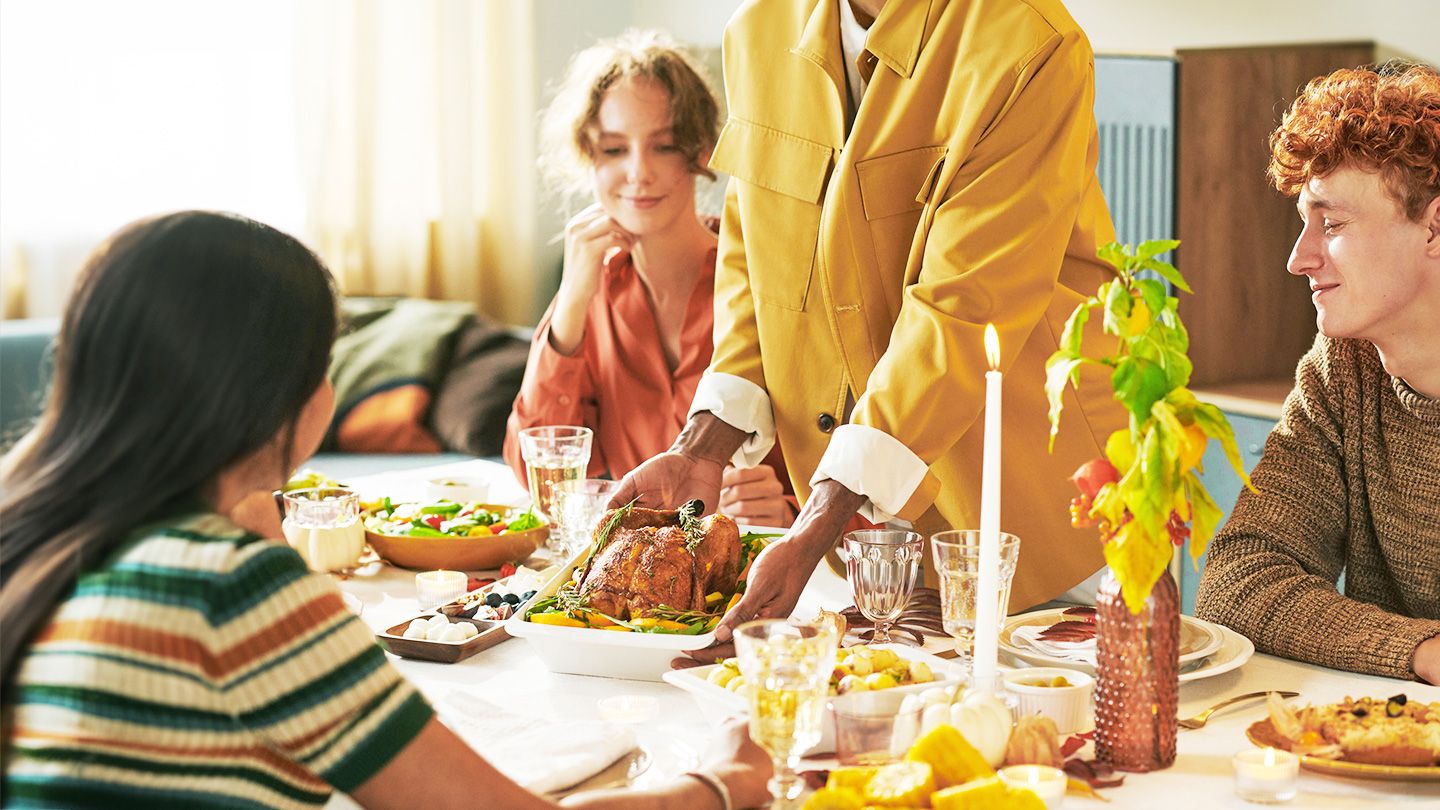
Trying to juggle work, a packed social calendar, stretched budgets, and family time during the holiday season from late November into the new year can be stressful for anyone. But if you’re also living with an inflammatory bowel disease (IBD) like Crohn’s or ulcerative colitis, the holiday season brings about an additional set of challenges.
From managing flares and navigating holiday party menus to coping with travel stress, the holidays can feel like a minefield for people with IBD.
But your diagnosis doesn’t mean you should sit on the sidelines while everyone else celebrates. With some planning, communication, and self-care, it’s entirely possible to enjoy the season while keeping your IBD in check.
Whether you’re traveling to attend a family dinner or hosting guests at home, here’s a look at practical strategies to help you — and your gut — move through the holidays with confidence and calm.
1. Plan Ahead and Bring Your Own IBD-Friendly Options
A little preparation can go a long way in keeping symptoms at bay during the holidays, says Kendra Weekley, RD, a registered dietitian at Cleveland Clinic who treats people with IBD.
Check restaurant menus ahead of time, eat a gut-healthy meal at home before heading to a holiday party, or connect with your dinner party host and offer to bring your own dish to a family potluck to help you feel more in control — and less anxious — about what’s being served, she suggests.
“I encourage patients to offer to bring a dish that they know they can tolerate well to a party, so there is at least one thing on their plate that they are confident they can eat,” Weekley says.
And keep your safe foods in mind. “There are still lots of easy, softer foods that are often well-tolerated and are ‘holiday staples.’ It is okay to just focus on those,” she says. Examples include mashed potatoes, slow-roasted vegetables, plain dinner rolls, and skinless turkey breast — all of which tend to be easier to digest.
2. Prioritize Self-Care
This tip is often overlooked but is crucial in managing your gut health, says Megan Riehl, PsyD, a gastrointestinal (GI) psychologist at University of Michigan Health in Ann Arbor and a Crohn’s & Colitis Foundation trustee.
Schedule breaks throughout the festive period for a good night’s sleep, a quiet night at home or any other activity that helps you unwind, such as meditation, yoga, or breathwork. These pauses will help you stay energized so you aren’t running on empty in the face of holiday parties, travel delays, and other stressors.
3. Pack an Emergency Kit
Whether you’re traveling across town or across the country for your next family gathering, come armed with an IBD emergency kit that includes adult diapers, cleansing wipes, soap, and a change of clothes, says Daphne Spyropoulos, PhD, a GI psychologist at Cleveland Clinic.
Get your bearings once you arrive at your destination by mapping out where the nearest bathroom is in case of an emergency, she says.
Consider tapping a friend or family member to be your designated support system. “It can be helpful to have a trusted person there with you, whom you can ask for help or who can help explain why you had to leave if you decide to. Sometimes remembering that you can leave if you feel uncomfortable can be helpful in alleviating some distress,” Dr. Spyropoulos says.
Talk to your GI doctor, who may be able to prescribe soluble fiber supplements, antidiarrheal, and anti-nausea medications for short-term use, Weekley says. You can keep these on hand if symptoms start to crop up.
Try not to overthink it if you need to leave abruptly, too, Spyropoulos says. “I often remind my patients that other people don’t pay as much attention to what we are doing as we are afraid of,” she says.
4. Set Boundaries and Communicate Only What’s Comfortable
Setting boundaries around food and social plans can be uncomfortable, but it’s a vital part of managing IBD, especially over the holidays, Riehl says.
It’s okay to decline a dinner invitation if you’re in the midst of a flare, or if it’s an outing that may trigger GI distress. You only need to communicate as much about your condition as you’re comfortable sharing, she says.
Riehl says you could offer something as simple as, “Thank you for the invite. I’m managing my health closely right now, so I’ll sit this one out, but please send pictures! Let’s get together next week if you’re free?”
The key is to keep the tone appreciative and matter-of-fact. You’re not asking for permission, you’re sharing your plan. “When you protect your energy and physical comfort, you’re far more able to show up fully for the moments that matter,” she says.
If you’re close friends, you may want to disclose more, Spyropoulos says. You can explain that restaurants — and certain foods in particular — can trigger IBD flares, but you’d love to join in on the next get-together. “Sometimes transparency can be the best strategy,” she says.
5. Focus on Connection, Not Just Food
Sure, cookies and hot chocolate are nice to have around the holidays, but they don’t have to be a focal point of gatherings, says Danielle Gaffen, RDN, a San Diego–based registered dietitian-nutritionist specializing in IBD nutrition.
You can suggest activities, such as ice-skating, decorating gingerbread houses, or having a movie night to soak up the festive atmosphere with your loved ones. You may even opt to join holiday parties post-meal, just in time for opening presents or playing games.
“The holidays are about much more than what’s on the plate,” Gaffen says.
6. Eat Mindfully and Listen to Your Body
Holiday meals often stretch over hours, making it easy to overindulge or eat foods that don’t sit well with you. Your job is to be mindful, slow down, and tune in to your body’s cues, Gaffen says.
Once you’re at the table, take time to savor your meal — digestion begins in the mouth. Chewing food thoroughly helps mechanically break it down, making it easier for your digestive system to handle. “I like to remind patients to chew like a chipmunk — chew, chew, chew, and then chew some more. Eating slowly also gives the brain time to register fullness and helps prevent discomfort from overeating,” Gaffen says.
The Takeaway
- Preparation during the holidays is key: Read menus ahead of time, offer to bring an IBD-friendly dish, or eat a small meal at home before heading to a party to help you feel more in control.
- Pack an emergency kit with essentials like wipes, medication, and a change of clothes, and identify a trusted friend or family member who can offer support if symptoms arise.
- Prioritize self-care and connection by getting enough sleep, managing stress levels, and focusing more on meaningful time with your loved ones, rather than what’s on your plate.
Read the full article here