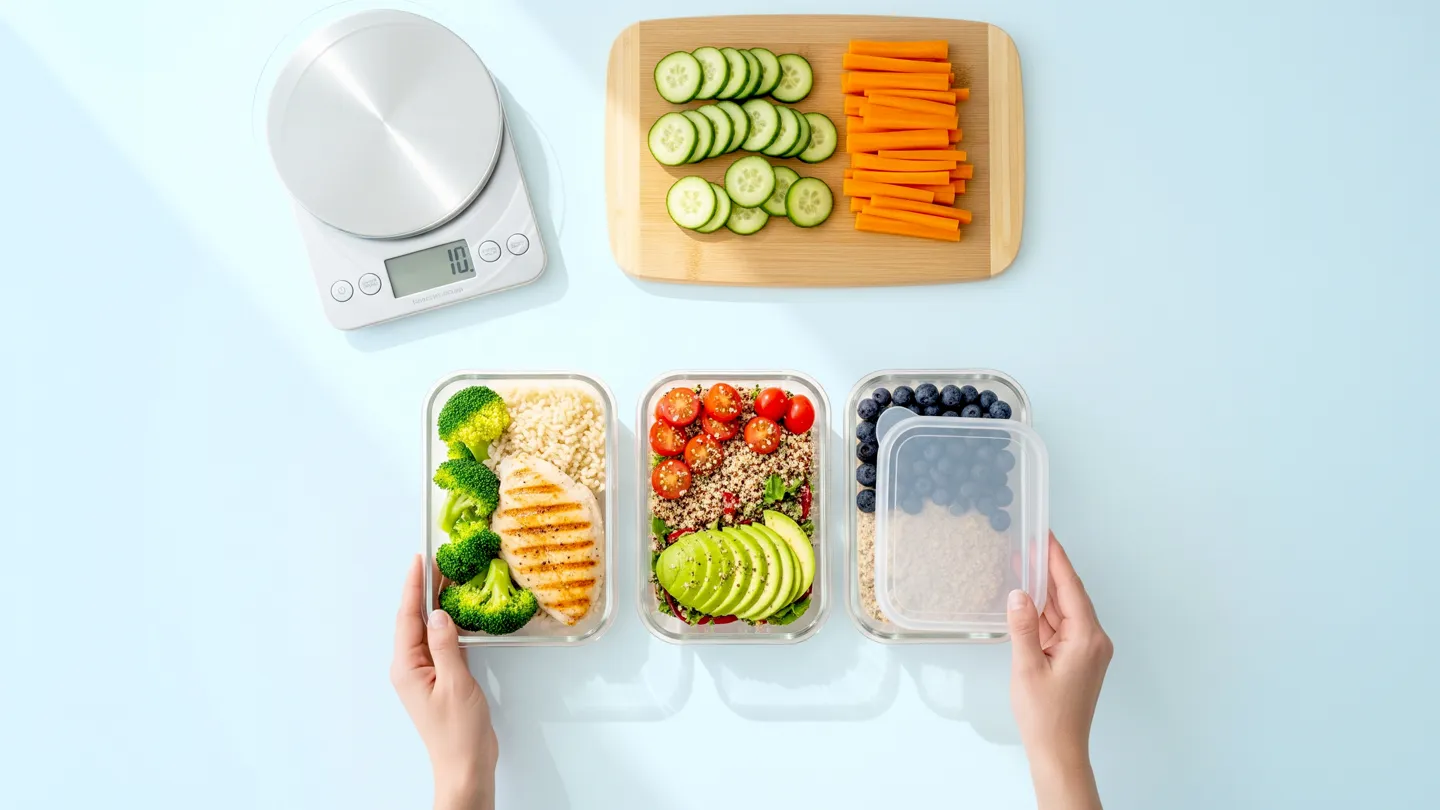
It’s important to read food labels carefully when monitoring portion sizes.
“The first thing to look at when reading a food label is the serving size,” Kimberlain says. “As food labels are currently written, they are not always just one serving. Therefore, if the serving size is more than one serving, you will need to calculate how much you’re eating. For example, if the serving size is five crackers, but you eat 10 crackers, you have to double all the information: 100 calories becomes 200 calories, 250 milligrams [mg] of sodium becomes 500 mg, etc.”
You also want to look at how much saturated fat you’re eating, Kimberlain says, as it could increase your heart disease risk.
“For saturated fat, I teach people to look at the percentages,” she says. “Giving them the range of 5 percent to 20 percent allows them to know if the food is ‘high saturated fat’ or ‘low saturated fat.’ If an item has 5 percent, it’s a better choice.”
It’s also important to monitor your sodium intake. Consume no more than 2,300 mg of sodium a day, and target 1,500 mg or less per day.
“Decreasing the amount of sodium in the diet can help many people lower their blood pressure,” Kimberlain says. “Lowering blood pressure also means decreasing risk for heart attack or stroke, both of which are common diabetes complications.”
Kimberlain also suggests looking at the “total carbohydrates” on a label. These include sugar, fiber, and starch.
“Many people with diabetes might look just at the sugar category, but that doesn’t give the whole picture,” Kimberlain says. “For example, bread might have 1 g of sugar but 15 g of carbs. If you only looked at the sugar, you might opt to eat more, thinking that you’re not affecting your blood sugar levels when in fact you are.”
Read the full article here