Summer camp is for kids.
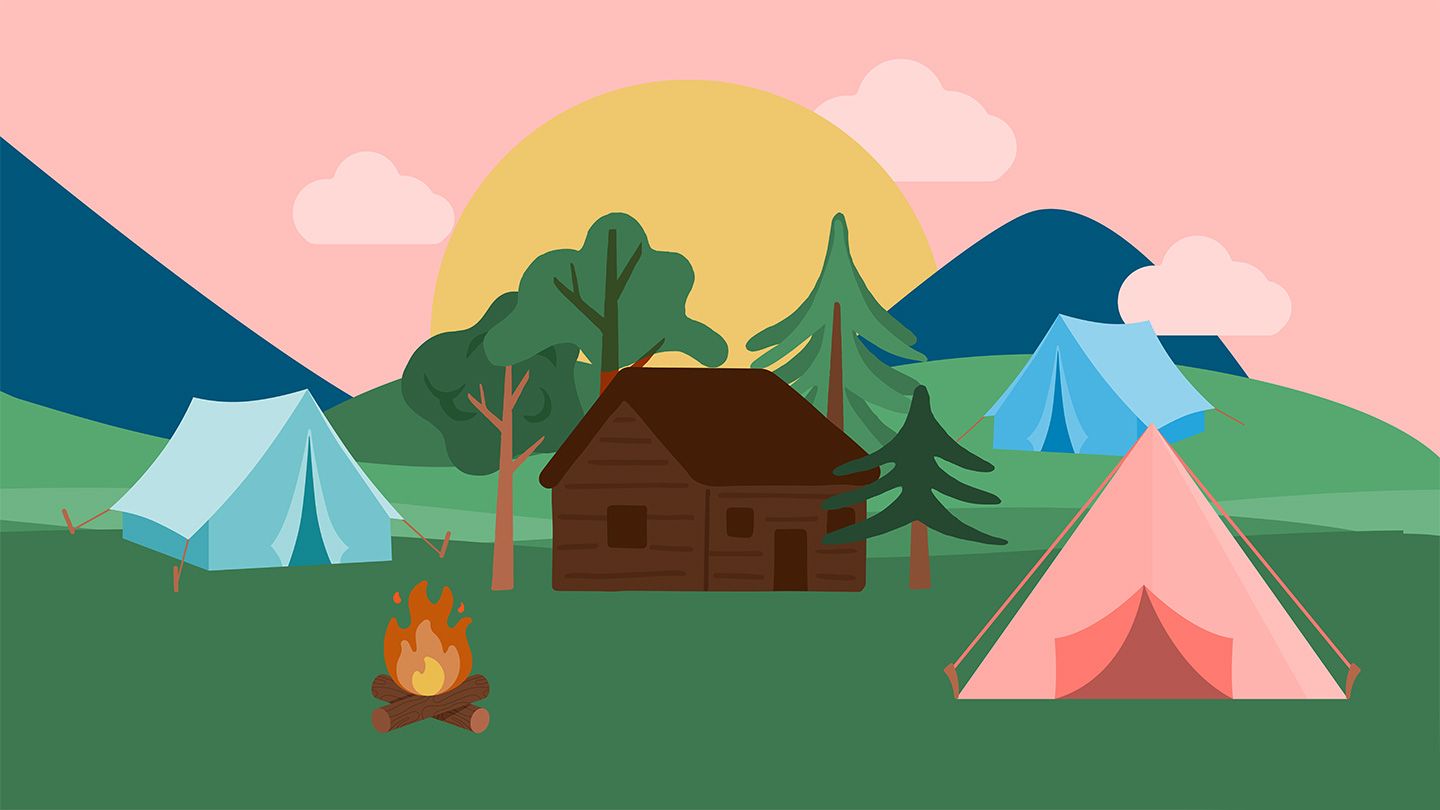
Unless, of course, it’s a summer camp created exclusively and specifically for people affected by breast and gynecologic cancers. That’s Camp Breastie, an annual four-day retreat/summit that welcomes everyone touched by these cancers, in whatever stage of the journey they’re in, from previvors and survivors to those living with stage 4 disease and caregivers. It’s a place, say attendees, where joy and cancer coexist, where community really is healing.
“The value of Camp Breastie is the space it creates for the person you are now, who is fundamentally different than the person you were before a diagnosis or a decision to undergo prophylactic treatment,” says past Camp Breastie attendee and presenter Simran Malhotra, MD, a hospice and palliative care physician and a columnist and medical reviewer for Everyday Health. She’s also a BRCA1 previvor who had a prophylactic mastectomy in 2020, at age 37. “Life just changes, and no matter how supportive and loving your friends and family may be, it’s not the same as coming here and meeting people who are in the same place as you in the journey or can relate to where you are from lived experience,” she says.
We asked some recent (many repeat) Camp Breastie attendees to share the wisdom gathered and lessons learned from their time at camp. Here’s what they have to say.
1. You See How Your Life Could Look, and It Can Be Good
Before she had her surgeries in 2020, Dr. Malhotra’s biggest fear was entering surgical menopause at just 37.
“How would that feel? How would it affect my relationship? I found a person in my same shoes but a few years ahead of me. I connected with her, and it was a ray of sunshine,” she says. “I saw how my life could look. Now having met her, it’s like there’s an invisible string connecting us.”
2. Survivorship Can Be as Challenging as Treatment
Justine Egan-Kunicki, 36, was treated for stage 1B hormone receptor-positive/HER2-positive invasive ductal carcinoma at age 23.
“During treatment, you often have the support and sympathy of others, including your care team. You’re constantly monitored, with your needs being met. But once treatment ends, it’s like you’re dropped into the ocean with a floatie and you have to keep your head above water,” says Egan-Kunicki. “Camp taught me that survivorship can be as challenging as treatment. Just knowing that, and that others feel the same way, is amazing.”
3. You Don’t Need to Explain Your Emotions and Fears — Everyone Gets It
When Jenn Mason, 38, found out that she had the BRCA1 mutation, she realized she craved a community that understood the feeling of having a high risk for cancer but not a diagnosis.
“I’d heard of Camp Breastie, and when I was looking into mastectomy options and was overwhelmed, my husband encouraged me to go. I was anxious I wouldn’t fit in, but I met so many people like me, and people further along who could answer all my questions,” says Mason. “The next year, I attended my second camp, the first after my mastectomy. This year, I attended camp for the third time. It’s like a weekend-long ultra therapy session where you don’t need to explain your emotions and fears. Everyone gets it.”
4. You Learn to Give Yourself Grace
Csilla D., 49, is a previvor with a genetic predisposition and family history of five cancers. “My first camp experience gave me the space to process my mutation, my risk, and my preventive surgeries, and understand the emotional weight that comes with making life-changing decisions before ever hearing the words, ‘You have cancer.’ This past year, I already knew I belonged, so I was able to focus on myself, give myself permission to prioritize my health, and continue advocating for myself,” says Csilla. “I’m proud that I’ve learned to give myself grace. Some days are harder than others, but I’ve stopped expecting perfection from myself. I’m doing the best I can, and that’s enough.”
5. Your Story Is Not Too Much
Annie Bond, 37, has been living with metastatic breast cancer (MBC) since she was 26 years old. “It can feel very isolating to be a person with MBC surrounded by early-stage survivors,” she says, “but at camp, everyone has a space to feel seen, safe, and represented.”
“One MBC thriver shared, at an open mic night, a letter she wrote to the woman who will love her husband and children after she is gone. Outside of this community, many might have told her not to say something like that out loud. But here, we know that cancer is part of who we are,” says Bond. “Camp Breastie is a place where your story is never too much. Cancer doesn’t define us, but it is a part of our story, and we have to be able to explore all the feelings that come with that.”
6. You Belong, Just as You Are
Julie Groob, 41, was skeptical about attending Camp Breastie at first. A cervical cancer survivor, she perceived it as largely a breast cancer community. Would she be an outcast?
“But I learned that cancer type didn’t matter,” Groob says. “The focus was entirely on connection, community, and support. I’m disabled and found fellow disabled Breasties to commiserate with, as well as fellow Breasties who live in my area. The whole experience is about belonging. You show up exactly as you are, and you are fiercely supported for just being you.”
7. There’s No One Right Way to Experience Camp
Genevieve Gassman, 37, was treated for stage 1A invasive lobular carcinoma at age 34. “Camp is whatever you want it to be,” she says. “If you want to spend hours relaxing by the lake, you can. If you want to attend every panel, workshop, and activity, you can do that, too. There’s no right or wrong way to experience it. Do what feels right for you and where you are in your journey.”
Gassman says that camp gave her the confidence to return to her first love, dance, and it gave her the courage to share her story. “If anyone needs encouragement to come to camp, I’d say this: Be open to new experiences, embrace the community, and let yourself enjoy every moment.”
Read the full article here