Living with these symptoms can leave you feeling drained, but you can reclaim joy and boost your energy using these evidence-based self-care tips. While they’re not a replacement for standard medical treatments for Crohn’s, adding them to your treatment plan may help you feel better.
1. Boost Endorphins With Yoga
Any physical activity can lift your mood. And yoga, a type of exercise that incorporates body poses and deep breathing, makes it easy to move your body, even when you’re not feeling your best.
“Yoga has so many benefits, but is also very able to be tailored to what your body is able to do on any given day,” says Brandon. “It can feel really approachable as a way to maintain a routine, even if you’re just doing [yogic] breathing on a particular day.”
If you are in the middle of a flare, you can switch to chair yoga instead, says Heather Ventura-Witcher, PhD, a gastrointestinal psychologist at Cleveland Clinic in Ohio. “The biggest thing I want my patients to take away from physical activity is that they’re doing something to move their body every day.”
Even if you can’t get out of bed, do some light stretches. “That counts,” says Dr. Ventura-Witcher.
2. Choose an Energy-Boosting Diet
Your body needs food to function, though it can be hard to eat enough with Crohn’s. But missing out on nutrients can deplete your energy and affect your mood.
Ventura-Witcher recommends these diet tips.
- Eat six to seven small meals a day instead of three big meals.
- If you can’t tolerate solid food during a flare, drink protein shakes and take provider-approved fiber supplements.
- Try to limit alcohol, especially during a flare.
3. Set the Stage for Restful Sleep
When you have Crohn’s, you can get stuck in a cycle of poor sleep and inflammation, says Ventura-Witcher. “If we’re not sleeping well, our risk of inflammation and a flare goes up. And then when we’re in a flare, our digestive symptoms — having to run to the bathroom, having abdominal pain — make it really difficult to sleep.”
Ventura-Witcher breaks this cycle by focusing on sleep quality over quantity. She recommends these tips to get better sleep.
- Sleep in a very quiet environment.
- Don’t look at your phone in bed, because the light from the screen can keep you awake longer.
- Only use your bed for sleep.
4. Use Mindfulness to Lessen Stress and Symptoms
“Mindfulness has actually been studied [and research has shown] that there is a reduction of C-reactive protein, which is a marker we use to determine how active Crohn’s disease is,” says Brandon.
You can practice mindfulness at home using these techniques.
- Deep breathing exercises like box breathing, 4-7-8 breathing, and belly breathing can make you feel calm and relaxed.
- Meditation involves focusing on an object, such as your breath as it enters and exits the nose, the movement of your belly as you breathe, or the repetition of a word or phrase (mantra), which can decrease stress.
- Body scanning is done by closing your eyes and slowly moving your attention from body part to body part, as you notice the sensations in your body, both pleasant and unpleasant, with curiosity and without judgment.
Ventura-Witcher also uses gut-directed hypnotherapy — a specific type of guided meditation. “It allows us to start to reteach the brain, to send out soothing signals through the digestive tract, rather than allowing the inflammation to provide the stress feedback,” says Ventura-Witcher.
You can ask your provider about gut-directed hypnotherapy, but if they don’t offer it, Ventura-Witcher recommends reaching out to an organization like GI Psychology, which can help you find this kind of care. There are also gut-directed hypnotherapy apps, like Nerva, which you can do on your own.
5. Spark Joy With Creative Hobbies
That said, because Crohn’s disease is unpredictable, it can make you want to drop hobbies or cancel social activities you enjoy, says Claire Brandon, MD, a gastrointestinal psychiatrist and the medical director at Whole Body Psychiatry in New York City. “[You] don’t want to feel unreliable, but it creates isolation.”
But sticking with or trying new hobbies can build connection to others and improve your quality of life with Crohn’s, says Dr. Brandon. Try out as many as you need to find one that improves your energy and mood.
You can get crafty with crochet, knitting, painting, or pottery, says Ventura-Witcher. “Other patients [of mine] just have started carving out part of their day to sit down and read a book.”
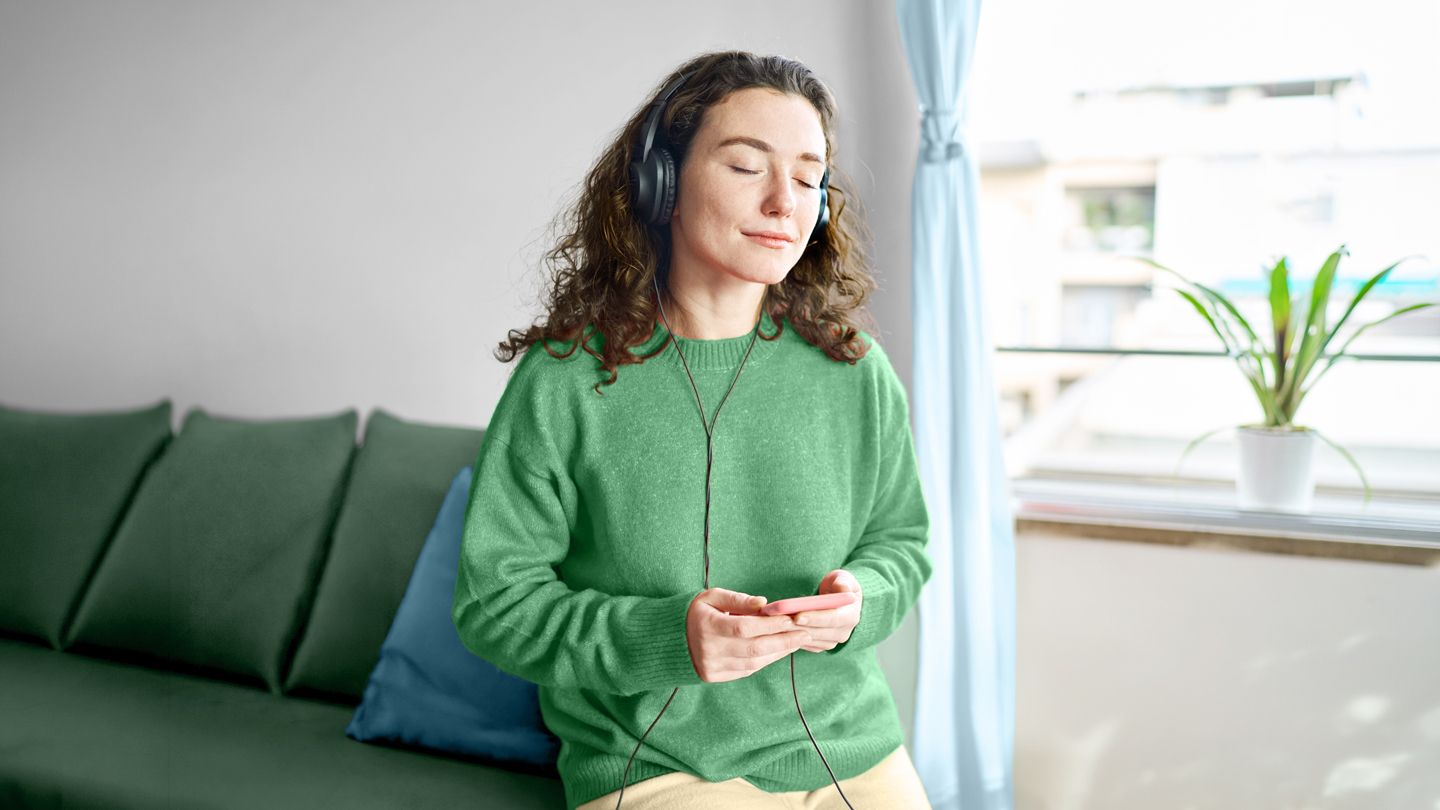
You could also try listening to music, says Brandon. “Music has long been known to be healing.” Studies show that music can lower stress hormones and feelings of sadness, fear, anger, and depression, she says. Another plus: You can listen to music even when symptoms are flaring.
6. Spend Time With People Who Energize You
“It really matters to not feel alone in this disease,” says Brandon. “Knowing what other people are experiencing and feeling — that you’re part of a bigger organization — can help ease the isolation that sometimes comes along with being very medically ill.”
If you’re not sure where to start, check out these groups that offer community and support.
And keep in mind that connection can take many forms. When you’re dealing with a flare, for example, virtual methods, like texting, video calls, voice notes, and email can allow you to stay in touch with people you value, at a pace that works for you.
7. Practice Self-Compassion
“I encourage my patients every day they’re going to have three items on their to-do list,” says Ventura-Witcher. “Number two and number three on that list are tasks that they want to get completed.”
But the first daily task has to be one activity that shows yourself kindness, whether that’s getting your favorite coffee, watching a movie, or taking a nap on your lunch break, says Ventura-Witcher.
How to Get Started
When you don’t feel your best, it can feel tough to get up each day, much less try a new hobby or sign up for a support group. But you can start slowly.
“It doesn’t have to be something that takes a long time. You can take 30 seconds to pause in your day and to take a couple of deep breaths,” says Ventura-Witcher.
“Or when the weather is not so dreary and awful, you can step outside for just a minute and come back in,” says Ventura-Witcher. When you start small, you can build something into a regular practice, says Ventura-Witcher.
Some people feel guilty for taking the time and effort to recharge with Crohn’s. But by doing these things, you can improve your quality of life and even reduce flares, says Brandon.
Read the full article here