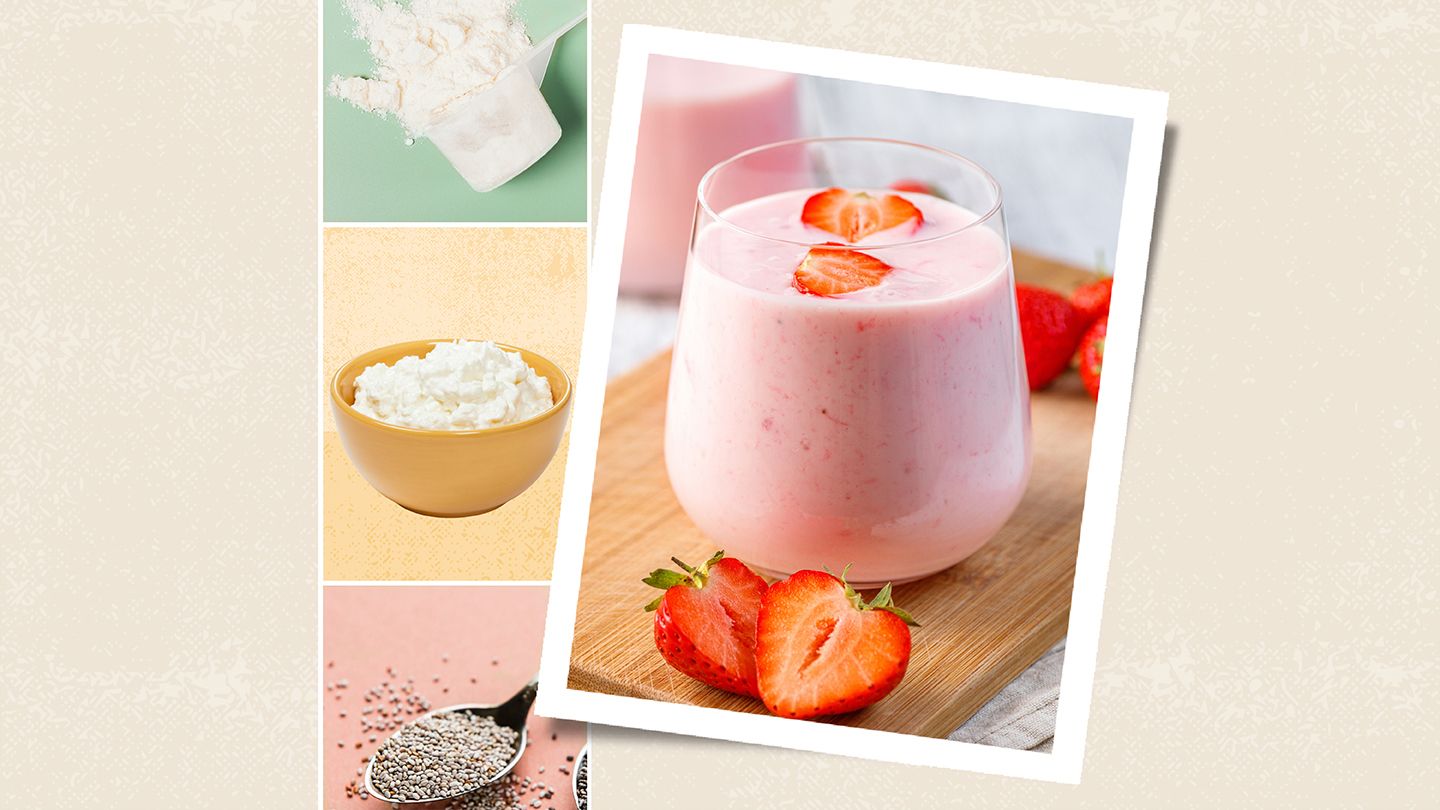
The Best Types of Protein for Smoothies
A scoop of protein powder is far from the only way to add this valuable nutrient to your smoothies. Although protein powders are convenient, they are considered a dietary supplement and therefore are not regulated by the U.S. Food and Drug Administration. That means no one is checking to see if the actual ingredients or amounts listed on the label are truly in the scoop of protein. Protein powders tend to be processed, and may contain added sugars, calories, and harmful contaminants like heavy metals and pesticides. To avoid these toxins, choose a protein powder that is third-party tested.
Many whole foods are great sources of high-quality protein. These include:
- Kefir A fermented dairy beverage, kefir contains probiotics, which aid in digestion and support immune health. One cup of nonfat plain kefir contains 9 g of protein.
- Milk One cup of cow’s milk contains 8 g of protein and is fortified with vitamin D and vitamin A, which support bone health and the immune system.
- Soy Milk Nondairy milks can vary greatly in their protein content, but soy milk is a good option for a protein base, delivering 7 g of protein per cup. Choose a plain, unsweetened carton of soy milk to limit added sugar intake.
- Greek Yogurt Because it is strained, Greek yogurt has more protein than the regular kind, with a whopping 25 g per cup of nonfat Greek yogurt. It also contains live and active cultures, which support gut health.
- Cottage Cheese Cottage cheese packs an amazing 23 g of protein into a cup, per USDA data, and its lumpy texture smooths out in the blender.
- Tofu Silken tofu blends easily, and a 3.5-ounce serving contains 7.4 g of plant-based protein. It also adds a creamy mouthfeel to smoothies and contains iron.
- Nuts Peanuts pack the most protein per serving of all nuts with 7 g per ounce, although almonds and pistachios are close behind with 6 g per ounce each. You can add nuts by the handful to your blender or add a tablespoon (tbsp) or two in nut butter form. Just be sure to use natural nut butter without added sugar or salt.
- Seeds Like nuts, seeds offer a trifecta of protein, fiber, and healthy fat in a small package. Just 2 tbsp of chia or hemp seeds has 6 g of protein, while the same amount of sunflower or pumpkin seeds has around 3 g.
- Oats This whole grain can thicken a smoothie without affecting the taste much. You can add any variety of oats to your blender, from steel cut to quick cooking. Just half a cup of quick oats packs 5.5 g of protein.
Once you stock up on your favorite quality protein sources, you can combine them to make all kinds of delicious and filling smoothies.
All Everyday Health recipes meet expert-developed nutrient goals, considering several dietary guidelines. Learn more about the methodology used to develop and tag each of the recipes on this list as healthy.
Read the full article here