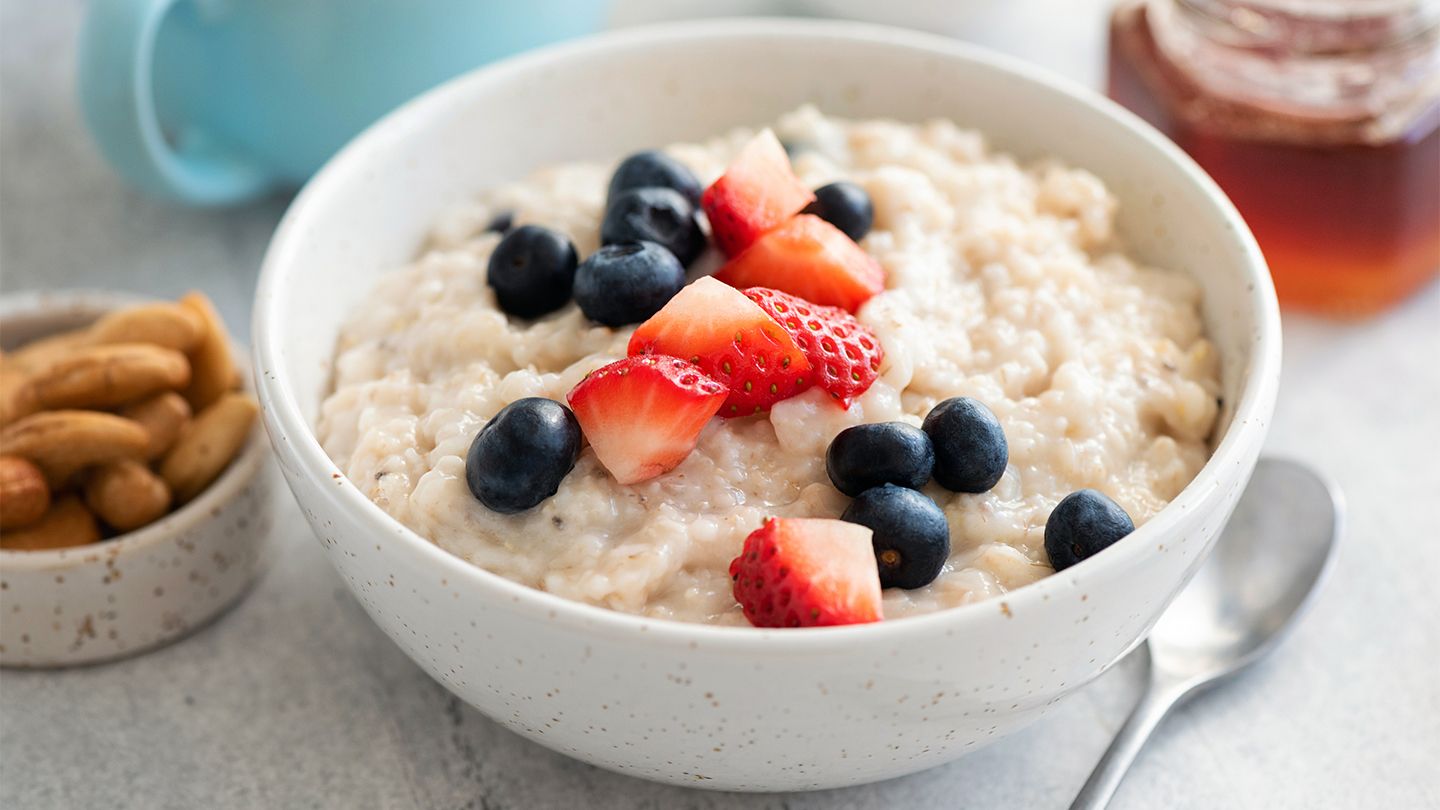
Oatmeal is a healthy breakfast that’s packed with complex carbohydrates (including fiber), vitamins, and minerals. Plus, it can be an excellent vehicle for nutritious toppings like nuts, seeds, and fruit, says Ginger Hultin, RDN, Seattle-based owner of Ginger Hultin Nutrition Practice and author of the Anti-Inflammatory Diet Meal Prep e-book.
What’s more, oats are naturally gluten-free, making them a good source of carbs for people with specific dietary needs, such as those with celiac disease, says Hultin. (However, some oats can still contain traces of gluten, so always check the brand you’re buying.)
Another thing to pay attention to is the type of oats you’re eating. For the most health benefits, choose steel-cut, old-fashioned, or rolled oats instead of instant or quick oats. Although these choices have similar fiber content, steel-cut oats have the lowest glycemic index. That means your body will digest them more slowly, helping keep blood sugar and energy levels more stable.
Next time you’re planning breakfast and considering oatmeal, keep these seven potential perks in mind.
1. Oatmeal Is a Stellar Source of Fiber
A bowl of oats can help you consume the recommended amount of fiber per day. According to the current Dietary Guidelines for Americans from the U.S. Department of Agriculture (USDA), people should aim to eat 25 to 29 grams (g) of total fiber.
Most Americans are eating less than half of that, according to Harvard Health Publishing. With 3.98 g of fiber per cup, cooked oatmeal covers about 14 percent of the daily value of this nutrient, making it a good source, according to the USDA.
Eating a diet rich in whole grains and other food sources of fiber has been shown to be protective against cardiovascular disease, type 2 diabetes, and colorectal cancer.
2. Oatmeal Is a Blank Canvas for Nutritious Toppings
A bowl of oats provides plenty of carbs, with one cup providing 28 g of carbs (or just over 10 percent of the U.S. Food and Drug Administration’s daily value). You can add toppings that are packed with protein and healthy fat to make your morning meal more balanced, says Hultin.
Try nuts like walnuts, almonds, or pecans; nut butter like almond or peanut butter; or seeds like chia, hemp, or ground flax. “These add protein, unsaturated fats, and even more fiber,” she says. Fresh fruit is another option — try sliced strawberries, blueberries, or raspberries for additional nutrients and fiber.
Read the full article here