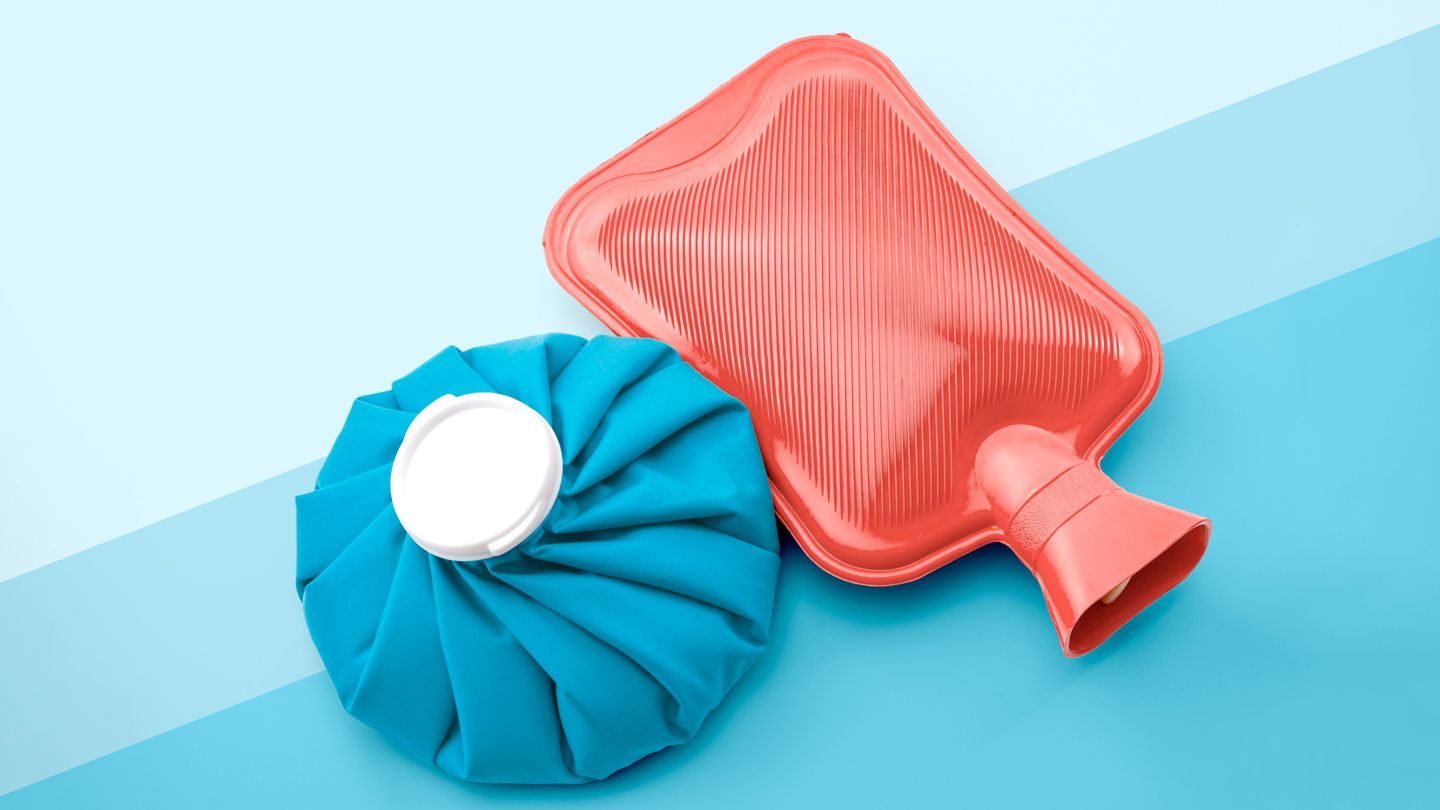
Doctors typically recommend using ice to help ease pain. There’s even an oft-used acronym: RICE, which stands for rest, ice, compression, and elevation. Applying ice to acute pain can help relieve discomfort by minimizing swelling, reducing inflammation, and numbing the affected area. Icing an injury can help it heal faster, too, and continue to ease pain a week or two after you first experienced the ailment or injury.
Injuries and Ailments to Ice
Ice is recommended for the following injuries and ailments:
- Swelling or redness from a new injury, such as a strain, sprain, pulled muscle, or bruise
- Pain after a fall or impact, such as a bump on the head or a finger caught in a door
- Acute pain due to overuse or tendinitis, as from a flare or shin splints
- Pain and pressure from a fever, headache, or migraine
- Pain from a cut or scrape
- Pain after surgery or an injection, if approved by your doctor
When to Apply Ice
When it comes to icing an injury, don’t delay. “The best time to use a cold pack or ice is immediately after the injury, because your goal is to decrease inflammation. And getting inflammation under control early on will help speed along your recovery and get you mobile faster,” says Michael Richardson, MD, a family medicine physician and expert in men’s health, sports medicine, and fitness in Wellesley, Massachusetts. For a typical strain, sprain, or overuse flare, cold packs should be started as soon as practical, especially in the first 24 to 48 hours, when pain and swelling tend to be most active. “[That’s] when the swelling and inflammatory process is being unleashed,” says Douglas Chang, MD, PhD, a physical medicine and rehabilitation specialist and professor of orthopedic surgery at the University of California in San Diego School of Medicine.
But it’s not an all-or-nothing situation. Ice can still help later for pain after activity or rehabilitation sessions.
How Long and How Often to Apply
To effectively use cold for acute pain, regularly apply it, and monitor your pain level. “Apply ice for 15 to 20 minutes at a time — once or twice an hour, while awake, in the first 12 hours and then about every other hour after that,” says Dr. Chang. You can repeat the use of ice “every few hours, as needed, during the first couple of days,” says Dr. Marascalchi. “Continue as long as it meaningfully reduces pain or swelling, and then taper.”
How to Use Cold for Acute Pain
When using ice to ease pain and swelling, be sure to protect your skin from frostbite by placing a thin barrier, such as a washcloth or paper towel, between the ice and skin, says Chang. “It’s important not to have it too cold, so it doesn’t damage the surrounding tissue,” says Dr. Richardson.
As for which kind of ice pack to pick, the choice is yours. Commercially made versions are fine (you may have several in your freezer right now from past summer picnics), or simply place some cubes in a resealable bag with a bit of water. Richardson suggests making the homemade pack with crushed ice, water, and salt. “The salt will lower the freezing point of the water and allow the water to be colder in liquid form. And the crushed ice gives you more uniform cooling across a larger surface area, compared with a solid block of ice.”
You can also grab a bag of frozen peas or corn, as these options “conform nicely to the body part,” says Chang. But skip a frozen ribeye, says Richardson. “Leave steak in the freezer, and instead go with that bag of peas. It’s flexible, it covers more area, and it’s a lot more hygienic.” For headaches, a cold wrap or mask can be positioned around the eyes, face, and neck for relief.
Precautions With Ice
Ice is a simple, effective treatment for acute pain, but there are some instances where it’s not recommended. For example, “You wouldn’t necessarily use it prior to a workout,” says Richardson. Any stiffness you feel before exercising may only get worse with ice.
Chang recommends not using ice (or stopping the application of it) if any of the following is true:
- Your skin becomes white, painful, or numb.
- You have a skin infection.
- You have circulation problems, nerve damage, or a history of neuropathy, such as from diabetes.
And if you’re using ice for knee pain, “Don’t put ice over the outer side of the knee,” says Chang. “Icing there can inadvertently affect the peroneal nerve and cause a few weeks of foot drop,” which is weakness in the muscles on the top part of the foot that’s usually due to nerve compression.
Read the full article here