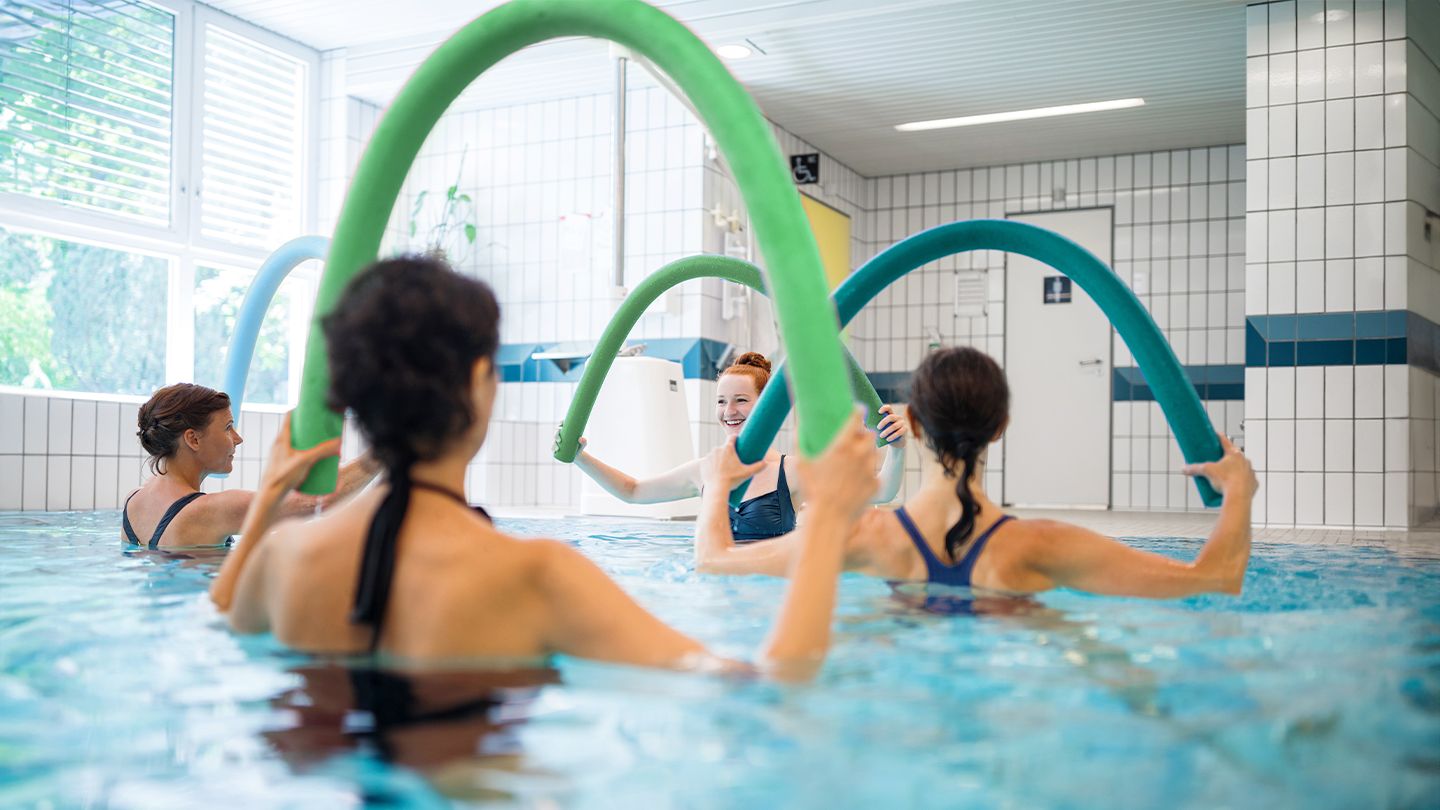
Benefits of Water Aerobics
It’s Low Impact
Angel Ruest, a group fitness instructor at Life Time Fitness in Westminster, Colorado, says that the top benefit of water aerobics is that it’s easy on the joints.
Your body becomes more buoyant in the water, so there’s less impact on joints, bones, and muscles. The water’s resistance also slows down your movements and keeps them fluid, meaning there’s less jerkiness or risk of injury.
It Builds Community
Ruest frequently sees how water aerobics helps to build community and gets older adults out of their home and into interactive social situations. And research suggests that socializing may improve cognitive function in people 70 and older.
Water aerobics classes can be a fantastic opportunity to get out of the house and meet some new friends and members of the local community. Plus, exercising with friends may make it more fun, which could help you stay engaged and more consistent with your workouts.
It Benefits Your Brain Health
Not only is water aerobics a physical workout — it also works out your brain.
A meta-analysis of 10 studies found that physical exercise improved the cognitive function of older adults.
Plus, aquatic exercises improve blood flow, which has also been shown to benefit your memory and cognition.
It Provides a Full-Body Workout
“Depending on the type of class and water depth, water aerobics really is a full-body workout,” Ruest says.
Aqua fitness targets your heart and muscles at the same time.
You may aqua jog or walk as part of the workout, using your legs and core for stability. Water weights or above-water hand motions are commonly part of the workout routine as well.
This gives you a workout focused on both strength and cardio, since the water adds resistance to your movements.
It Supports Cardiovascular Fitness
Plus, just being in the water benefits your heart by helping it move oxygen more efficiently to the muscles you’re using during exercise. So, even if you have a heart-related health condition, you might still be able to enjoy water aerobics without worry about your heart working too hard.
That said, before starting any aquatic exercise, ensure that your vital signs are stable and that your doctor has given you the go-ahead. Water exercise is therapeutic and fun, but it may overload your heart if you have a condition that’s not being properly treated.
It Can Help Relieve Stress
It Helps You Build Core Strength
Properly executing water aerobics movements forces your body to activate your core to keep you balanced and stable in the water. In one small study involving people who had undergone lumbar fusion, aqua exercise plus home exercise improved trunk flexor strength.
The extra resistance from the water also activates your core as you perform each move.
It Can Be a Recovery Workout
Water aerobics can help you wind down from your other recent workouts, thanks to its low-impact nature and relaxing quality, and it can lower pain levels and give you more freedom of motion. All of this helps counteract the effects of land exercise, while promoting rest and recovery.
It Improves Mobility and Flexibility
Water aerobics provides a safe environment for you to move your body with less risk of injury.
Some of the movements may involve bending toward your toes, reaching behind you to stretch your quads, or reaching upward to stretch your back and arms. Even if you stumble or lose your balance during a stretch, the water makes for a soft landing. This can even boost your confidence and help reduce your fear of falling when you’re back on solid ground.
Plus, the weightless effect of water can make stretching and mobility movements feel less constrained or laborious.
It May Help Soothe Your Muscles
Some water aerobics classes are done in heated therapy pools. The heat loosens joints and relaxes muscles. In this case, for people living with joint aches or mobility challenges, the water itself may be therapeutic.
Other aqua fitness classes may be held in cooler lap pools. Cold water can have an anti-inflammatory effect on muscles, which may reduce soreness and aid in recovery.
Read the full article here