A rare variant of the Ebola virus is fueling a large outbreak in the Democratic Republic of Congo, with more than 500 suspected cases and at least 130 suspected deaths so far, according to Tedros Adhanom Ghebreyesus, PhD, the director-general of the World Health Organization (WHO), in a video posted on his public Facebook page on May 19.
Among those infected is an American doctor, who has been transferred to Germany for care. Public health authorities have also relocated the doctor’s high-risk contacts for monitoring.
WHO has declared the outbreak a public health emergency of international concern. The director-general said he was “deeply concerned about the scale and speed of the epidemic.”
Ebola outbreaks occur periodically, especially in western and central Africa. But experts say this outbreak is different.
Here’s why this outbreak has gotten the attention of the international public health community and how the U.S. has reacted.
This Ebola Outbreak Is Large — and Expected to Grow
WHO first received notice of the outbreak on May 5. On May 14, blood sample analyses confirmed that the cases involved a form of Ebola known as Bundibugyo virus disease (BVD).
Fatality rates from the past two Bundibugyo virus disease outbreaks ranged from 30 to 50 percent. There is no specific vaccine or treatment for Bundibugyo virus.
“The outbreak is quite a bit larger than the original numbers reported,” says Emily R. Smith, PhD, a researcher and the interim chair of the department of global health at the George Washington University Milken Institute School of Public Health in Washington, DC. The rapid increase in case counts suggests reports of more illnesses will be coming, she says.
While cases have largely been limited to Democratic Republic of Congo, a Congolese man who had contracted the virus traveled to Kampala, the capital city of Uganda, where he died.
The virus spread undetected for weeks after the first known death, Dr. Sellick says. “Some of the diagnostic tests for Ebola may not work as well for this strain as they do for other strains,” he explains.
As a result, some people who had the virus were told that they did not, and were not isolated from the general population, allowing the disease to spread.
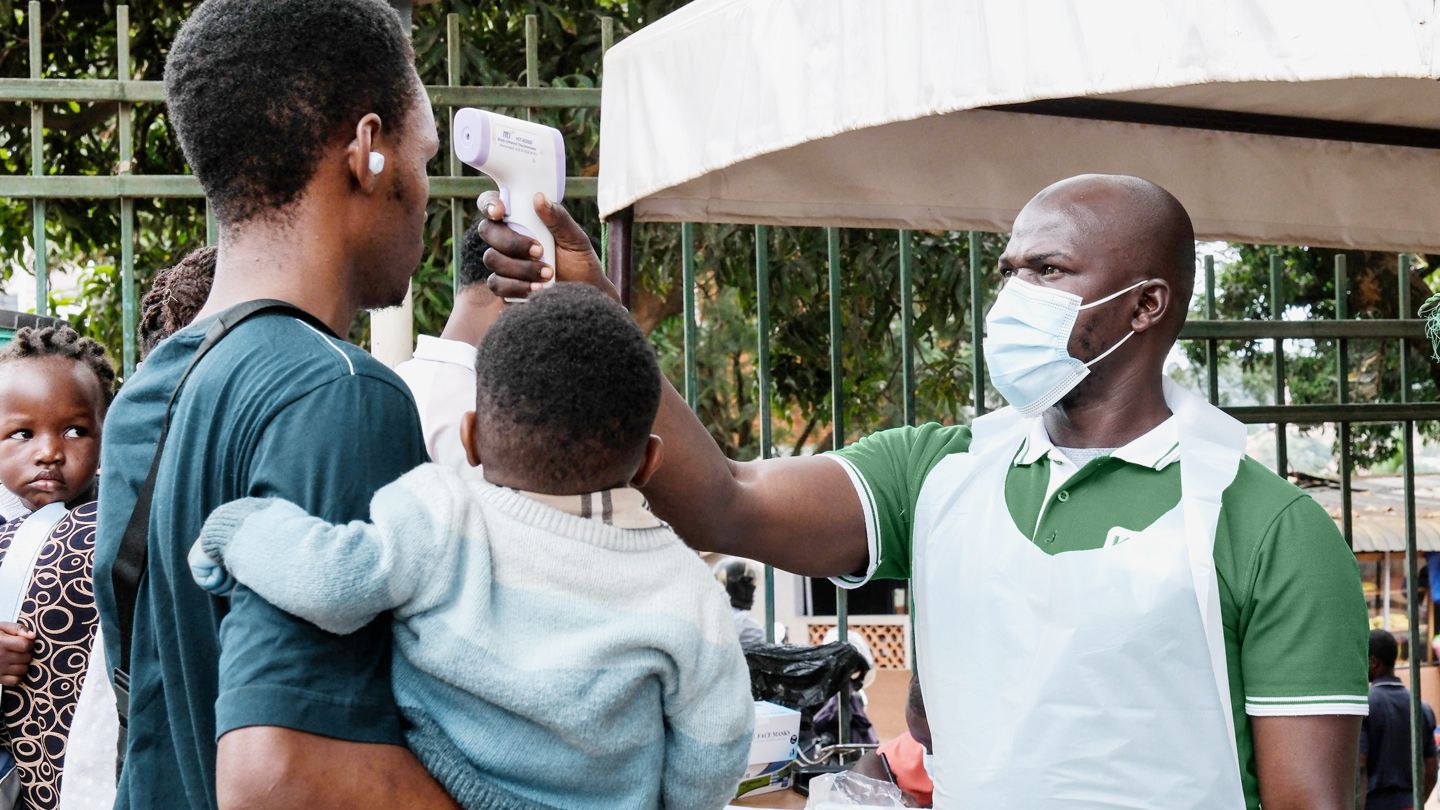
Healthcare Workers May Be at High Risk of Infection
Tedros also noted that healthcare workers have died.
“This also reinforces why healthcare worker protection is so critical in Ebola outbreaks,” says Anne W. Rimoin, PhD, MPH, the chair of infectious diseases and public health at the UCLA Jonathan and Karin Fielding School of Public Health.
“Ebola does not spread casually through the air, but healthcare settings can become high-risk environments if cases are not recognized quickly, if personal protection equipment is not used properly, or if infection prevention protocols break down,” she says.
How Does Ebola Spread?
Ebola is caused by an infection with an orthoebolavirus, a family of viruses found mostly in sub-Saharan Africa. Orthoebolaviruses can cause serious and deadly disease, with a mortality rate that can be as high as 90 percent, depending on the strain.
“The major concerns with Ebola are its high fatality rate and its mode of transmission,” Dr. Varga says. “The virus spreads through direct contact with the bodily fluids — blood, vomit, feces — of an infected person, or with objects contaminated with these fluids.”
Initial Symptoms of Ebola Can Be Hard to Recognize
Early symptoms of Ebola, which include fever and a headache, are vague, making this illness difficult to diagnose early, Varga says. “Once the disease progresses to the hemorrhagic phase, it is devastating,” he says.
The virus can cause diarrhea, vomiting, and unexplained bleeding, including bleeding from the eyes, Sellick says. “It’s a fairly gruesome death,” he says. “You cannot imagine the amount of fluid these patients put out in terms of sweat and diarrhea. It happens on a cataclysmic scale in a short period of time.”
Treatment is usually “high-quality supportive care,” like giving patients fluids, electrolytes, oxygen, blood pressure support, and treating complications, Dr. Rimoin says.
“For Zaire ebolavirus, there are monoclonal antibody treatments that have improved survival,” she says. “For Bundibugyo, we do not have the same level of clinical evidence or approved strain-specific therapeutics.”
Could Ebola Come to the United States?
The Centers for Disease Control and Prevention (CDC) and Department of Homeland Security (DHS) have implemented travel screening, entry restrictions, and other public health measures to try to keep Ebola out of the United States.
People arriving from the Democratic Republic of Congo, Uganda, and South Sudan are now subject to enhanced public health screening and traveler monitoring. Non–U.S. passport holders are subject to entry restrictions if they’ve been in those countries in the past 21 days.
But this strategy isn’t as clear-cut as it seems, Sellick says. “They’re trying to stop all travel coming from these countries,” he says. “That’s difficult because people don’t fly directly from where this outbreak is happening to the U.S.” Instead, people traveling to the United States will often have layovers first in countries that are unlikely to be flagged, Sellick says.
“What is unusual is the complexity of this outbreak: a rarer Ebola species, delayed confirmation, cross-border spread, limited diagnostics, and no approved Bundibugyo-specific vaccine or therapeutic,” Rimoin says.
“That makes the response harder than a more straightforward Zaire Ebola outbreak, where the playbook and countermeasures are clearer,” he adds. Zaire is a more common Ebola strain.
Americans Shouldn’t Panic, Experts Say
“The risk to the American public is extremely low,” says Lindsay Busch, MD, the associate medical director of the Emory Serious Communicable Diseases Unit in Atlanta.
The United States has a network of high-level isolation units that are specially trained to receive and treat patients with Ebola and similar diseases while keeping them contained from the general public, she says. “In short, there are many layers of protection to keep the American people safe,” Dr. Busch says.
Dr. Smith agrees. “Ebola doesn’t spread like COVID does,” she says. “It’s not like you can easily catch this from breathing the same air. As an individual, your concern about getting Ebola should be very low.”
Still, Varga says it’s important for Americans to be aware of Ebola. “In a globally connected world, a threat anywhere can become a threat everywhere,” he says. “The primary concern is not a widespread outbreak in the United States, but the potential for an infected traveler to arrive and require immediate, expert care.”
But Smith also says that the United States is “significantly less safe” now than it was nearly two years ago. “The U.S. isn’t part of the WHO anymore. We aren’t the first at the table to get these updates as they’re coming in,” she says. “We aren’t at the frontlines of information and preparedness like we may have been in the past. That’s something we really need to take action on.”
Read the full article here