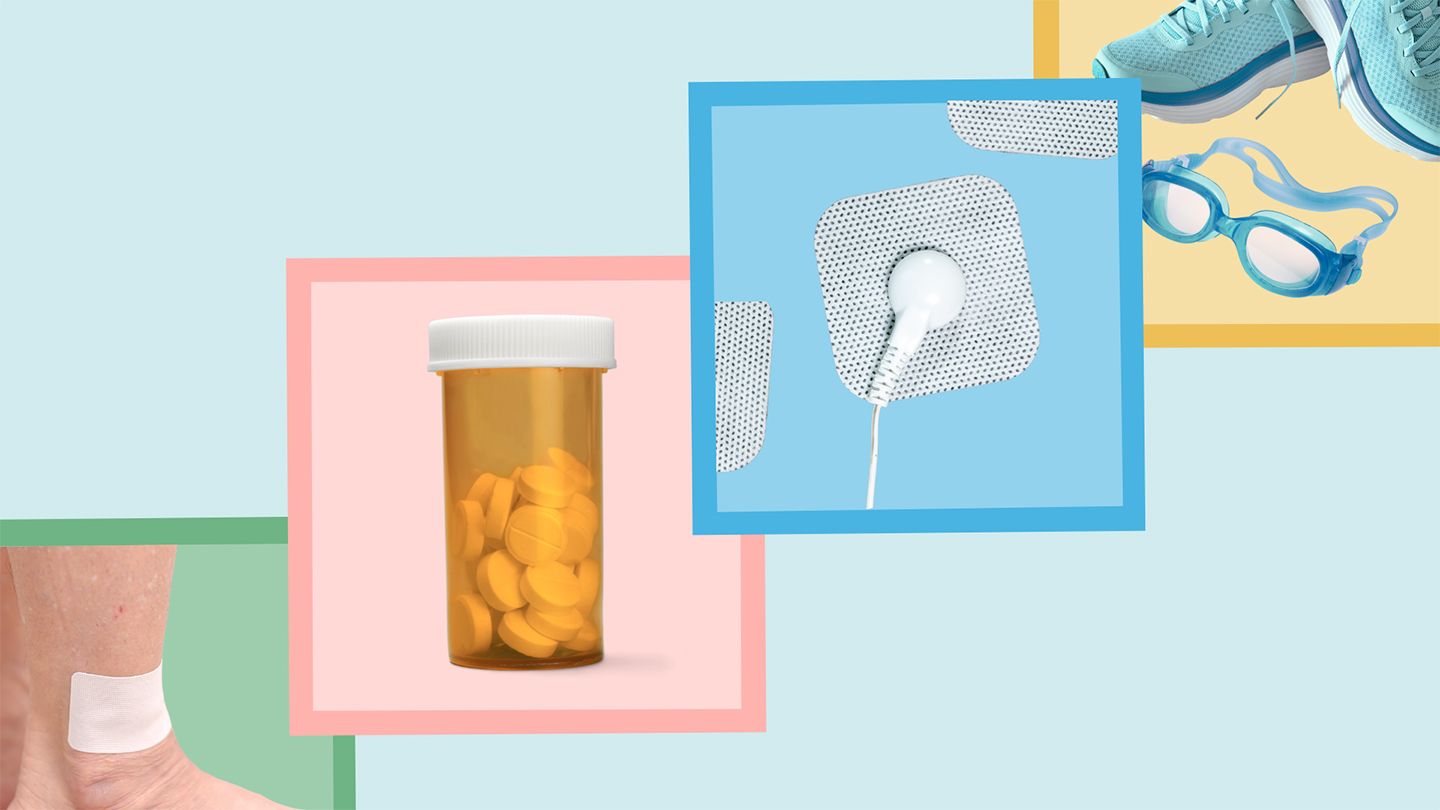
Besides medications and medical procedures, you can lessen your pain with physical therapy and other noninvasive treatments. “Using physical therapy and encouraging activity is extremely important to assist and improve joint pain or instability around joints due to weakened muscles as well as prevent or improve pain from immobility,” says Hurst.
Physical and Occupational Therapy
During this treatment, your therapist may place a warm or cold pack on the painful area and gradually adjust the pressure or temperature until your body gets used to the sensation.
Transcutaneous Electrical Nerve Stimulation (TENS)
Another treatment called transcutaneous electrical nerve stimulation (TENS) sends mild electric currents through electrodes on your skin. TENS can change how your nerves send and receive pain signals.
Unlike SCS, TENS doesn’t require a medical procedure, and it can be less expensive and more convenient. TENS works best for small areas of pain.
Acupuncture
Lifestyle Changes
Psychological Therapy
Psychological therapies can also help you manage CIDP pain, alongside other symptoms, says Dr. Lynch. “What’s important to recognize is that pain in CIDP, like with other chronic diseases, rarely exists in isolation — depression and fatigue so often coexist. It’s about treating the whole patient, not just the nerve.”
Read the full article here