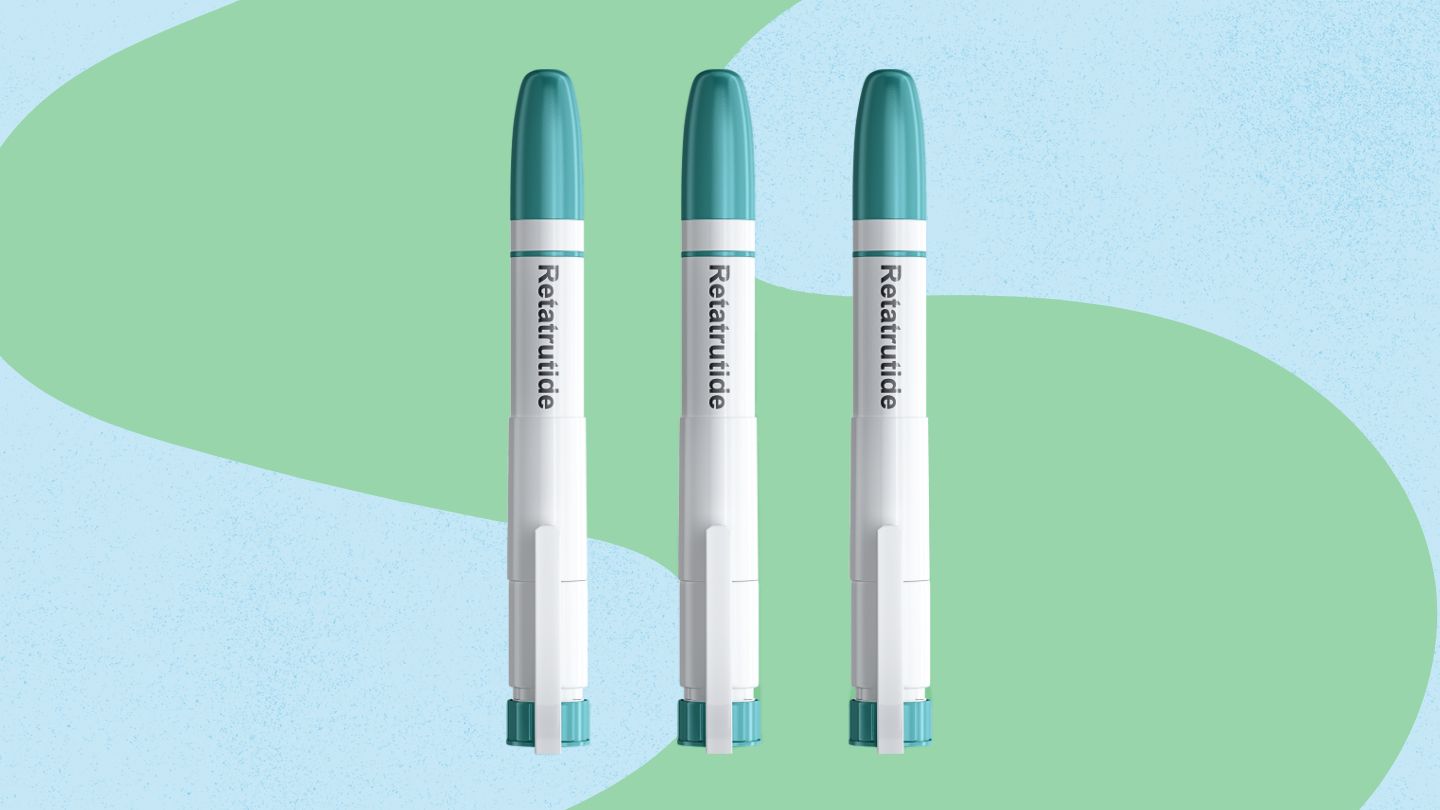
Buzz has been building around the experimental drug retatrutide (“reta”) after data from late-stage clinical trials suggest it could be the most powerful obesity drug yet.
At its highest dose — 12 milligrams — retatrutide can help a person lose 30 percent of their body weight, according to newly published research findings. That’s on par with bariatric surgery results.
But, as with all medications, there are nuances to consider with retatrutide, such as potential side effects. Plus, some people enrolled in the clinical trials dropped out because they worried they were losing too much weight.
That raises the question: Is retatrutide too strong?
“Is bigger always better? Is bigger always needed? Is bigger always right? And the answers are no, no, and no,” said Alice Yuk-Yan Cheng, MD, an associate professor of medicine at University of Toronto, during a presentation on the retatrutide trial results at an American Diabetes Association meeting on June 6. “Not every person requires, wants, needs, or should have weight loss at these high numbers.”
Here’s what doctors want you to know about who could benefit from retatrutide and when a different drug might be better.
What Is Retatrutide and How Does It Work?
Retatrutide is a first-in-its-class triple agonist medication, also known as a “triple G.” It targets receptors for three different hormones: glucagon-like peptide-1 (GLP-1), gastric inhibitory polypeptide (GIP), and glucagon (GCG).
By focusing on these three receptors, the medication reduces appetite and slows digestion, leading to weight loss. (The recent clinical trials also identified other health changes, including improvements in knee osteoarthritis pain, type 2 diabetes, and obstructive sleep apnea.)
Retatrutide is unique in targeting three hormone receptors. Semaglutide (Wegovy, Ozempic) aims at one receptor (GLP-1), while tirzepatide (Zepbound, Mounjaro) homes in on two (GLP-1 and GIP).
The third receptor that interacts with retatrutide, glucagon, targets liver fat and may prompt the body to burn more calories. “That is completely absent in the prior two medications,” says Rutuja Patel, DO, the medical director of medical weight management at Northwestern Medicine Central DuPage and Delnor Hospitals in Illinois.
Retatrutide is administered as a once a week shot, just like injectable semaglutide and tirzepatide.
The Data: How Much Weight Loss Can Retatrutide Cause?
Last month, Eli Lilly, the maker of retatrutide, released top-line results from its late-stage (phase 3) clinical trial named TRIUMPH‑1.
TRIUMPH‑1 took place over 80 weeks and involved more than 2,300 adults with obesity who were randomly assigned to receive either retatrutide or a placebo.
Participants on retatrutide received doses of 4, 9, or 12 milligrams (mg). Each person who received retatrutide started with a 2 mg dose, with amounts increasing every four weeks until they reached their targeted dose.
Average results varied by dose and time frame:
- Participants taking a 4 mg dose lost 47.2 pounds (lb), or about 19 percent of their starting body weight.
- Participants who took a 9 mg dose lost 64.4 lb, or about 26 percent of their starting weight.
- Adults who took the 12 mg dose lost 70.3 lb, or about 28 percent of their starting weight.
The trial included a 24-week extension period at doses of 9 or 12 mg for about 500 adults with a BMI of 35 or greater, which is classified as severe obesity. People on the maximum dose lost an average of 85 lb after 104 weeks, or slightly more than 30 percent of their starting body weight. Of those, more than 65 percent reached a BMI of below 30 within 80 weeks, which no longer classified them as having obesity.
“The average percentage weight reduction is really high,” says Richard Siegel, MD, the codirector of the Diabetes and Lipid Center at Tufts Medical Center and an endocrinologist at Tufts Medicine Weight & Wellness Center–Stoneham. “It’s well toward the middle of the range for what we see for bariatric surgery. Tirzepatide is in the lower to middle range.”
Doctors caution that clinical trial results are often more impressive than real-world results. “I expect the numbers will be lower on average in a clinical setting,” Dr. Siegel says.
What About Retatrutide’s Side Effects?
While the weight loss results are impressive, 11 percent of trial participants on the highest dose of the medication discontinued treatment because of side effects. (By comparison, about 5 percent of participants on the placebo discontinued use due to side effects.) That’s raised questions about real-world use and tolerability.
The most common side effects in the trial included:
- Nausea (about 29 to 42 percent of participants, depending on the dose)
- Diarrhea (25 to 34 percent)
- Constipation (24 to 26 percent)
- Vomiting (11 to 25 percent)
- Upper respiratory tract infection (12 to 14 percent)
These side effects are consistent with other injectable weight loss medications, according to Siegel. But retatrutide was also linked with these unusual side effects:
- Dysesthesia, or nerve sensitivity (about 5 to 12.5 percent, depending on the dose)
- Urinary tract infections (about 7.5 to nearly 9 percent)
These side effects were usually mild to moderate, and typically happened as people transitioned to a higher dose of the medication. Most participants continued to take retatrutide, despite the side effects.
Side effects are common on these medications, and Dr. Patel says it’s important to talk to a healthcare provider “right away” if you experience them. “We can work with patients to mitigate most of the side effects for these medications,” she says.
Does Retatrutide Cause Too Much Weight Loss?
A number of participants dropped out of the retatrutide clinical trials because they thought they were losing too much weight, Lilly stated.
Some researchers have also voiced concern that a 25 to 30 percent reduction in body weight could compromise some patients’ health, perhaps by leading to nutritional deficiencies or loss of muscle mass.
“We really need to be asking ourselves, is it about weight loss or is it about health gain? That’s what we ultimately care about,” said Dr. Cheng at the diabetes conference.
Patel emphasizes it’s important to consider the needs of each patient when prescribing any weight loss drug. “We should not look at these medications as ‘weak’ or ‘strong,’ but consider the needs of each patient individually,” she says.
As for the rate of weight loss, Siegel says, “With all of these medications, this is where it’s important to have a discussion with your provider on your progress. If the weight is coming off too quickly, you may need to downregulate a dose or perhaps switch to a medicine that’s less potent.”
Siegel points out that the lower 4 mg retatrutide dose yielded a 19 percent body weight reduction, with a significantly lower rate of discontinuation, suggesting this may be a more tolerable option for many. “I generally tell people that if they’re having mild nausea or constipation, see if you’re able to ride it out,” he says. “But if you’re having significant vomiting or major nausea, let me know. Communication is really important.”
When Will Retatrutide Be Approved?
Retatrutide is an investigational drug and is not yet approved by the U.S. Food and Drug Administration (FDA). Some online retailers claim they have the medication for sale, though. “Any place that sells it is not selling an FDA-approved product yet,” Patel says.
Phase 3 clinical trials for retatrutide are continuing through 2026. Many doctors anticipate that the medication may be FDA approved sometime in 2027, Siegel says.
Patel says the retatrutide discussion should serve as a reminder that ongoing patient-doctor communication is vital with any weight loss drug.
“The medical tools are becoming more and more successful but, just like we do not let patients who undergo bariatric surgery have surgery without ongoing support, we need to make sure patients who take these medications are also receiving the right kind of support.”
Read the full article here