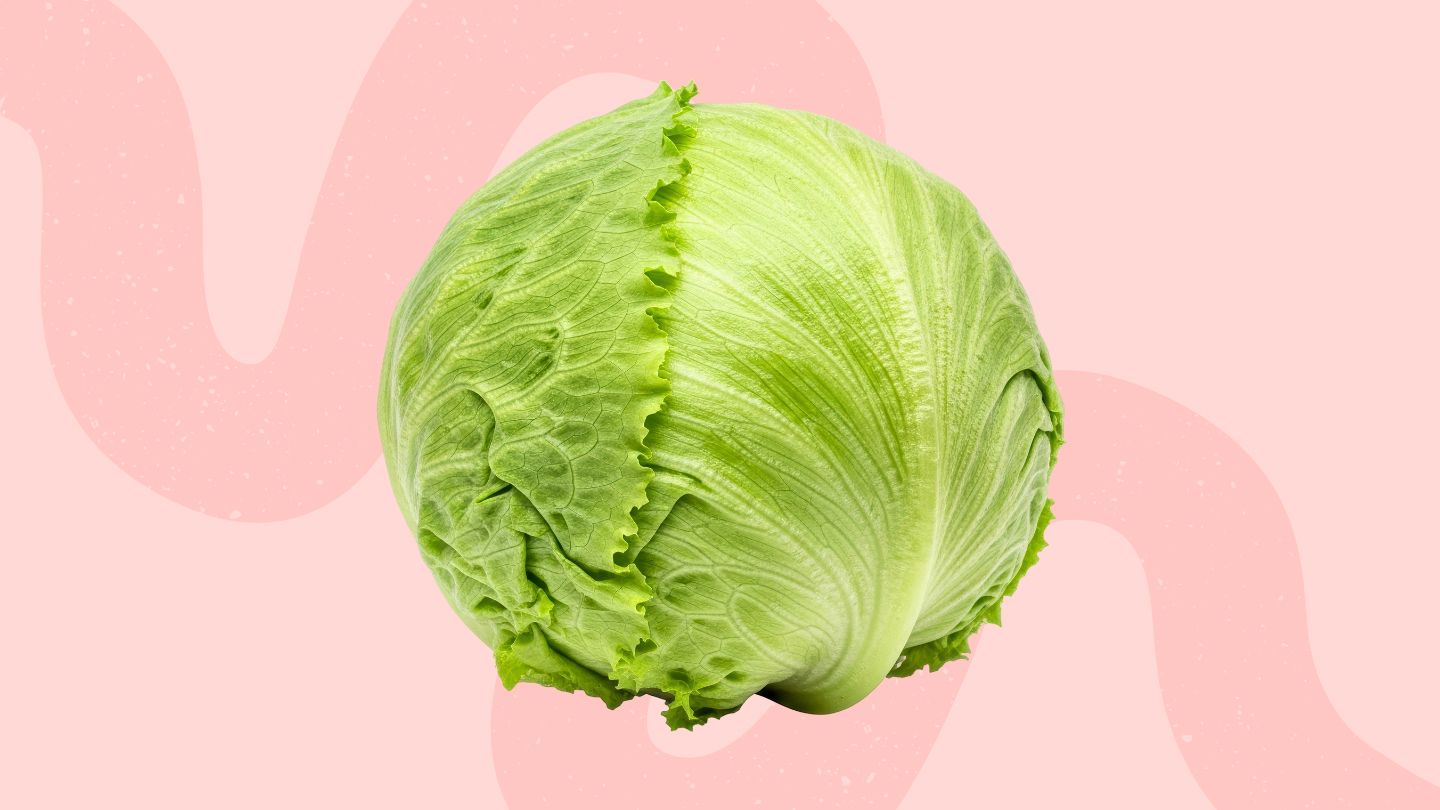
The cyclosporiasis outbreak that has sickened thousands of people across the United States has gotten confusing.
On Saturday, the FDA said a sample of iceberg lettuce from Taylor Farms tested positive for Cyclospora — seemingly confirming that the outbreak source had been found. But in an agency update on July 19, the FDA said the result was a “false positive.”
“Due to the complexity in detection of Cyclospora, FDA laboratory experts re-reviewed the sample results and have concluded that the finding does not represent true amplification and should be considered a false positive,” an updated statement from the FDA says.
The agency said it continues to work with Taylor Farms “to ensure product implicated in this outbreak has been removed from the market” before stressing that “as of July 19, 2026, there are no confirmed positive sample results for product testing for Cyclospora.”
All this is leaving consumers understandably confused. “People in large numbers are really sick across more than half of the states,” says Darin Detwiler, PhD, the author of the book Food Safety: Past, Present, and Predictions and a professor at Northeastern University in Boston.
“Consumers understand that science takes time. What they don’t understand is why the story seems to change from one day to the next.”
Here’s what food safety experts want people to keep in mind as the outbreak investigation unfolds.
Which Iceberg Lettuce Has Been Recalled?
Taylor Farms recalled iceberg lettuce distributed in the following states.
- Alabama, Arkansas, Connecticut, Florida, Georgia, Iowa, Illinois, Indiana, Kansas, Kentucky, Louisiana, Massachusetts, Maryland, Michigan, Missouri, Mississippi, North Carolina, New Hampshire, New Jersey, Ohio, Oklahoma, Pennsylvania, South Carolina, Tennessee, Texas, Virginia, and Wisconsin
The recall lists brand codes, not actual names, making it hard to know where affected lettuce was sold and served. All but one were listed as food service brands.
The FDA confirmed that the following lettuce sold at Walmart, under its house brand Marketside, was included in the recall:
- 12-oz and 24-oz Iceberg Salad with Best If Used By dates 7/18/2026 to 8/3/2026
- 8-oz and 16-oz Shredded Lettuce with Best if Used By dates 7/18/2026 to 8/3/2026
Taylor Farms said recalled products were limited to iceberg lettuce grown and processed in central Mexico. “All other Taylor Farms products, including all Taylor Farms branded products currently available, are not involved in the recall.”
Cyclospora Testing Isn’t as Easy as It Sounds, Food Safety Experts Say
Kalmia E. Kniel, PhD, is a professor and the chair of microbial food safety at the University of Delaware in Newark, where she tests food samples in her lab for the presence of Cyclospora. “Testing for Cyclospora in food and environmental samples is extremely difficult,” she says.
Dr. Kniel compares looking for Cyclospora in shredded lettuce to finding a needle in a haystack. “Iceberg lettuce has all kinds of chemicals that we value, along with chlorophyll. All of these can cause problems when you’re trying to amplify a piece of DNA that belongs to Cyclospora,” she says.
Typically, there is only a small number of Cyclospora in a sample, and they can be sporadic, Kniel explains. Researchers will then try to make more of the sample of the parasite that they find, but they’re trying to detect it among “background noise” from all of the other elements in the lettuce.
“When there is more background noise, it can be interpreted as a false positive,” she says. Detwiler also stresses that it’s difficult to accurately test for the presence of Cyclospora in food.
Food Safety Experts Recommend Being Cautious About Iceberg Lettuce
Food safety experts acknowledge that this is confusing. “We know for a fact that a lot of people got sick,” Detwiler says. “But we also know that things we thought we knew, we don’t really know.”
Until there’s more clarity, food safety experts suggest avoiding bagged lettuce and purchasing your iceberg lettuce from farmers’ markets. “Farmers’ markets are still a great way to go, especially one that is direct from the farm,” Kniel says. “We don’t have any reason at this point to believe that a whole head of iceberg lettuce has been involved or implicated at this point.”
Detwiler agrees that purchasing your iceberg lettuce from farmers’ markets is a good idea, “as long as it was truly grown locally.”
Given the confusion and delays in federal-level reporting on the outbreak, Detwiler suggests paying close attention to updates from your state health department. “If you’re paying attention to your state-level information, you’re going to have a little more accurate and timely information,” he says.
What Is Cyclosporiasis?
Cyclosporiasis is an intestinal illness caused by the microscopic parasite Cyclospora. It’s spread through the fecal-oral route, meaning human poop contaminates food, and once eaten, that food makes people sick. The biggest source of cyclosporiasis outbreaks in the United States have historically been fresh produce.
Cyclosporiasis can cause a range of symptoms, including:
- Loud, watery, explosive diarrhea
- Loss of appetite
- Bloating
- Extreme fatigue
- Low-grade fever
- Stomach cramps
- Nausea
- Vomiting
If left untreated, cyclosporiasis symptoms can come and go for weeks.
Read the full article here