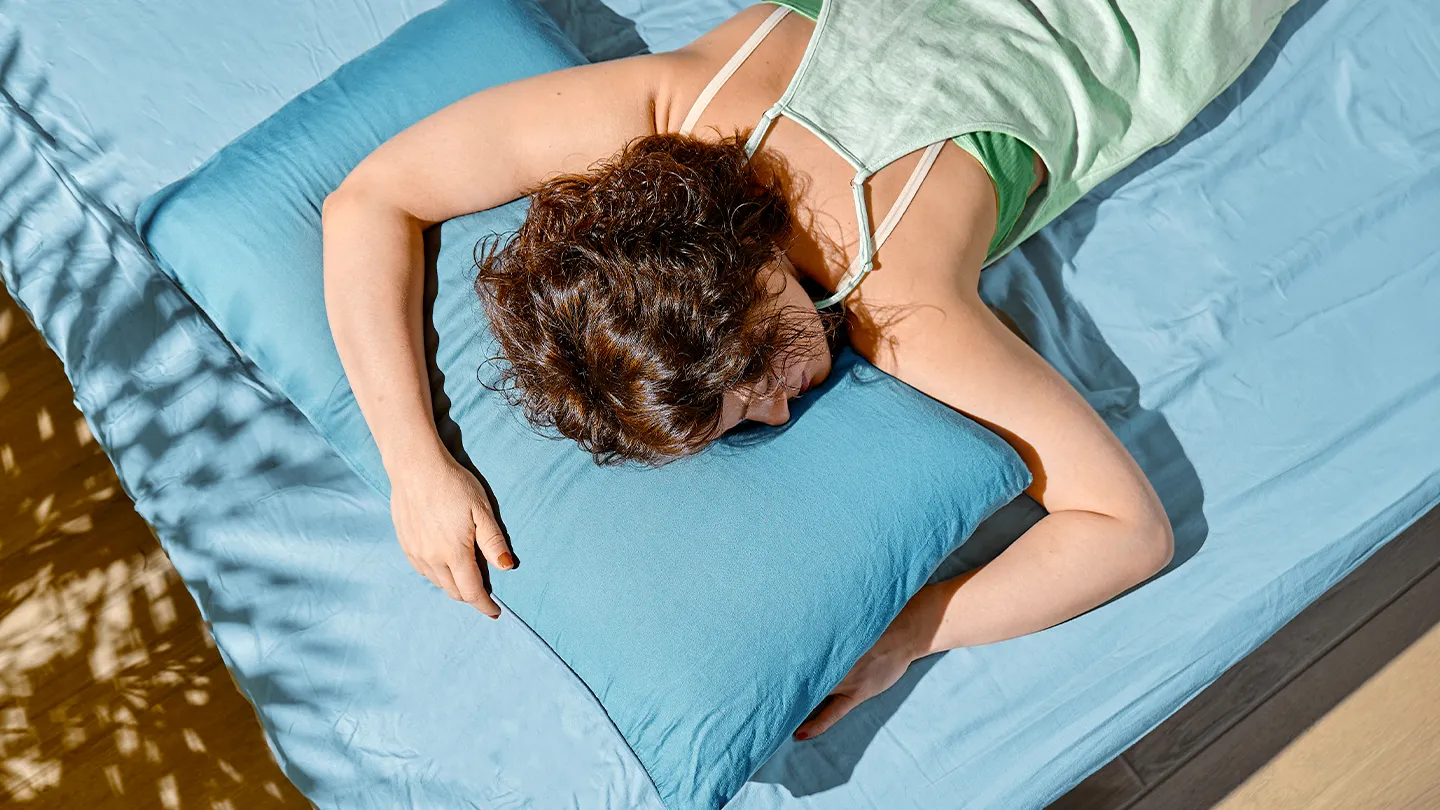
“A little drooling during sleep is common and usually not something people need to worry about,” says Davud Sirjani, MD, an otolaryngologist at Stanford Medicine in Palo Alto, California.
Here are some common causes of nighttime drooling and when to see a doctor.
1. Sleep Position
Try sleeping on your back instead. If that’s challenging, you can use pillows to prop yourself up and keep yourself from rolling over at night.
2. Sleeping With Your Mouth Open
3. Obstructions in Your Nose or Throat
If you think you may have an obstruction, talk to your doctor. They’ll examine your nose and throat and recommend an appropriate treatment, such as:
- Removal of enlarged tonsils (tonsillectomy) or adenoids (adenoidectomy)
- Correction of a deviated septum (septoplasty)
- Removal of nasal polyps
- Reduction of the nasal turbinates (turbinectomy or turbinoplasty)
4. Congestion
5. Dental Issues
Misaligned teeth, poorly fitted dentures, or an open bite (a condition in which the upper and lower teeth don’t touch when your mouth is closed) can contribute to nighttime drooling, says Louis Siegelman, DDS, a dentist in New York City. “The loss of structural support from the teeth and jawbone can change the seal around the lips and potentially lead to drooling,” he says.
Any foreign objects, such as mouth guards, nighttime snoring appliances, orthodontic devices, and tongue or lip piercings, can also contribute to nighttime drooling, Dr. Siegelman says. It’s best to see a dentist, who can determine the cause and the best way to cope. For example, they may suggest refitting dentures or using braces or clear aligners to correct misaligned teeth.
6. Sleep Apnea
These are the main types of sleep apnea:
- Obstructive sleep apnea (OSA) is a condition in which the muscles in the back of the throat relax too much during sleep, temporarily blocking the airway and causing pauses in breathing.
- Central sleep apnea (CSA) occurs when the brain doesn’t send proper signals to the muscles that control breathing, resulting in short pauses in breathing.
- Complex sleep apnea, which occurs when OSA changes to CSA during sleep apnea treatment.
OSA can be treated with a continuous positive airway pressure (CPAP) machine, which keeps your airway open. If you find the CPAP uncomfortable or have only mild to moderate sleep apnea, an oral appliance can help keep your jaw or tongue in the right position. Oral appliances can also increase salivation, though, leading to drooling.
Lifestyle changes — such as sleeping on your side, quitting smoking, avoiding alcohol and sedative medications later in the day, and exercising regularly — may also help alleviate symptoms. Talk to your doctor if you have (or suspect you have) sleep apnea. They can help you determine the best way to cope based on factors such as your specific condition and any co-occurring health issues.
7. Gastroesophageal Reflux Disease (GERD)
You can reduce GERD-related nighttime drooling by avoiding GERD attacks. Some ways to do this include limiting or avoiding trigger foods like alcohol, caffeine, or spicy foods; eating smaller, more frequent meals; staying upright for at least two hours after eating; and elevating your head for sleep. Your doctor may also recommend over-the-counter or prescription medications to help neutralize existing stomach acid, prevent or reduce acid production, and heal the esophagus.
8. Certain Neurological Conditions
Swallowing requires your brain and throat muscles to coordinate. Certain neurological conditions can interfere with that process, leading to excess saliva and drooling. These conditions include:
Keeping drooling under control isn’t just about comfort for patients with neurological conditions; it’s essential for their safety and quality of life. “These cases sometimes carry a high risk of saliva being inhaled into the lungs (aspirated), so they need specialist care — speech therapy, swallowing therapy, and sometimes medical or surgical treatments,” Iroku-Malize says.
If you have been diagnosed with one of these conditions and experience nighttime drooling, speak with your doctor about treatment options. If you’re experiencing new neurological symptoms — such as difficulty swallowing, weakness of the muscles around your mouth, or coughing or choking while eating, drinking, or sleeping — along with nighttime drooling, discuss your concerns with your primary care doctor. They can refer you to a specialist to investigate the possible causes.
9. Medication Side Effects
If nighttime drooling begins after you start a new medication, discuss it with your doctor. “A careful review of a patient’s medications is important, but so is a thorough history looking for other explanations that may be contributing to the problem,” says Sirjani.
10. Other Health Conditions
Other conditions that may cause nighttime drooling include:
- Bell’s palsy from facial nerve inflammation
- Epiglottitis, a medical emergency in which the epiglottis (the cartilage that covers the windpipe) swells, blocking the airway
- Wilson disease, a rare genetic disorder that causes copper to accumulate in the body and leads to drooling due to facial stiffness (dystonia) and swallowing difficulties (dysphagia)
Although nighttime drooling is typically harmless, if it doesn’t go away, worsens, affects your sleep quality, causes skin irritation, or is accompanied by other symptoms, it’s time to see a doctor, Sirjani says. “A new change in drooling, particularly in an adult, should not be ignored.”
If your drooling occurs suddenly alongside difficulty breathing, trouble swallowing, a severe sore throat, hoarse or quiet voice, and stridor (a high-pitched sound when breathing in), this may signal epiglottitis, a life-threatening emergency. In this case, call 911 or head to the emergency room immediately.
Read the full article here