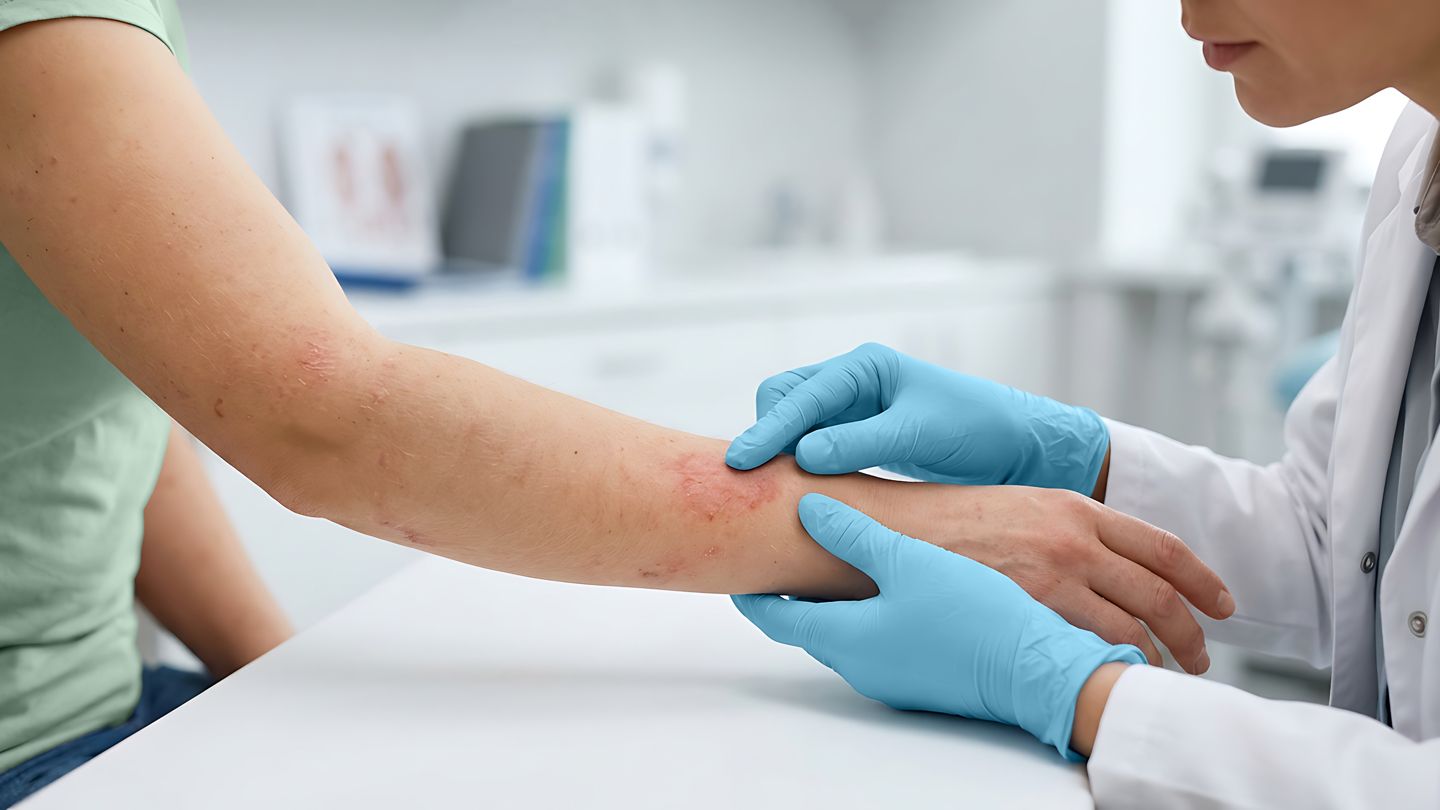
Atopic dermatitis is a treatable condition, but for some people, it can take some trial and error before finding a healthcare provider experienced enough to support them.
“Eczema care has changed dramatically in the last several years, so a dermatologist who treats a lot of it will know the full range of options, rather than just the basics,” says Aderonke Obayomi MD, MPH, a board-certified dermatologist and assistant professor of dermatology at Mount Sinai in New York City.
If you don’t feel like you’re getting the care you need, it might be time to get a second opinion or find another provider altogether. Here are some reasons to pursue it.
You Can’t Come Off Topical Steroids
If your doctor is continually rotating you through topical steroids or you flare up again as soon as you come off a topical steroid, you should seek a second opinion, says Shira Y. Wieder, MD, a board-certified dermatologist at Montefiore Einstein Advanced Care and assistant professor of dermatology at the Albert Einstein College of Medicine in the Bronx, New York.
Long-term topical steroid use comes with risks such as thinning skin, spider veins, and patches of lighter skin, especially on darker skin, says Dr. Obayomi.
Topical steroids should only be used for a couple of weeks, and if your doctor isn’t following that routine guidance, it might be reason to look for someone else, says Dr. Wieder. There are other options at your disposal.
Your Doctor Is Overreliant on Oral Steroids
“For more stubborn cases, there are treatments that address the root immune drivers, so you’re not leaning on steroids indefinitely,” says Obayomi.
You Keep Getting Skin Infections
If atopic dermatitis is not under control (even with medications), you’re left vulnerable to staph infections, other viruses, and fungal overgrowth.
“Skin that keeps getting infected is a sign the barrier and the inflammation aren’t well managed,” says Obayomi. “When eczema is well controlled, those repeated infections tend to settle down, so a pattern of them is worth a fresh set of eyes.”
You Haven’t Discussed Some of the Newer Treatment Options
“For a long time, the toolkit was mostly moisturizers and steroid creams. Now there are targeted biologics and pills that work on the specific immune signals behind eczema,” says Obayomi. “And knowing when to reach for them and which one fits which person takes real experience.”
Those additional treatments can include prescription medications that work on immune cells, including biologics, Janus kinase (JAK) inhibitors, and neurokinin 1 (NK1) receptor antagonists. But you might not know about these if your doctor hasn’t brought them up.
Ask your current healthcare provider about your range of potential treatment options, or consider getting a second opinion. “Not everyone needs [the newer drugs], but anyone with more significant disease deserves to know they exist,” says Obayomi.
You Frequently Feel ‘Rushed’
Your appointment may only be scheduled for 15 minutes. For some people, that simply isn’t enough time. “Eczema is a long-game condition, and it affects sleep, mood, and daily life, so you need someone with the time to actually hear how it’s showing up for you,” says Obayomi. “Consistently feeling brushed off is a real reason to look elsewhere.”
Start by bringing this up with your current healthcare provider by saying you’d really like to spend some time talking about X, Y, and Z. “If you’re not getting what you’re looking for, then you can look to speak to another doctor,” says Wieder.
Your Symptoms Aren’t Better, Despite Following the Treatment Plan
If you’ve been following your treatment plan and still aren’t finding relief, you may need a more specialized doctor who can tailor medication to your circumstances.
“If you’re doing everything asked of you, and your skin still isn’t meaningfully better after a fair trial, the plan needs to change,“ says Obayomi, “not just get repeated. ‘Better’ should mean clearer skin, far less itch, and getting your life back, not simply a little less bad than before.”
“Better” can vary from person to person, though, says Wieder. Some people may want to take a biologic to prevent flares altogether, for instance, while others would prefer to stay on a topical medication and treat an occasional flare. These are personal choices that you should be able to talk through with a specialist.
“They should give you the options, tell you the pros and cons, and then make a decision together with you,” says Wieder.
Your Doctor Seems Unaware of How Atopic Dermatitis Appears in People of Color
“For people of color especially,” she adds, ”finding someone who understands how eczema and its aftermath show up in your skin can be the difference between years of frustration and finally getting somewhere.”
Your Treatment Plan Doesn’t Address Marks Left Behind by Eczema
Ultimately, seeking a second opinion is a way to advocate for your own best care. It’s not being difficult or disloyal. “You don’t have to settle for simply managing eczema anymore,” says Obayomi.
“Skin that’s clear or nearly clear, with minimal itch and nights you can actually sleep through, is a realistic goal for most people — not wishful thinking,” says Obayomi. “Asking for a second opinion is advocating for skin that genuinely feels and looks better.”
Read the full article here