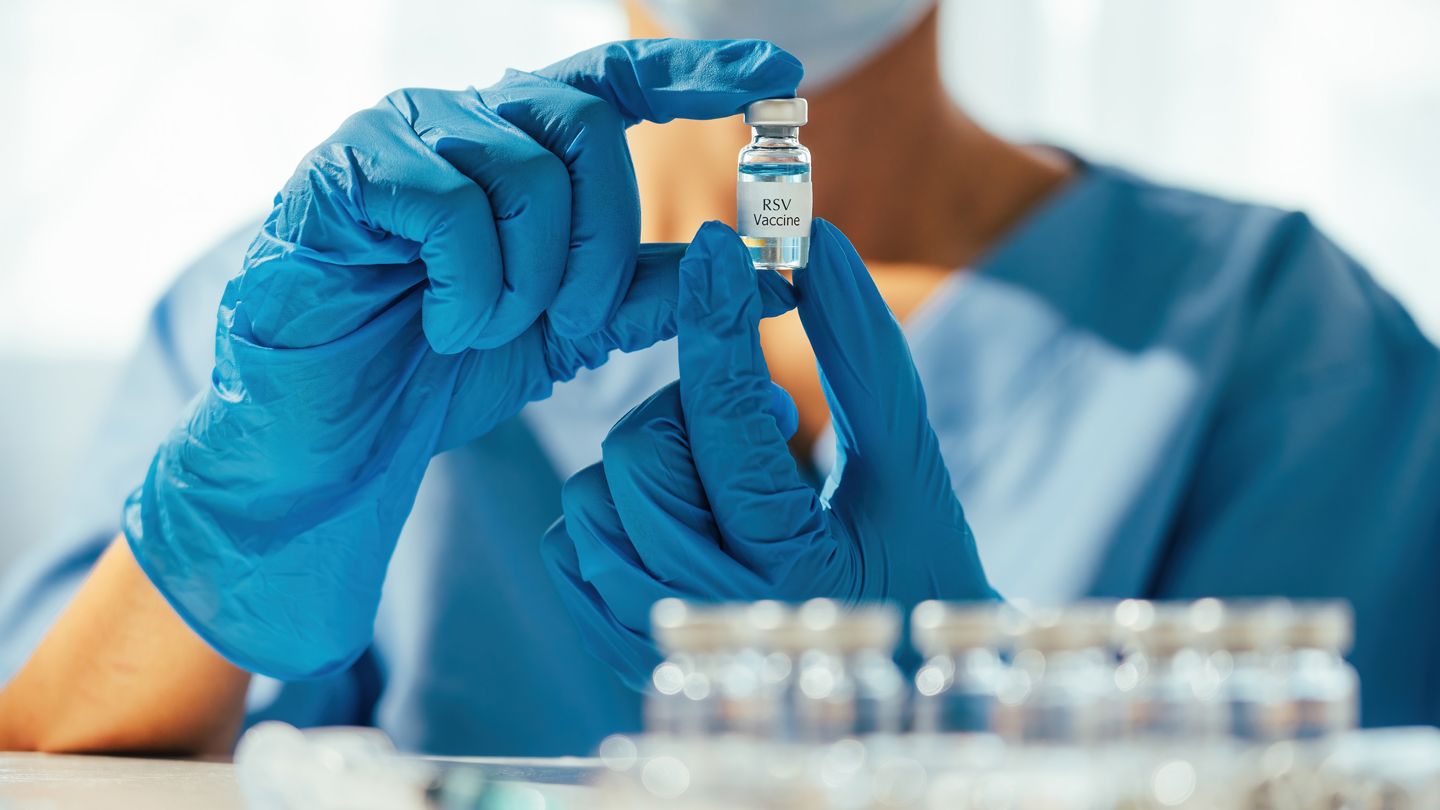
Why the RSV Vaccine Took so Long to Develop
Scientists worked to develop a vaccine for RSV for more than 50 years. In 1966, a trial was halted after two deaths and the hospitalization of 80 percent of the infants who received the experimental inoculation, which contained an inactive version of the entire virus, according to a paper published in November 2022 in Science.
After the failed trial, researchers realized there were fundamental scientific problems that needed to be solved to create a successful vaccine, and that’s been done only recently, says Dr. Adalja.
In RSV, a molecule called the F protein rearranges its structure when the virus infects and joins with a cell. Researchers determined that the failed RSV vaccines of the past were using F protein in an altered (post-fusion) shape that did not generate beneficial antibodies and actually caused harm, Adalja says.
Using innovative means, researchers were able to “pin” the F protein of RSV in its original correct shape (before it fuses with a cell) to generate the type of immunity that was protective, Adalja explains.
The team that uncovered the solution was led by Barney Graham, MD, a professor at the Morehouse School of Medicine in Atlanta and a former researcher at the National Institute of Allergy and Infectious Diseases (NIAID), who also applied this solution to the SARS-CoV-2 spike protein for the COVID-19 vaccine, says Adalja.
Once a means of accomplishing this was found, vaccine developers were able to move forward, Adalja says. “Multiple companies seized on this opportunity once this basic science problem was solved, due to the enormous burden that RSV exacts, conferring a major market opportunity.”
Read the full article here