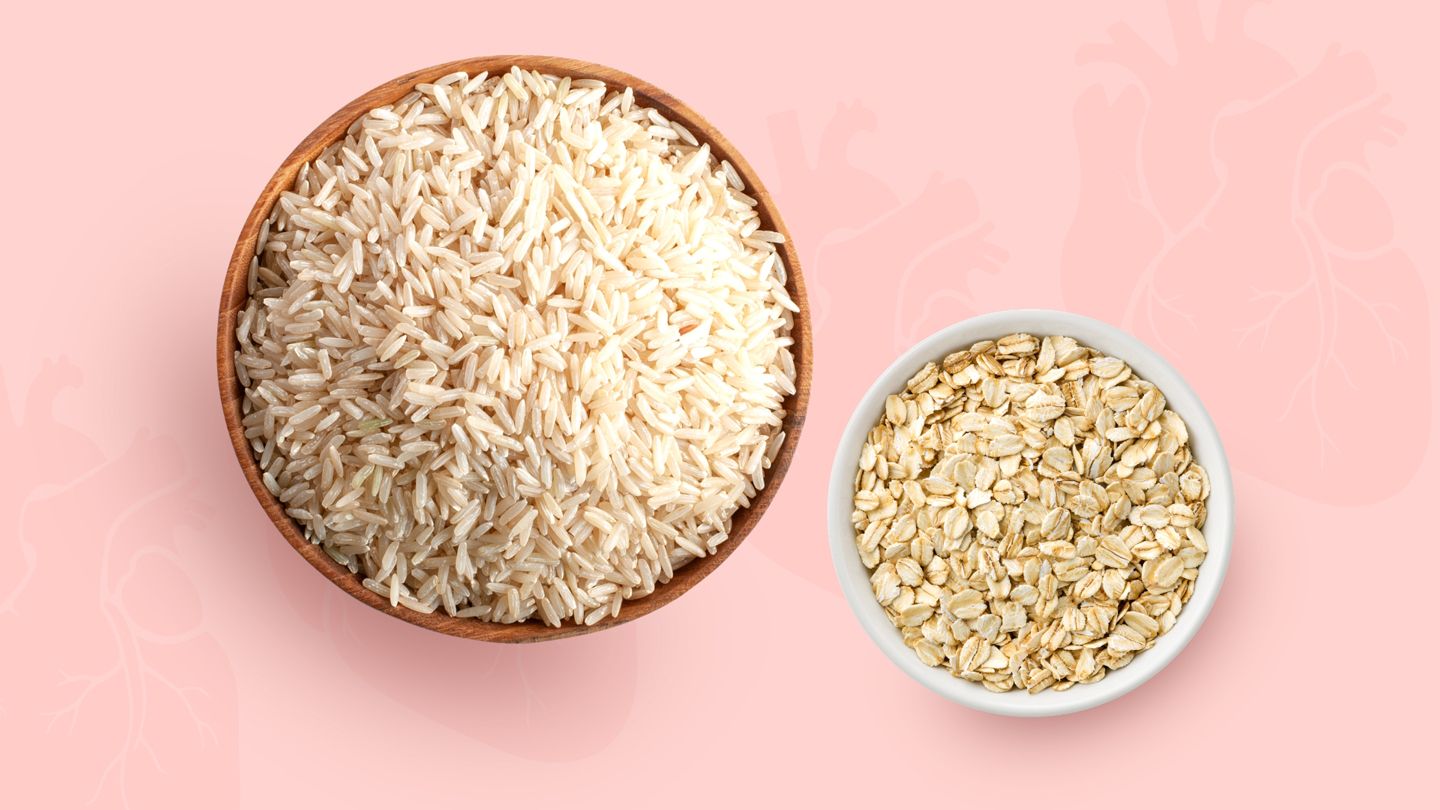
How Whole Grains Can Support Heart Health
Whole grains are rich in fiber, which helps to slow digestion and blood sugar spikes after eating. This can help people to feel fuller, longer, and lower the risk of overeating, says Dr. Rambhatla. “Additionally, these fibers get metabolized by gut bacteria into healthier anti-inflammatory short-chain fatty acids,” all of which can boost heart health, he says.
Soluble fiber can also help lower LDL cholesterol, says Scott Keatley, RD, a registered dietitian and a co-owner of Keatley Medical Nutrition Therapy in New York City.
Whole grains may also boost heart health indirectly. “Part of the benefit may come from what whole grains replace,” for example, highly processed refined grains, which are less nutritious, he says.
4 to 6 Servings May Be Ambitious for Some People
The findings are “encouraging but modest,” Keatley says. “The trials measured cardiovascular risk factors, not heart attacks,” he says. “We cannot fully separate the benefit of whole grains from the benefit of removing less nutritious foods.”
Four to six servings of whole grains is also a “meaningful number of calories,” Keatley says. As a result, it’s crucial to consider these within the context of your caloric needs. “They should replace less nutritious grain foods, rather than be added on top of the diet, or crowding out filling fruits, vegetables, and lean proteins,” he says.
Rambhatla also says that four to six servings of whole grains may not work for everyone. “Individual needs will depend on a person’s overall diet, calorie needs, health conditions, and what foods the whole grains are replacing,” he says.
Study Offers More Evidence of Benefits Offered by Whole Grains
The new study isn’t the first to link whole grains with better heart health.
A scientific analysis of 45 studies published in BMC Medicine in 2022 found that eating three daily servings of whole grains was linked with a 20 percent lower risk of coronary heart disease.
The American Heart Association recommends eating at least three fiber-rich servings of whole grains each day.
The Study Has Some Limitations
The researchers noted in the analysis that the included studies may be biased because they only included participants who stuck with the trial diet for the entire study. In addition, some studies did not report the participants’ diets before increasing their whole grain intake, making it difficult to determine their usual diet before the trials began.
“It is important to keep the results in perspective,” Rambhatla says. “The study had fewer data at very high intake levels, and many of the trials were relatively short, so we should not interpret the findings as meaning that more whole grains are always better.”
How to Incorporate More Whole Grains Into Your Diet
“Focus on meaningful substitutions,” Keatley says. That includes choosing oatmeal instead of sugary cereal, whole-grain toast over a pastry, and air-popped popcorn instead of refined crackers.
But choosing whole grains shouldn’t be the only thing you do for your heart health, Rambhatla says. “Whole grains appear to be one useful component of a heart-healthy eating pattern,” he says. “Whole grains should be viewed as one part of the larger picture alongside an overall healthy diet and other healthy lifestyle habits,” like regular exercise and adequate sleep.
Read the full article here