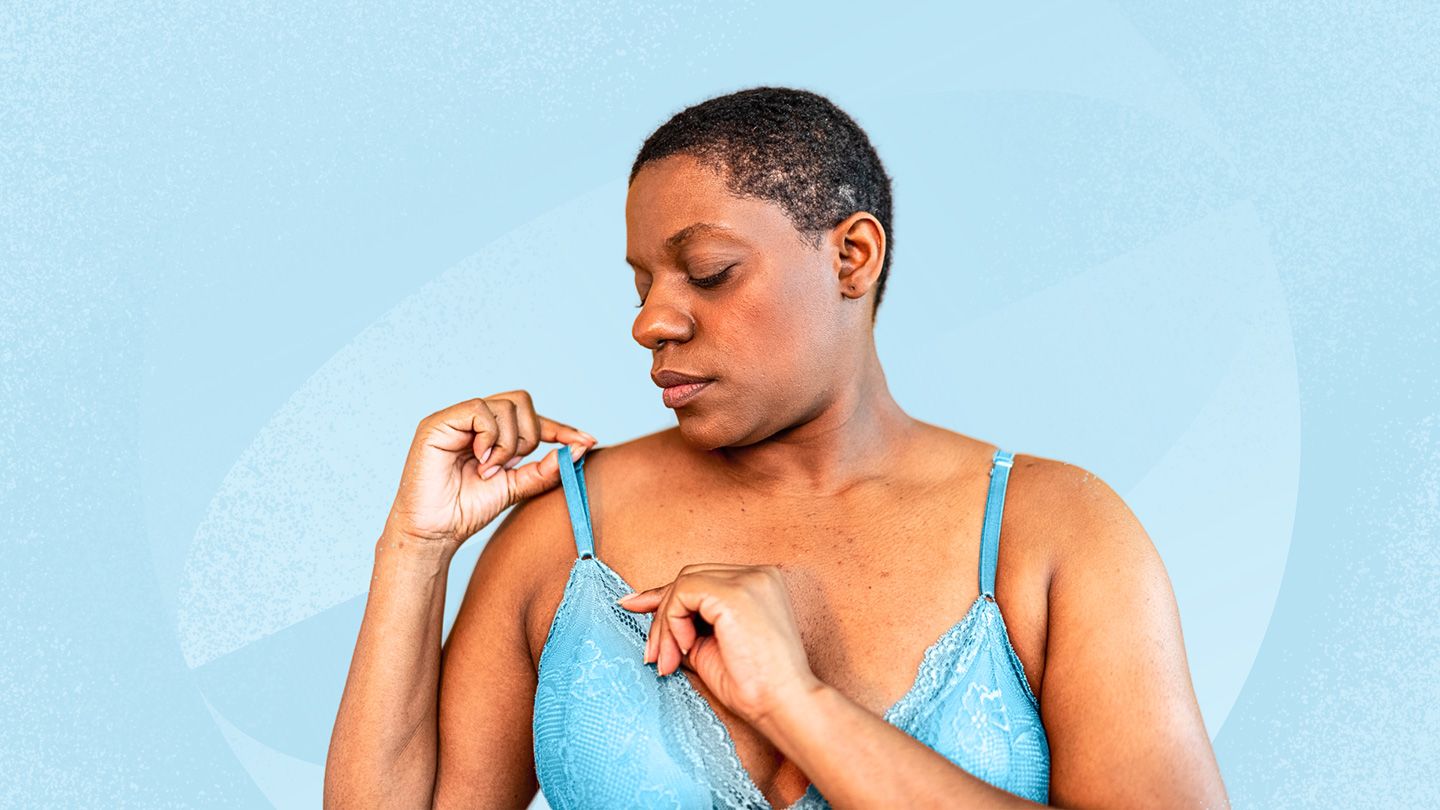
Large breasts, referred to in medical literature as macromastia, can impact multiple areas of the body, raising the risk of a range of health issues.
Musculoskeletal Strain
Posture Shifts
The weight of large breasts can lead to changes in posture over time, according to Molly Gearin, DPT, a physical therapist at Anchor Wellness & WAVE Physical Therapy & Pilates in Ohio.
”Some women may notice shifts in posture to accommodate the changes in load distribution and attempt to offset the muscle strain,” she says. ”They may adopt a more rounded shoulder position, increased roundedness in the upper back, or altered head and neck positioning in response to the added anterior load or discomfort.”
Other women may consciously or unconsciously pull their shoulders back or extend their back through their lumbar spine to counterbalance the weight, Gearin says.
Skin Concerns
Women with larger breasts often have breast tissue that rests against the lower chest and upper abdomen, especially if they can’t find a comfortable, well-fitting bra, Ross says.
That can lead to heat, sweat, and moisture being trapped against the skin.
”As a result, chafing and yeast and bacterial rashes find a home in this environment, especially if no bra is being worn,” she says.
Nerve Pressure
Large breasts can lead to brachial plexus strain, or temporary nerve compression, due to the weight of the tissues stretching or compressing nerves.
Migraine and Sleep Apnea
Research published in the journal Headache in September 2026 analyzed the medical records of almost 700 women treated at headache and neurology clinics affiliated with Stanford Medical Center. The researchers discovered that women with large breasts were 40 percent more likely than those with smaller breasts to have chronic migraine and 50 percent more likely to have obstructive sleep apnea.
There could be a few reasons for the link between large breasts and migraine, including neck pain from the weight of the chest, according to Dr. Segil. ”Neck pain sometimes triggers face and head pains or migraine headaches,” he says.
Read the full article here