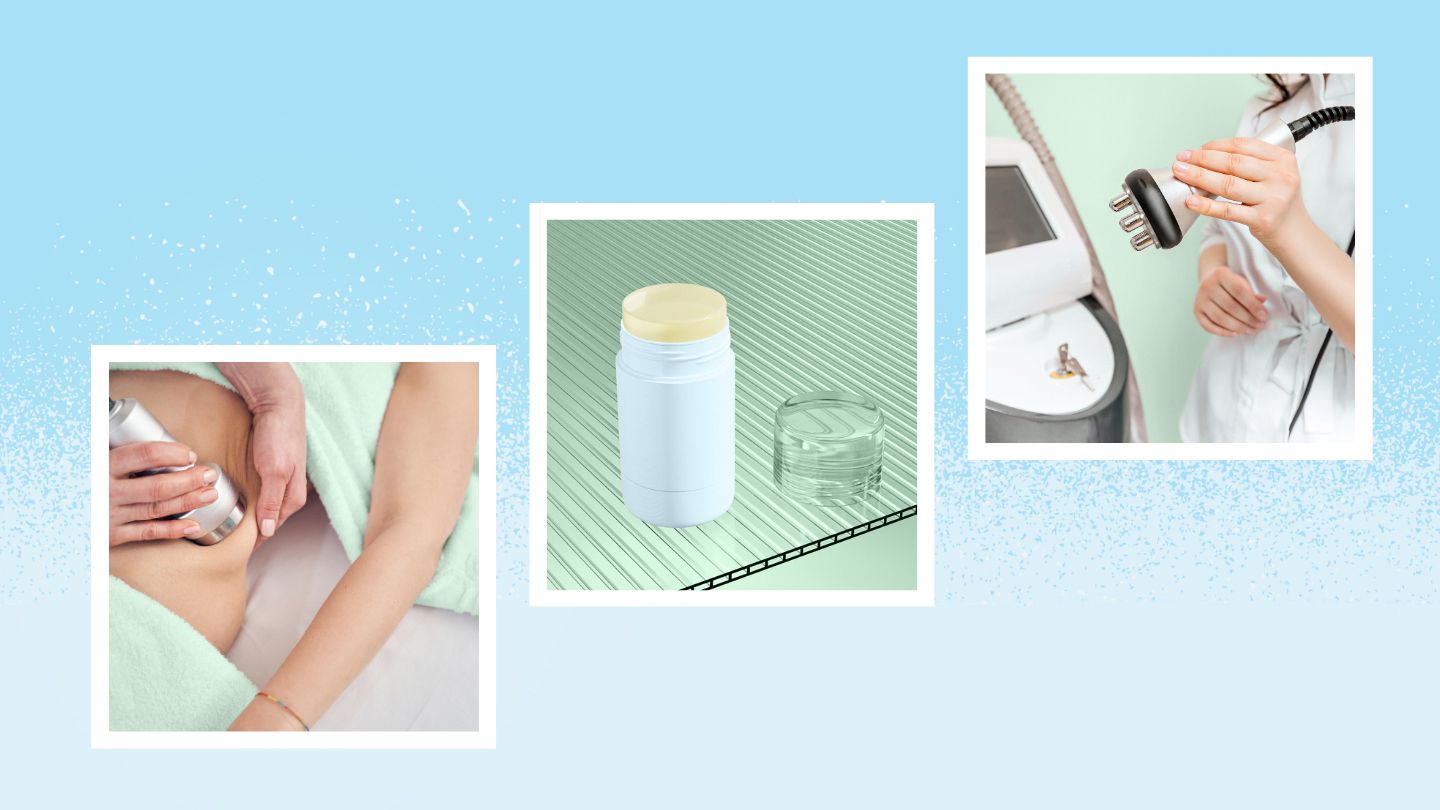
So, if you’re dealing with loose skin after losing a lot of weight, is there anything you can do about it? Experts say yes, but they emphasize staying realistic and patient.
Day-to-Day Options
There are a few products and clothing options you can use to manage loose skin after weight loss:
- Anti-Chafing Balms In either cream or stick form, anti-chafing balms help create a protective barrier to reduce irritation from skin rubbing against skin. “Look for something that reduces friction,” says Wu, “not just a basic lotion.” Jody A. Levine, MD, a dermatologist in New York City, says they are helpful in high-friction areas (for example, the inner thighs and under the breasts), especially during workouts and warmer months.
- Clothing Made of Moisture-Wicking Fabrics Wu and Dr. Levine say these are especially good for active people who sweat a lot. “These help keep skin folds dry, which is key for preventing irritation and fungal overgrowth,” says Levine. “They’re particularly useful for people who exercise regularly or sweat easily. I recommend breathable, technical fabrics.”
- Specialized Undergarments or Compression Clothing These can really help minimize the appearance of loose skin by providing support. “These are very underrated,” says Wu. “They can help people feel more comfortable by reducing the movement of loose skin under clothes, plus they help them feel more confident in clothes by giving a smoother silhouette.”
- Comfortable and Supportive Clothing Wu recommends sturdier, looser fabrics over filmy, tight ones. “Slightly thicker, structured fabrics that skim the body can feel better than very thin, clingy ones,” she says.
Nonsurgical Interventions
There are various topical and in-office treatments for loose skin that don’t involve surgery, including:
- Collagen-Boosting Creams These creams contain collagen but “mainly hydrate,” says Wu. “So I don’t typically expect creams to ‘lift.”
- Radio Frequency In this procedure, your dermatologist heats your skin from within using a special electrode device. Radio frequency doesn’t remove the loose skin, but it “can tighten mildly, firm, and improve contours,” says Wu. “They work best for early or moderate looseness, and I tend to see better results in my patients with thicker skin.”
- Ultrasound This procedure sends heat deep into the skin using ultrasound technology. Like radio frequency, it also doesn’t remove loose skin but can tighten it a bit. Wu says it, too, works best for early or moderate looseness and in people with thicker skin.
- Laser Treatments Your doctor uses a laser to heat underneath the skin with this procedure. Laser resurfacing treatments tend to be most effective at tightening the skin and smoothing wrinkles.
The best results come when nonsurgical treatments are part of a more comprehensive plan that includes diet and exercise changes.
“Prioritize protein in every meal,” says Wu. (Collagen and elastic tissue are made of proteins.) “And include strength training. Building muscle under the skin can improve how everything sits.”
Levine tells her patients to moisturize every day “to support skin barrier function and improve comfort and appearance.” Use barrier creams, such as zinc oxide, and antifungal powders, and avoid major weight fluctuations, which can worsen the appearance of skin folds.
She cautions, though, that nonsurgical treatments may not give you dramatic results. “You can realistically expect modest tightening and improved skin texture, as well as better ‘quality’ of skin (less crepey, more elastic feel), but don’t expect the same results as surgery in severe cases,” says Levine.
Surgical Interventions
“Some people don’t mind that [loose] skin, and some people it really bothers,” says Linden Karas, MD, a bariatric surgeon and obesity specialist at University Hospitals Geauga Specialty Clinic in Chardon, Ohio. “If that’s the case, there’s plastic surgery for that.”
The surgeries that can be done to remove loose skin include:
- Facelift (rhytidectomy) for the face and neck
- Tummy tuck (abdominoplasty) for the middle and lower abdomen
- Panniculectomy to remove hanging skin and fat from the lower abdomen
- Arm lift (brachioplasty) for the skin under the arms
- A breast lift or bra-line lift (mastopexy) for the chest and upper back
- A thigh lift (thighplasty) for skin around the thighs
Elie Levine, MD, a plastic surgeon in New York City, says many of these procedures are covered by insurance, but when they’re not, they can cost $10,000 and up. He says everyone responds to weight loss differently, and sometimes surgery can be combined with other treatments for the best results.
“The most common areas of concern are the abdomen, the breast or chest area, the arms, the inner thigh, the upper back, the buttocks, and the face and neck,” he says. “It is not unusual to use multiple modalities, including radio frequency, fat transfer, and [surgical] lift procedures, to address needs in all of these areas.”
Sometimes, plastic surgery is the best option if you want to get rid of loose skin completely after weight loss.
“If there is significant excess skin, skin hangs, or it sits in folds, often plastic surgery is the only way to get dramatic improvement,” says Wu.
Read the full article here