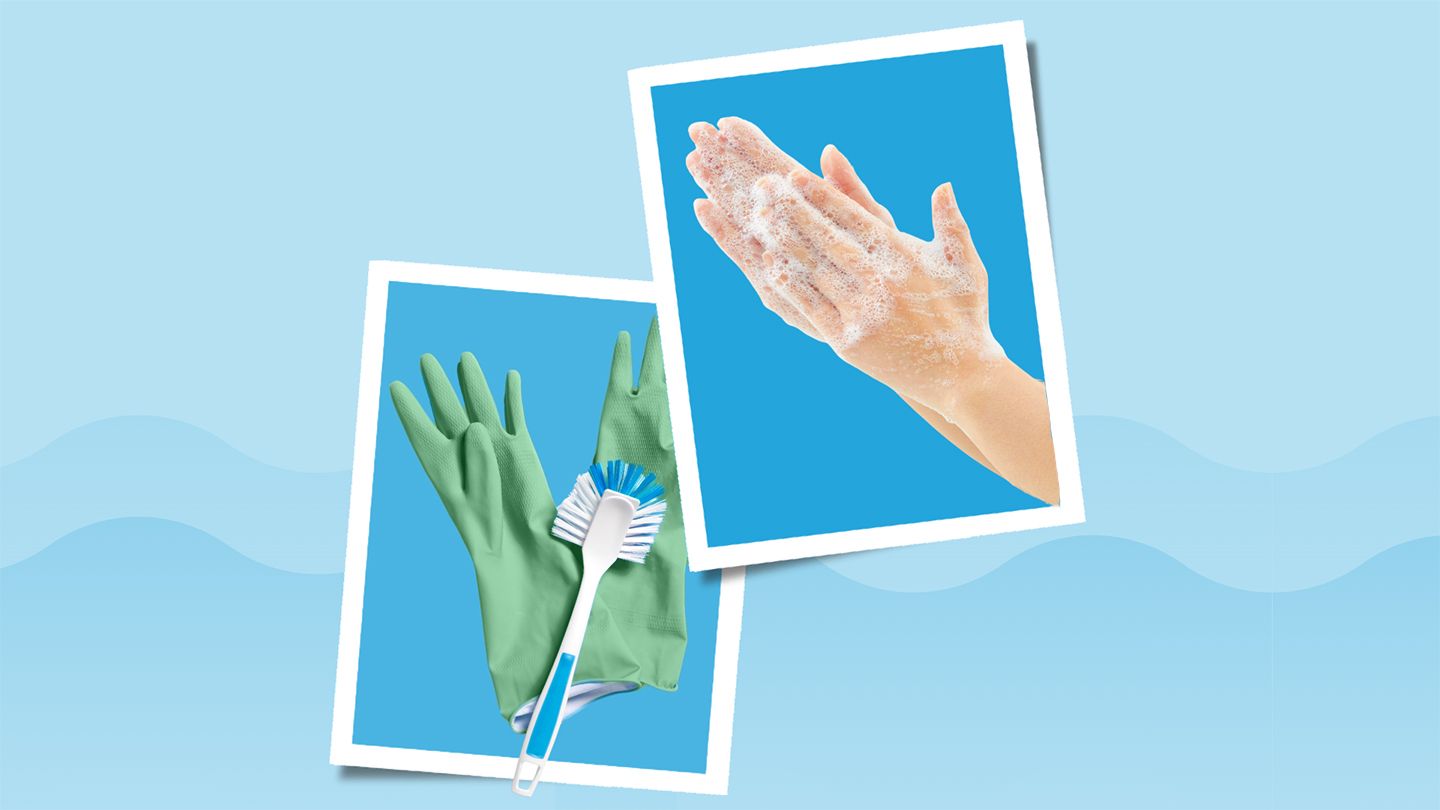
Most conventional cleaning products contain fragrances and harsh chemicals that may dry out or irritate the skin, while repetitive scrubbing or pressure on areas like the knees and elbows can worsen psoriasis symptoms in some people. Environmental irritants around the home — including dust mites — may also contribute to itching and, in turn, cause plaques to spread.
It’s still possible to get your weekly cleaning sessions in, though. With a few simple adjustments — like using gentler products and protecting your skin during chores — you can make housecleaning more psoriasis-friendly.
1. Choose Your Cleaning Products Strategically
If you’re grappling with symptoms like a rash or dry, flaky plaques, be aware that many cleaning products contain ingredients that can aggravate your sensitive and inflamed skin, says Sandy Johnson, MD, a dermatologist in Fort Smith, Arkansas.
“Oftentimes, people with psoriasis will have lesions on their skin that can make harsh chemicals even more irritating and enter the skin, causing more problems,” Dr. Johnson says.
That’s why you should stock your cleaning caddy with products that have “gentle formulations,” says Sheilagh Maguiness, MD, the director of pediatric dermatology at the University of Minnesota in Minneapolis and the president of the Society for Pediatric Dermatology.
That means choosing cleaning products that are “fragrance-free” instead of “unscented” (which may contain chemicals to mask the scent) or “chemical-free” (which often includes essential oils that can also irritate the skin), Dr. Maguiness says.
You should also scan product labels for ingredients that can dry out the skin, including alcohol, dyes, parabens, and sulfates.
Choose a pump spray over an aerosol, and watch out for harsh ingredients, preservatives, irritants, and allergens, Maguiness says.
If you don’t need to do heavy-duty cleaning and disinfecting, even everyday household items — like lemon, baking soda, or vinegar — can get the job done, Johnson says.
2. Wear Gloves to Protect Your Hands
“Wearing gloves is a great way to protect the hands from irritants, allergens, and the impact of chronic water exposure,” Maguiness says.
She recommends non-latex, waterproof, powder-free nitrile gloves. You can double up if your hands are a concern for psoriasis and use a cotton liner underneath.
But gloves should not stay on for too long. “Gloves should be removed and hands moisturized promptly after use, as prolonged occlusion with sweat inside gloves can itself be irritating,” she says.
3. Let Cleaning Tools Do the Heavy Lifting
Repeated scrubbing, scratching, pressure on the knees or elbows, or even small abrasions may contribute to new plaques forming, says Chris Adigun, MD, a board-certified dermatologist in private practice in Chapel Hill, North Carolina.
Dr. Adigun notes that while normal cleaning activities are usually fine, minimizing unnecessary skin trauma is still a good idea. She recommends using knee pads or a gardening pad if you need to kneel while cleaning floors or bathrooms. You can also cover up affected areas with loose-fitting clothes so they aren’t exposed to cleaning products.
Appliances like dishwashers, vacuums with HEPA filters, long-handled scrubbers, and spray mops can do the heavy lifting, saving you from the repetitive strain on your body, Johnson says.
4. Protect Your Skin Post-Cleaning
What you do after cleaning matters, too. Adigun recommends rinsing your hands — or showering after heavier cleaning sessions — to remove any lingering cleaning products, sweat, dust, or debris from the skin.
“If you are going to be exposed to cleaning products, you definitely should shower to remove the cleaning products and immediately moisturize and tend to any active areas of psoriasis,” says Adigun.
Warm water is generally preferable to hot water, which can further dry out or irritate the skin. Applying moisturizer immediately after washing and while your skin is still slightly damp may help support the skin barrier, too.
Maguiness recommends using a thick, fragrance-free moisturizer or barrier cream after cleaning, while Johnson says products like petroleum jelly can help act as a protective barrier before and after exposure.
5. Be Mindful of Allergies and Airborne Irritants
Allergens aren’t considered a primary psoriasis trigger in the same way they are for eczema, but they may still contribute to itching and skin irritation in some people — especially those who also have allergies.
Cleaning can also stir up dust, mold spores, and airborne particles that can irritate the skin or airways. “I do recommend opening windows and making sure you’re set up for success with good airflow to minimize the chance of respiration concerns and airway irritation,” Maguiness says.
6. Know When to Call Your Dermatologist
Some mild dryness or irritation after cleaning should improve with moisturizing, staying on top of your psoriasis treatments including topicals and oral medication, and gentler cleaning habits, Adigun says.
But symptoms like a worsening rash or plaques, persistent burning, cracked skin, bleeding, or signs of infection may warrant a call to your dermatologist.
The Takeaway
- Many cleaning products have harsh ingredients that can irritate sensitive, psoriasis-prone skin. Choose brands labeled fragrance-free (not “unscented” or “chemical-free”) to reduce your exposure.
- Because repetitive friction, scratching, and minor skin trauma can trigger the Koebner phenomenon, wear protective clothing and use knee pads and tools like vacuums, spray mops, and long-handled scrubbers.
- After cleaning, rinse off lingering cleaning products with warm water and apply a thick, fragrance-free moisturizer or barrier cream while the skin is still slightly damp to help support the skin barrier.
Read the full article here