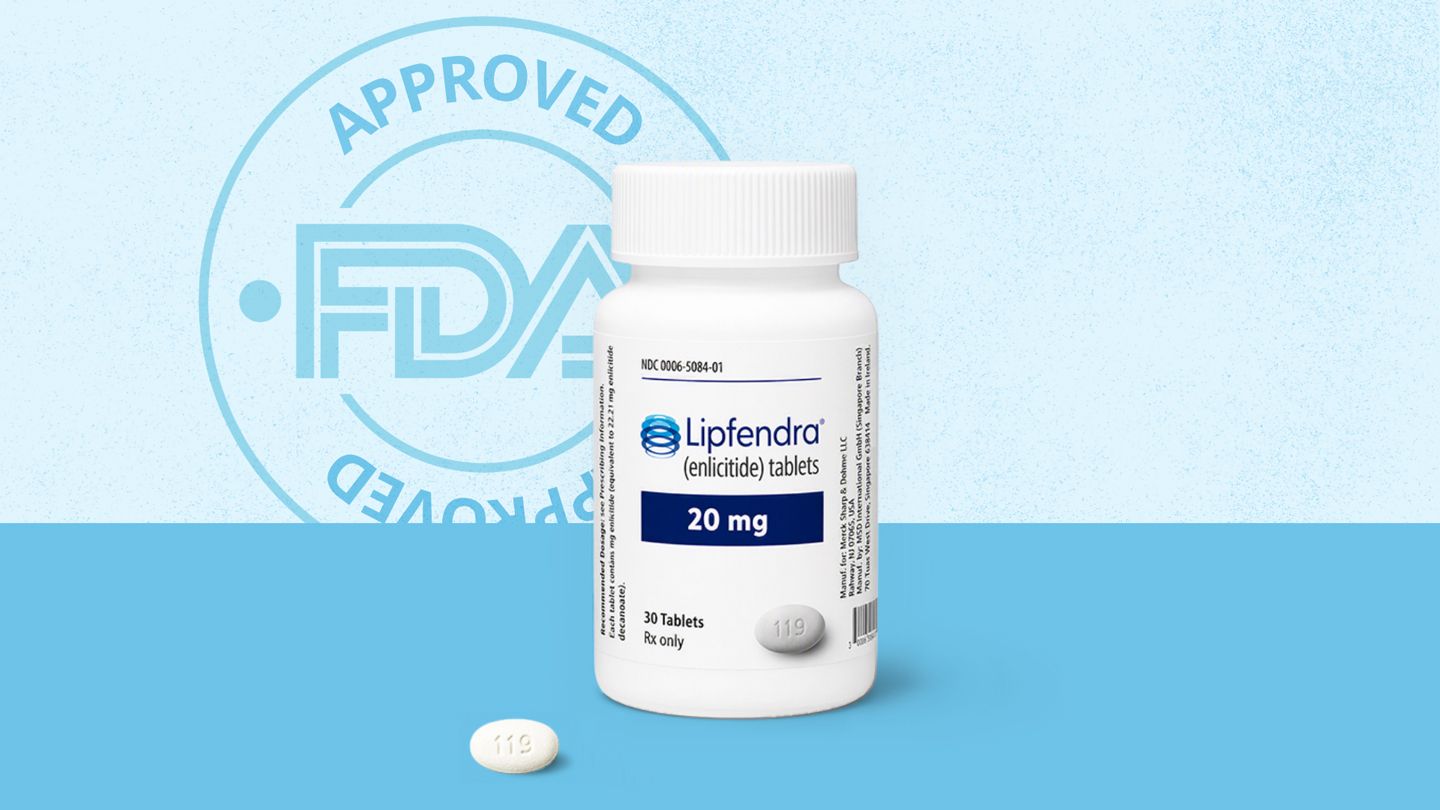
In conjunction with diet and exercise, PCSK9 inhibitors can help adults get their LDL “bad” cholesterol down when statins, the most common cholesterol-lowering drug class, aren’t effective enough. But until now, PCSK9 inhibitors were only available as expensive injections taken every two weeks.
“This is a major breakthrough in lipid management,” says Yu-Ming Ni, MD, a board-certified cardiologist and lipidologist at MemorialCare Heart and Vascular Institute at Orange Coast Medical Center in Fountain Valley, California. Lipids include HDL “good” cholesterol, LDL “bad” cholesterol, and triglycerides.
In addition to being more convenient as a daily pill, Lipfendra will also be more affordable than other medications in its class: It will cost about half the amount of similar injectable medications, according to a spokesperson from Merck.
Lipfendra Led to Significant Reductions in LDL ‘Bad’ Cholesterol
Lipfendra’s FDA approval is based on two phase 3 clinical trials. For the first trial, researchers recruited about 2,900 adults with high cholesterol, or hypercholesterolemia, who were already taking statins. About two-thirds of participants received Lipfendra, and the rest received a placebo (dummy pill).
After 24 weeks, people who took Lipfendra saw a 57 percent drop in LDL “bad” cholesterol. Those who took a placebo saw LDL levels increase by 3 percent.
- 10 milligrams (mg) of Lipfendra
- 20 mg of Lipfendra
- 180 mg of bempedoic acid (a nonstatin drug used to lower cholesterol)
- 180 mg of bempedoic acid plus 10 milligrams of Lipfendra
After 56 days, participants who took 20 mg of Lipfendra saw LDL cholesterol decrease by 65 percent. Those who took only bempedoic acid saw a 6.3 percent drop.
How Lipfendra Works
Statins are a common first-line treatment for high cholesterol, and work by reducing the liver’s production of cholesterol, says Jeffrey Berger, MD, director of the Center for the Prevention of Cardiovascular Disease at NYU Langone Heart in New York City. Other cholesterol-lowering medications, like ezetimibe, work by reducing cholesterol absorption in the intestine.
Lipfendra belongs to a class of medications known as proprotein convertase subtilisin kexin type 9 (PCSK9) inhibitors. These medications decrease LDL cholesterol levels through a different mechanism, by blocking the PCSK9 protein.
Until now, existing medications in this class have been injectable treatments. “Overall, I’ve been very happy with this drug class. It’s been very effective for lowering cholesterol,” Dr. Ni says. “But a lot of patients tire out from giving themselves shots year after year.”
Side Effects of Lipfendra Were Similar to Those Experienced With Placebo
In clinical trials, adults taking Lipfendra experienced the same side effects at about the same rate as those who took a placebo. The most common side effects were:
- Diarrhea, in 7 percent of Lipfendra users versus 2 percent of placebo users
- Dizziness, in 9 percent of Lipfendra users versus 4 percent of placebo users
Lipfendra Will Be Available Within ‘Weeks’
The list price for Lipfendra will be $10.50 per day, or $315 for a 30-day supply, according to a Merck spokesperson. However, the out-of-pocket costs will likely be lower for many patients, regardless of insurance. (By comparison, many injectable medications in this class cost $500 to $600.)
Merck will offer a coupon program to reduce out-of-pocket costs for Lipfendra, and the company plans to introduce a direct-to-patient program. The spokesperson said the medication should be available within weeks.
Read the full article here