When considering which types of exercise may be most helpful, jumping into high-intensity, high-impact workouts may not be the best approach, says Morgan Rees, a personal trainer in Los Angeles who works with clients who have fibromyalgia and who also has the condition herself. That doesn’t mean you need to skip doing these workouts forever, but it’s better to work toward them gradually to make sure the intensity doesn’t trigger a flare, she says.
“Overall, high-intensity exercise can increase the sensitivity of the central nervous system and potentially increase pain signals,” she says. “For some people, high-impact activities can increase stress on the joints and cause greater levels of inflammation. Some people are able to do high-intensity exercise and have less pain, whereas others experience more.”
Here are some types of exercise to consider as you’re getting more active.
Low-Impact Cardio
These activities don’t put too much impact on the joints, and they’re often touted as the best exercises for people with fibromyalgia because of their ability to build endurance and strength.
Strength Training
Strength training can help build muscle endurance in a fibromyalgia-friendly way, particularly if you begin with body-weight training and progress very gradually into using weights and other forms of resistance, Ascher says. Building endurance can help alleviate pain and stiffness in the muscles and tendons over time.
That’s essential, since the condition often involves reduced muscle strength and endurance, in addition to widespread musculoskeletal pain. Ascher says that people with fibromyalgia often experience faster muscle fatigue than those without the condition, which is why focusing on building muscle function is important. Strength training can also increase blood flow to the muscles and lessen the risk of injuries that would lead to more pain.
And you have options for strength training besides lifting weights. One review found that Pilates, which uses either your own body weight or equipment as resistance, improved function and lessened pain in people with fibromyalgia. And in a study of 28 women with the condition, in which half of the participants did Pilates twice a week for six weeks using an apparatus called a reformer and the other half did exercises on a yoga mat, both groups saw benefits in fibromyalgia symptoms overall, among other improvements.
“This will be felt at a greater level, with increased pain, for someone who has fibromyalgia,” says Rees. That’s why taking your time to build up to heavier loads and using a trainer if possible are important.
“Sometimes if people work out and they feel extra sore afterward, it causes them to be afraid of that pain and to not go back to exercise,” she says. “But you can build up a tolerance over time. It could take you several times of exercising to find what works for you. Just because you become sore one time does not mean it will be like that every time. The body does adapt.”
Yoga
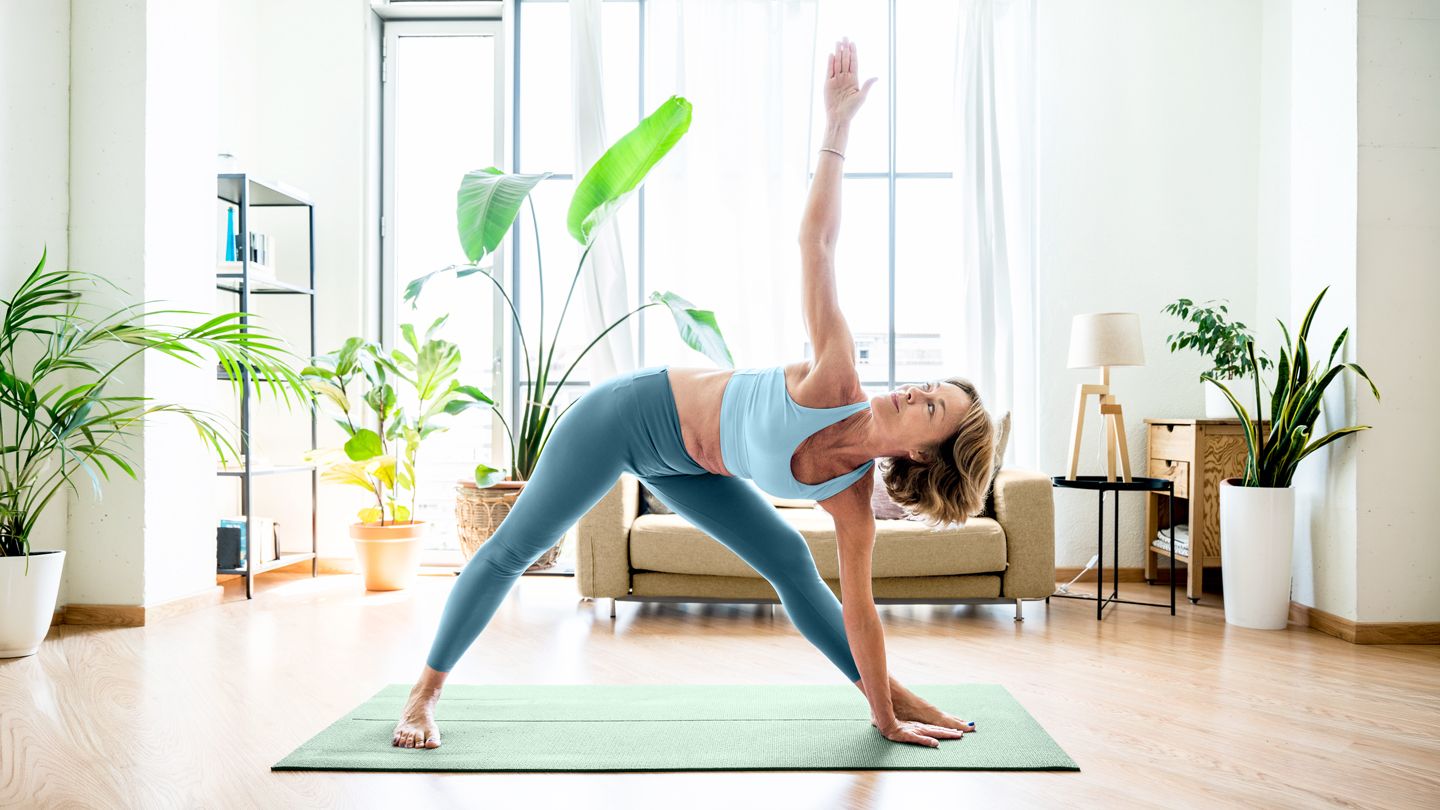
Yoga pairs movement with deep breathing, which can help alleviate emotional distress, says Nissa Keyashian, MD, a psychiatrist in San Jose, California, who helps people with fibromyalgia learn coping skills to deal with the emotional impact of chronic illness and the author of Practicing Stillness, which focuses on meditation, yoga, and psychotherapeutic principles.
“Practicing yoga can also help you build strength and have a greater sense of emotional health,” says Dr. Keyashian. “If you don’t already meditate or practice yoga, start with short sessions of time and build up from there. That can help you integrate this into a daily routine that also includes short periods of rest to support yourself physically and mentally.”
Read the full article here