Know Where Eczema Is Most Challenging
“The skin on the face is thinner than elsewhere on the body, so it’s more sensitive,” Wu explains.
Contact eczema on the face can even be triggered by cosmetics or skin-care products. It’s frequently found on the eyelids, where it can cause red, flaky, swollen upper and even lower eyelids. It can also develop around the mouth.
“It’s obviously more visible to others when it occurs on the face, so it’s important to treat it sooner rather than later,” says Wu.
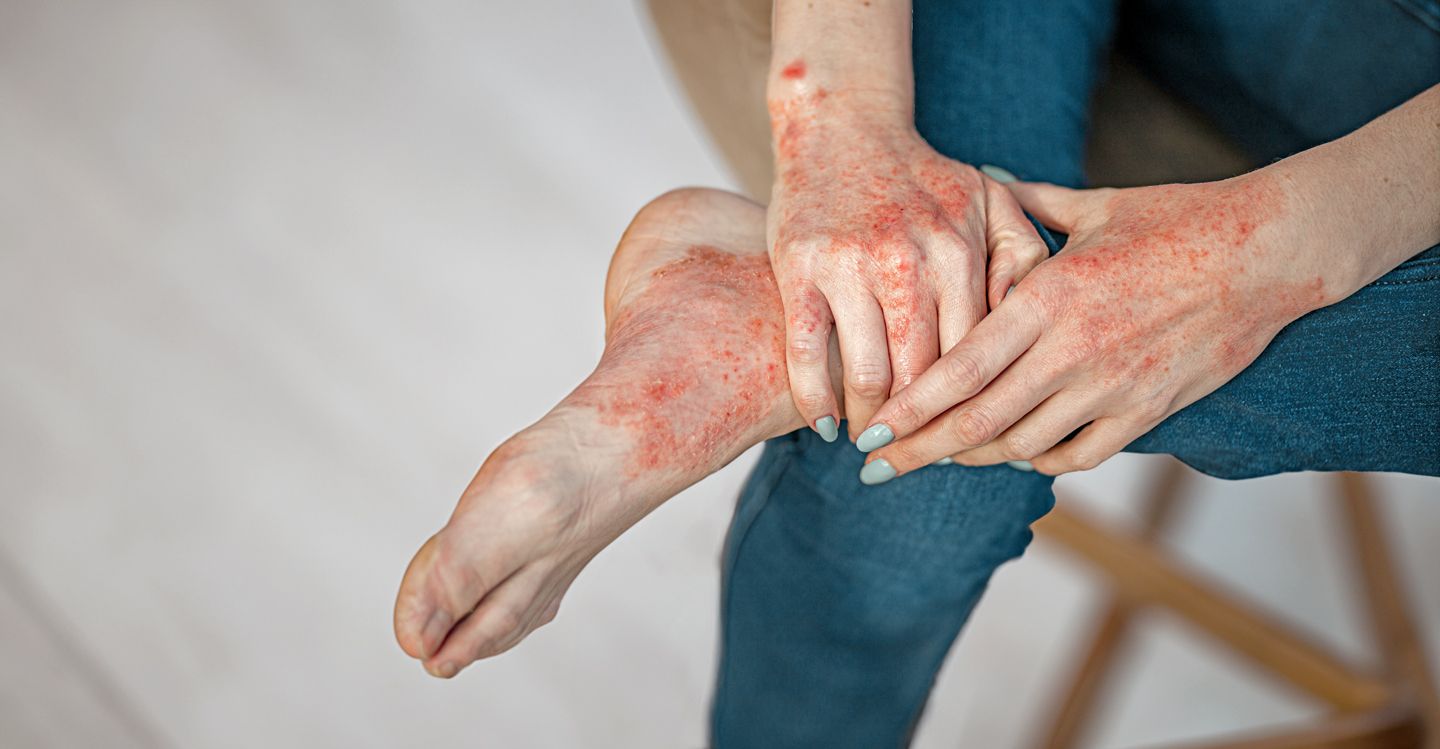
The face is not the only area that can be affected, however. “Eczema patches on the body can become thick and discolored, especially after weeks to months of scratching, and they can develop scabs,” says Wu. “The discoloration can persist even months after the itching goes away.” Thickened skin from years of scratching may even itch all the time.
Hand-washing, though important, is one way this happens. Frequent hand-washing dries skin, and can cause irritation and itchiness, or even weaken the skin barrier, causing cracked skin, which raises the potential for infection.
Hand sanitizing can be even more bothersome to eczema-prone skin. To reduce dryness, wash your hands with soap or soap-free cleanser and water rather than using hand sanitizer. If you do opt for hand sanitizer, choose one without methanol, which can be irritating, and always follow up with a moisturizer immediately afterward.
Read the full article here