Tips for Managing Anxiety With UC
To help you manage anxiety while living with UC, follow these tips.
Talk to a Professional
For many people, including Cleasby, working with a therapist or other mental health provider is an important part of managing UC.
“I think the most important way to deal with anxiety and depression is to speak out about it,” Cleasby says. “It’s easy to feel so alone and that no one will understand you, but actually, just voicing your fears takes away some of their power.”
Acceptance and commitment therapy (ACT) helps people who have a chronic illness manage symptom-related anxiety. ACT has been shown to reduce stress and depression but not anxiety in people who have IBD, according to a research review, though the authors note that it’s a newer therapy with only one randomized, controlled trial to draw conclusions from. There are a number of other forms of psychotherapy you might try, though most haven’t been studied to treat anxiety in people with IBD.
Petrik says to ask your doctor if there is a mental health provider on staff or if they can recommend a therapist that specializes in chronic illness or IBD. Psychology Today also maintains a searchable database of verified mental health providers across the United States. And a psychiatrist can help determine whether anxiety medication is a good fit for you.
Identify Stress Triggers and Explore Relaxation Techniques
“Recognizing the initial symptoms and heading them off with deep breathing and meditation works for me. But, it’s about finding what works for you,” says Cleasby. “Speak to your doctor about how you are feeling and to your loved ones. There is no shame in needing support.”
Dr. Zein recommends eliminating everyday stressors that could trigger anxiety with a few simple rules of thumb:
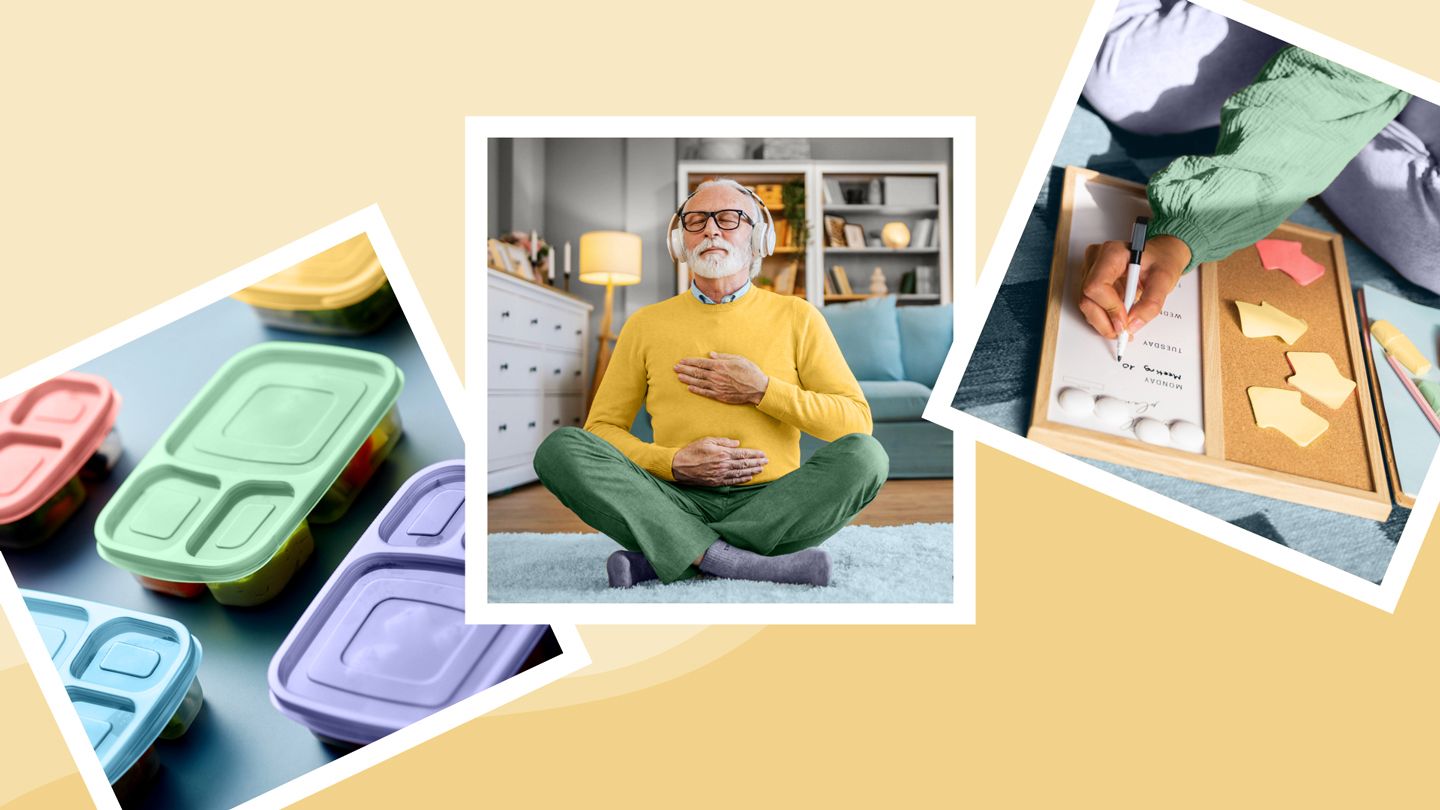
- Set realistic goals for yourself each day, and break big tasks into smaller ones.
- Do some prep work at night, such as packing a lunch or laying out your clothes, to decrease stress the following day.
- Build structure into your days, whether you’re in a flare or in remission. Using a calendar or daily planner to keep track of your activities and appointments can help.
Zein says that relaxation techniques can reduce anxiety after it’s set in. These include breathing exercises, muscle relaxation, and meditation. “Apps like Calm and Headspace can be really useful to guide people through these techniques when they’re feeling more anxious,” she says.
“One technique is to combine slow, deep breathing with muscle tensing and relaxing,” Zein says. “Try balling your fists while inhaling, holding, and then releasing them slowly while exhaling. [Doing this] is enough to relieve anxiety.”
Another technique is to inhale slowly while raising your arms overhead and exhale slowly while lowering them back to your sides.
Cultivate a Support System
To help you learn more about your disease and form a network of people who are living a shared experience, it can help to join an online or a local support group.
“Having good support is an important part of managing physical and mental health in IBD. Asking for and accepting help from family and friends is important,” says Zein.
And whatever your ritual, “It’s really important to develop coping skills that work for you,” says Zein.
Read the full article here