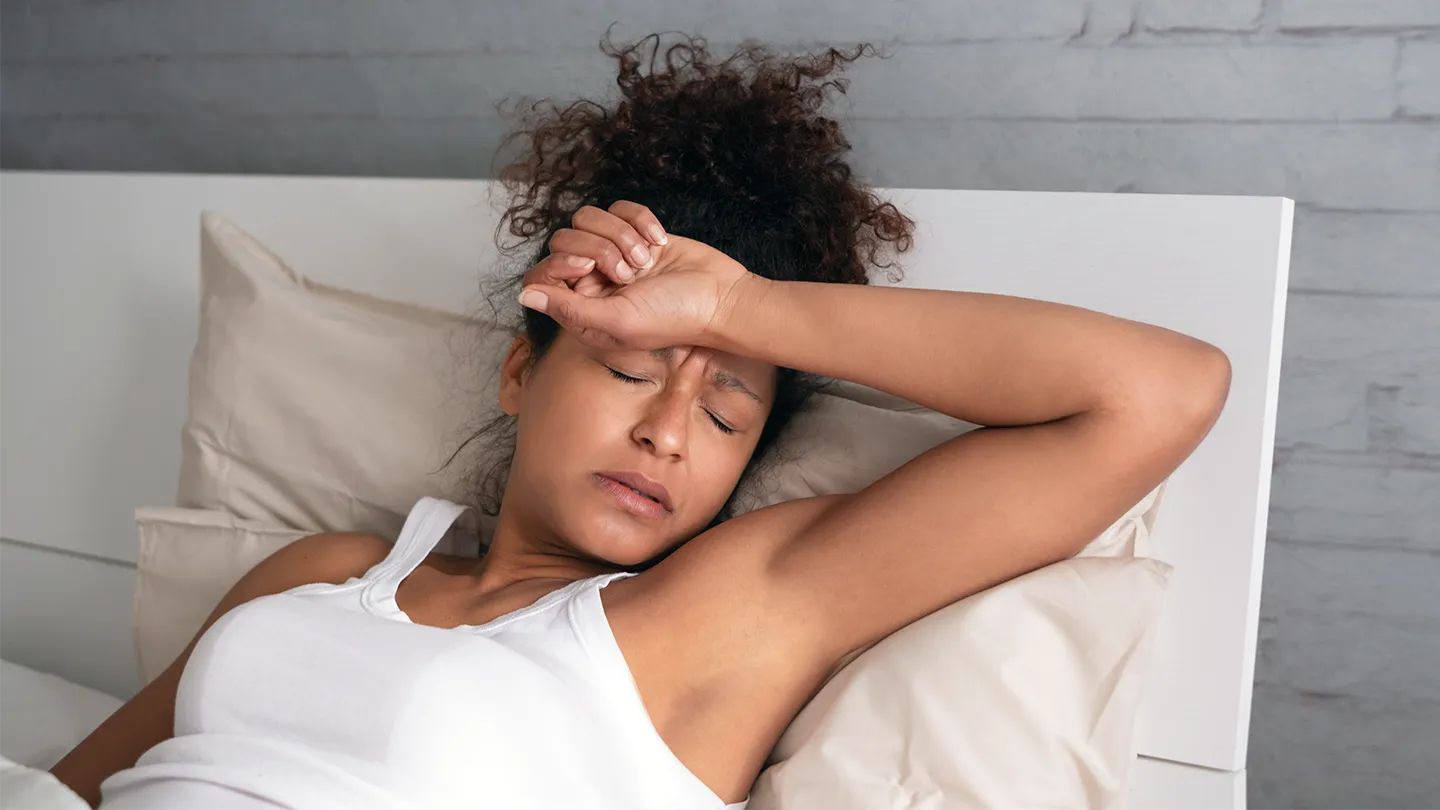
Night sweats and hot flashes can last anywhere from a few months to more than several years, but you may not have to sweat in silence when it comes to mild night sweats. However, the Menopause Society advises that while these approaches won’t cause you harm, not enough evidence suggests that they’re effective.
Still, here are a few tips to try that might help you feel better if night sweats are making your nighttime a nightmare:
- Sip a glass of ice water. This can help you cool off. If you need to, keep a flask of ice water on your bedside table so it’s within easy reach.
- Lower the temperature. Turn down the thermostat, open a window, or turn on a fan.
- Consider supplements. Some research suggests that black cohosh may help reduce symptoms of menopause, including hot flashes and night sweats, but more studies are needed to determine its effectiveness. If you want to give it a try, first talk to your doctor before taking any supplements. Some can cause harmful side effects or interactions with your existing medications.
- Try relaxation techniques. Meditation and deep breathing can be helpful for some people coping with mild hot flashes. Even if these techniques don’t help with sweating, they may be able to help you get back to sleep.
- Change your clothes. Soaked in sweat? Wet clothing equals cold clothing, so change into a fresh, dry pair of pajamas for comfort.
If environmental changes or home remedies don’t seem to help your night sweats, talk to your doctor about medications. Hormone therapy can help ease hot flashes, but it can increase the risk of some health issues in some people, so it may not be suitable for everyone. But it’s safe for many women, so you and your healthcare provider can discuss your medical history and work together to balance the benefits and risks.
Nonhormonal medications are also available, including antidepressants, gabapentin (Neurontin, Gralise, and Horizant), fezolinetant (Veozah), and clonidine (Catapres, Catapres TTS). Your doctor can help you determine which might be best for you.
Whatever you do, don’t give up. Several avenues are available to ward off at least some night sweats and reduce their severity.
Read the full article here