Types of Exercise for Postpartum Depression
Yoga
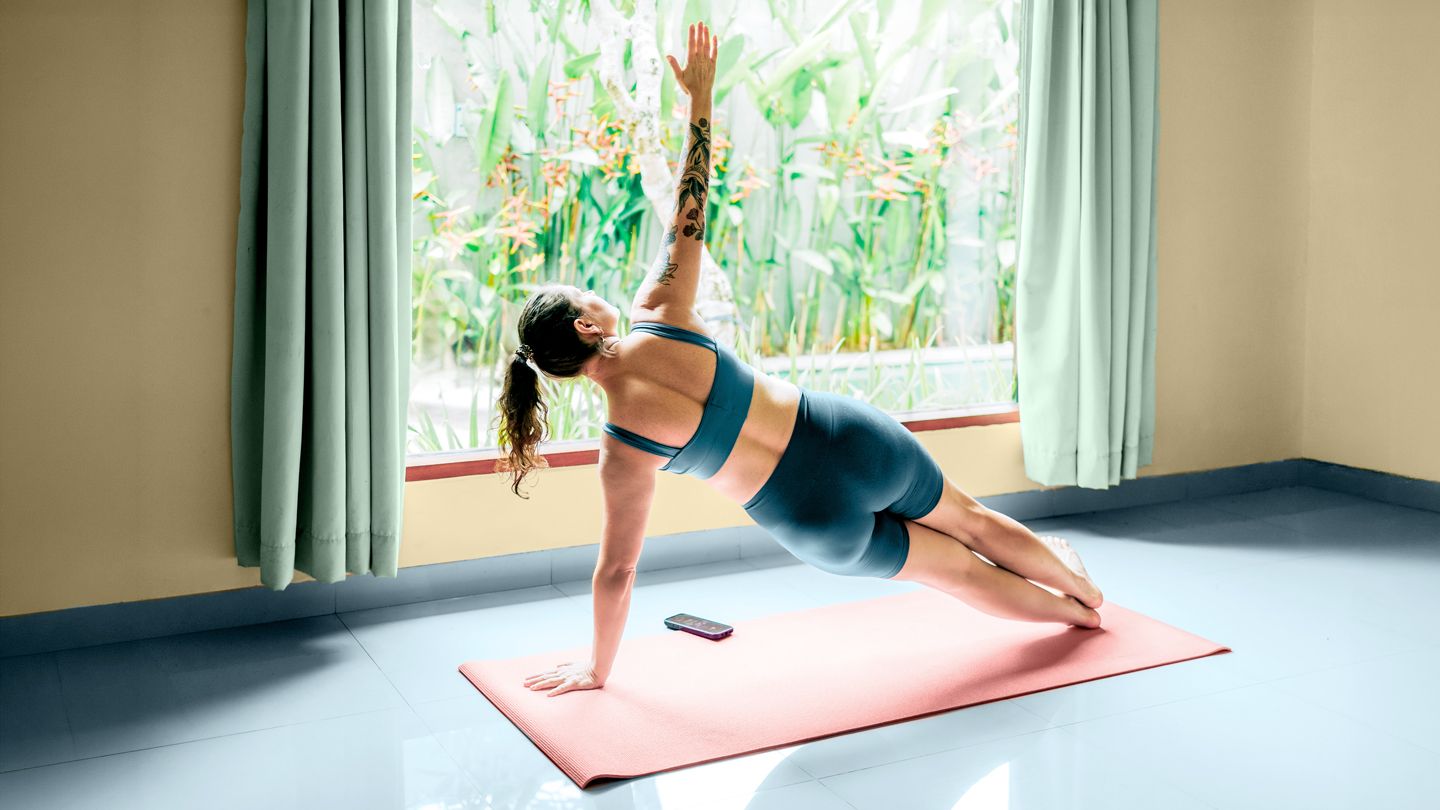
Yoga can be especially helpful for PPD because it combines breath work, mindfulness, and gentle strength training, and all of these can support both physical recovery and mental health, says Patience Riley, LPC, a licensed professional counselor specializing in perinatal mental health and an alliance program specialist at Postpartum Support International, where she launched support groups for pregnant and postpartum parents.
Riley experienced perinatal mental health struggles after the birth of her second child in 2021. As a military wife, she had relocated three times within 18 months, and she solo parented for long stretches while raising two young children. “Yoga became not only strength-building, but a place I could go for safety and security and to support myself mentally, emotionally and spiritually,” she says.
“Many women spend months focused on their baby’s needs, and yoga creates space to slow down, rebuild confidence in movement, and cultivate self-compassion,” she says.
For Riley, it also gave her mind a break from errands to run and endless to-do lists. “It wasn’t until my yoga practice where I was connecting with my breathing and turning inward that I actually slowed down. It gave me mental rest that really helped,” she says.
Riley is now a registered prenatal yoga teacher, who teaches yoga classes locally in Perry, Georgia, alongside free, virtual, twice-monthly classes for pregnant and postpartum parents via Postpartum Support International.
Try 10 to 15 minutes of gentle yoga two to three times per week to start, Cox-Larrieux says. Look for classes labeled postpartum, postnatal, gentle, restorative, hatha, or beginner. You can even try a mommy-and-baby yoga class for extra bonding time with your little one.
If getting to a class feels too difficult, Riley suggests starting with online videos. “If you don’t know where to begin, go on YouTube, and type in ‘postnatal yoga,’” she says.
Walking
Walking is often one of the easiest ways to start moving with PPD because it is low impact and doesn’t require special equipment, a gym membership, or much planning. It can be done with your baby in a stroller or carrier, indoors or outside, alone or with a friend, and in short spurts throughout the day, says Karen Brandon, DSc, a physical therapist with a clinical specialty in pelvic and women’s health therapy and spokesperson for the American Physical Therapy Association.
“Walking can help improve cardiovascular fitness, circulation, mood, energy levels, and overall recovery after childbirth,” she says.
One research review suggested that walking may help mothers manage PPD. Researchers found that supervised group-based activity that included 90 to more than 120 minutes per week of moderate-intensity walking seemed to lead to greater reductions in PPD than other types of walking.
Walking can also be social. Riley says that one of her regular walks with another new mom gave her both accountability and social connection. “It gave us time to get together and talk to somebody else other than just the baby,” she says.
Begin with 10 to 15 minutes on a flat surface, three to five days per week, Dr. Brandon says. Build toward 20 to 30 minutes, or try increasing the pace or adding incline as your body allows, she says.
Strength Training
Strength training (aka resistance training) doesn’t have to mean lifting weights at the gym. It can also involve body-weight moves, resistance bands, light dumbbells, or everyday movements that strengthen your body. Actions like lifting the baby, pushing the stroller, getting up from the floor, and carrying the car seat, laundry, or groceries are good examples of strength-building everyday movements, says Cox-Larrieux.
“Resistance training just means your muscles work against some form of resistance,” she says. Some examples of moves you can do at home, she says, include:
- Bridge pose or glute bridges
- Body-weight squats
- Sit-to-stand (from a chair or bed)
- Marching in place while lying down
- Side-lying leg lifts
- Wall sits or wall squats
- Wall push-ups
Brandon says that strength training is an important part of postpartum recovery because pregnancy and postpartum can both affect muscle mass, strength, and bone health. It also helps prepare the body for the everyday demands of parenting.
“You spent months carrying your baby inside your body. Now you’re carrying that same load outside your body — and it keeps getting heavier,” she says.
Try doing strength training for 15 to 20 minutes, one to two times per week, Brandon says. Begin with one to two sets of 8 to 12 repetitions of basic movements, such as sit-to-stands, wall push-ups, and glute bridges. “Focus on proper form, breathing coordination, and pelvic floor support before increasing load,” she says.
Group Fitness Classes
Group classes can help with one of the hardest parts of PPD: isolation. A class gives structure, a reason to leave the house or log on, and a sense that you’re doing something with other people, even if it’s virtual, Riley says.
One small study of eight people with major depressive disorder found that 14 weeks of supervised group exercise was tied to significant improvements in depression symptoms. The researchers noted that, generally speaking, a group format may offer an added benefit of social support and a sense of belonging.
Cox-Larrieux says stroller fitness, postpartum yoga, Pilates, beginner dance fitness, and low-impact strength classes are all good options for group fitness. “They’re often 45 to 60 minutes long, offer different fitness levels or modifications, and provide a social, enjoyable way to get the body moving again,” she says. “Many classes offer modifications or beginner-friendly versions, so moms don’t have to feel like they need to be ‘fit enough’ before showing up.”
Classes can also help take away the burden of planning. Riley found online workout classes helpful when she had two small children, limited support, and very little mental bandwidth. “I didn’t have the brain power to think about what exactly I was going to do,” she says. “So, they guide you through everything.”
The online format also made movement more accessible. “I could stay at home, my kids could be right there with me,” Riley says. “I just had to have a couple of free weights, and the workouts were really short.”
Look for classes that are postpartum-specific or categorized as beginner-friendly, low-impact, stroller, mom-and-baby, or virtual. Try one class before committing to a package, Riley says. You also can ask whether the instructor can modify movements to account for pelvic floor symptoms, diastasis recti, C-section recovery, or back pain before signing up.
Read the full article here