Types of Scar Revision
There are several different scar revision techniques. The treatment that’s right for you will depend on factors like the type of scar, its severity, location, and your desired outcome.
Topical Treatments
Topical treatments are typically more effective for mild or newly formed scars, while a wound is healing. They are applied to the surface of your skin and don’t require any needles or incisions.
Topical treatments include:
- Pressure Therapy This involves wearing a pressure dressing, such as an elastic bandage, to apply pressure to a wound. Applying pressure can help prevent scarring or reduce its appearance.
- Polyurethane Dressing This is a moist, flexible pad that can help reduce scarring after surgery or reduce discoloration, hardness, and the size of a raised scar.
- Silicone Gel This works similar to a polyurethane dressing and is applied as either a gel sheet or ointment. It is applied after a wound closes and you need to use it every day, often for months.
Injectables
Types of injections include:
- 5-FU and Bleomycin Injections 5-FU (5-Fluorouracil) and bleomycin are types of chemotherapy drugs that can also treat keloid scars. They can help reduce or completely flatten raised scars and ease pain and itching.
- Corticosteroid Injections These also help treat raised scars and keloids, and in some cases, may completely reduce their appearance. Corticosteroid injections typically require more than one treatment.
- Dermal Fillers These are used to fill in depressed scars, such as acne scars and pockmarks. Fillers can be temporary or long-lasting and made from natural or synthetic materials. Examples include Restylane, Juvéderm, and Radiesse.
Skin Resurfacing
Surface treatments help improve the appearance of scars by smoothing out irregularities and reducing uneven pigmentation. They work by either removing the top layers of skin or changing its structure.
Skin resurfacing treatments include:
- Laser Therapy This technique uses different types of laser light to treat a scar. Laser treatments are effective for all scar types, and can improve appearance, symptoms, texture, and pliability.
- Cryotherapy Cryotherapy, or cryosurgery, uses a substance such as liquid nitrogen to freeze the scar tissue, causing it to die. It is typically used to treat raised or keloid scars and can help reduce their size, pain, and discoloration.
- Chemical Peel This involves applying a chemical solution to the skin, typically a kind of acid. It works best for mild scars on the face.
- Dermabrasion Dermabrasion uses a sterile sandpaper or wire brush to evenly smooth the surface of skin. It is typically used for acne scars.
- Skin Bleaching This uses medications applied topically to lighten the skin and reduce the appearance of scars.
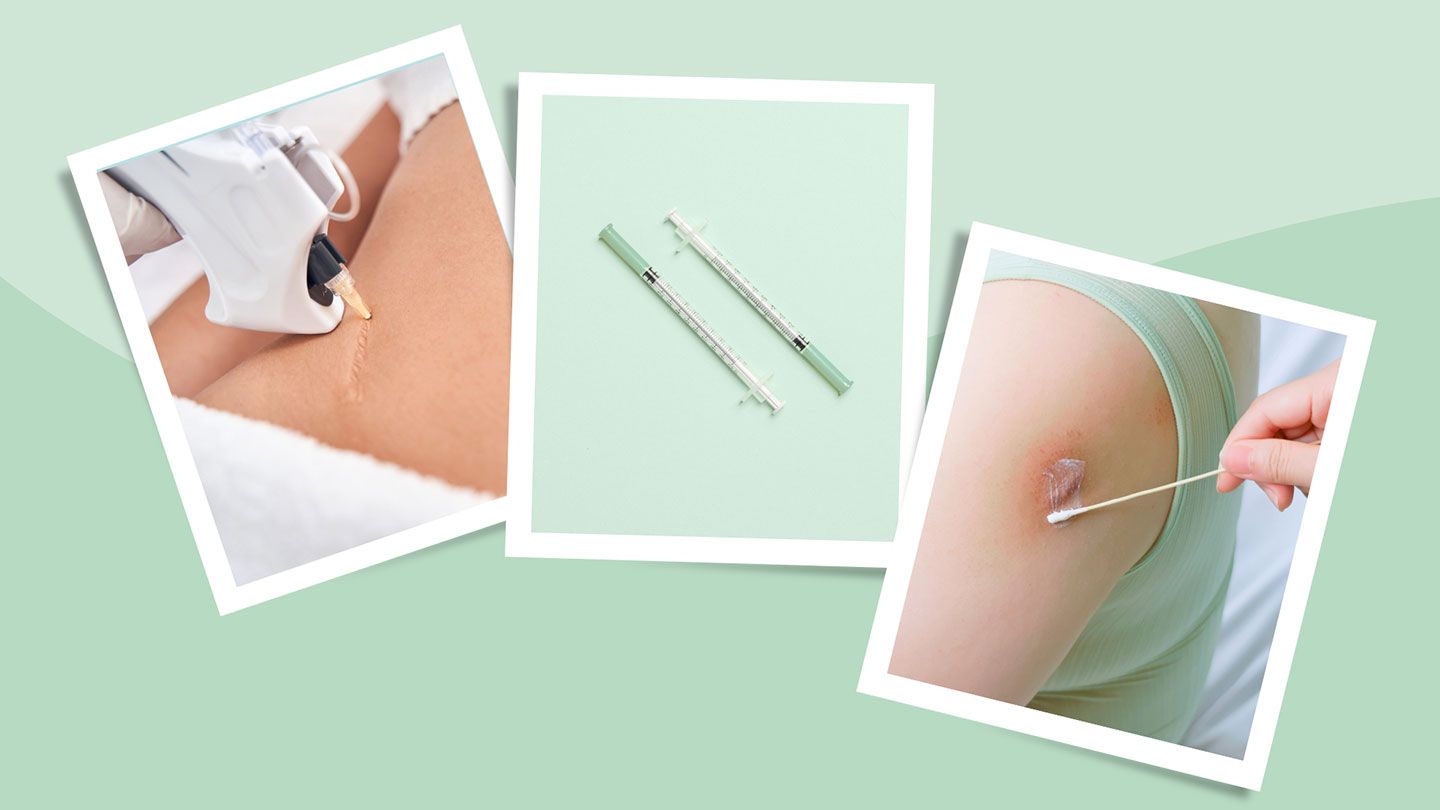
- Microneedling With this technique, a doctor uses a device to make microscopic punctures in your skin, encouraging structural changes and improved appearance.
Surgery
Surgery techniques involve cutting or removing a scar. These types of treatments may be necessary for large or severe scars, especially if they are causing pain or limit movement.
Types of surgery for scars include:
- Z-Plasty and W-Plasty With this treatment, a surgeon cuts a “Z” or “W” shape into the scar, allowing movement once the skin heals.
- Skin Graft If there isn’t enough healthy skin to close a wound, a surgeon may take healthy skin from another area to cover the affected area. This type of treatment is common for scars caused by serious burns.
- Excision With this procedure, a doctor makes an incision to remove the scar and then surgically remove and close the skin.
Read the full article here